

The complete guide
Choosing a Kids Castle Tent, A Practical Buyer's Guide
The problem a play tent actually solves
Small children do not have much space that is theirs. They share the living room, they share the kitchen floor, and even their own bedroom is a place adults walk in and out of all day. That is why so many of them build dens out of sofa cushions and dining chairs. The urge to have a small, enclosed spot with a door they control is a normal part of being three or four years old.
A castle tent gives them that in a tidier form. Instead of the sofa being dismantled every afternoon, there is a dedicated corner that stays set up. For parents, the win is less about the fairy-tale theme and more about containment. Toys drift into the tent, play happens inside it, and the rest of the room stays usable.
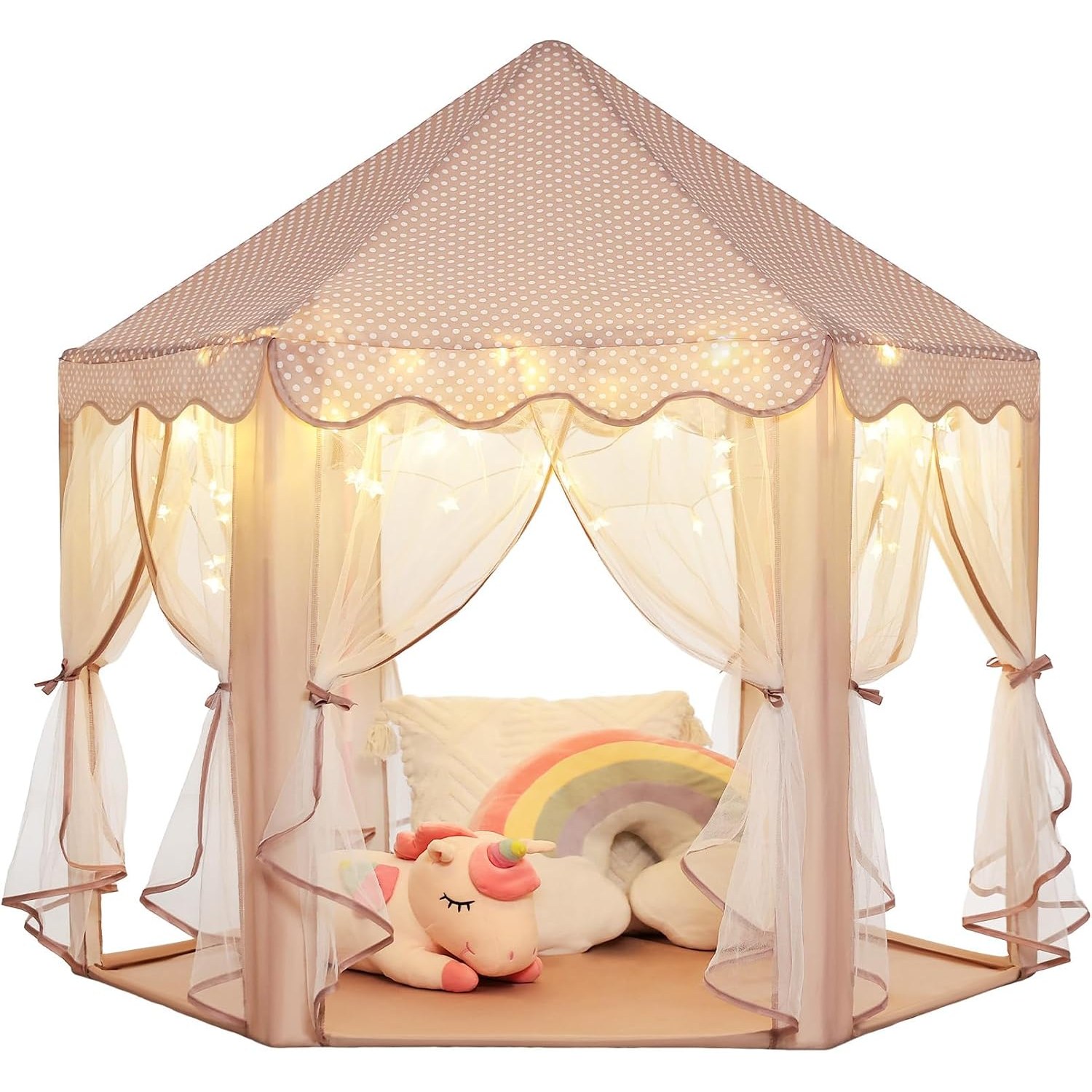
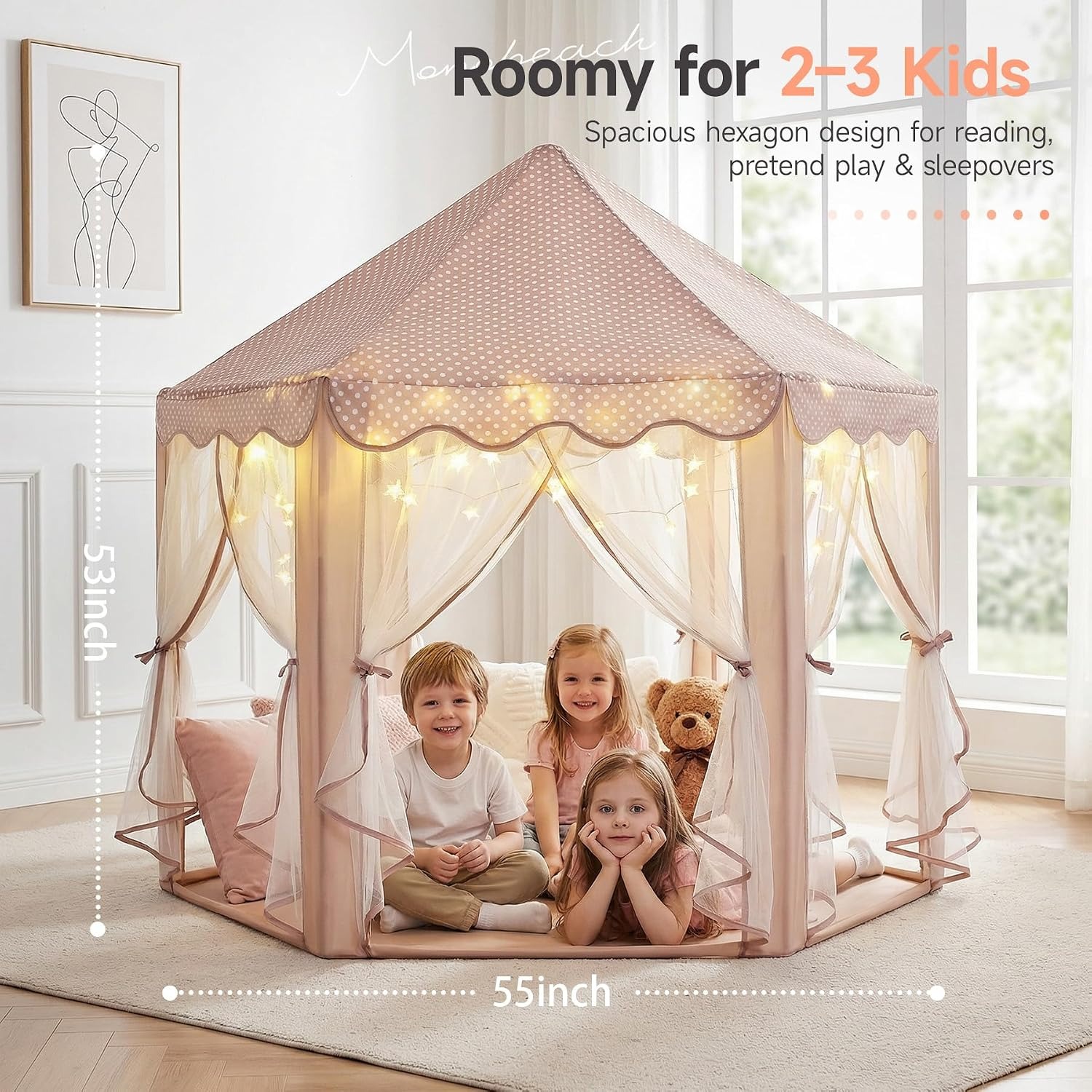
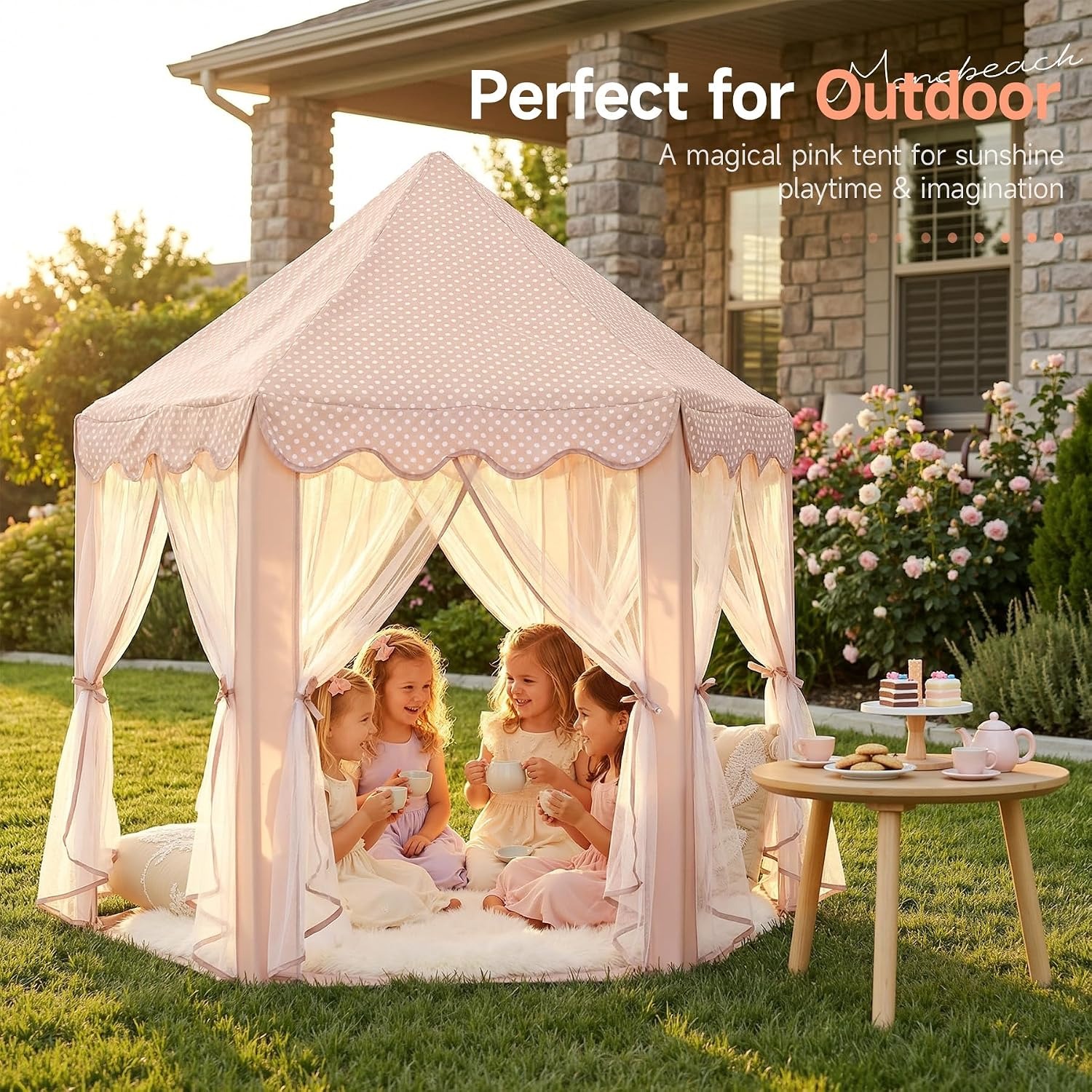
This particular model is a brown princess castle playhouse measuring 55 inches square and 53 inches tall. Polyester fabric sits over a metal pole frame. It weighs 1.81 kg assembled and comes with a small set of star lights.
How it goes together and how it holds up
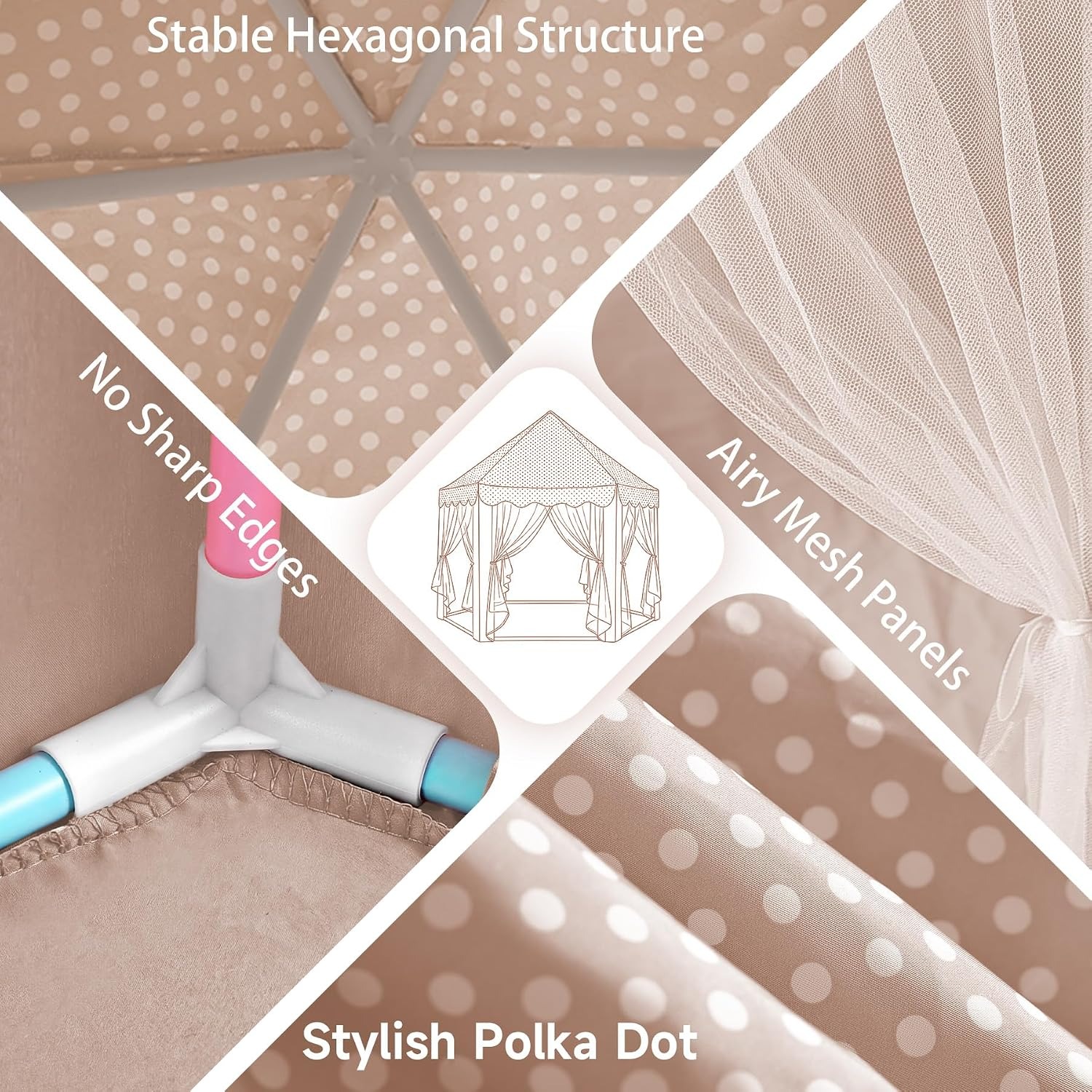
The structure is about as simple as play tents get. Poles slot into connectors to form the castle shape, then the fabric cover goes over the top. There is nothing to screw or glue, and no tools are needed. Most people get it standing on the first try, though reading the instructions once before starting saves backtracking.
Because the frame is metal rather than fibreglass or plastic, it keeps its shape better over repeated set-ups. The trade-off with any pole-and-fabric build is that the joints can loosen if the tent gets knocked around. Push them back together when you notice movement. It takes a few seconds and stops the shape sagging.
The fabric is polyester, which is the standard choice for this kind of product. It is light, it does not hold water the way cotton does, and it wipes clean easily. What polyester does not love is long exposure to strong sunlight, which fades color over months. If the tent lives by a big window, it is worth rotating it occasionally.
Weight is the underrated spec here. At 1.81 kg, the whole thing is lighter than a full kettle. You can lift it aside with one hand to vacuum underneath, or carry it to another room without taking anything apart. Heavier tents end up staying in one place forever because moving them is a chore.
Who it suits
The maker's recommended age is 36 months to 6 years, and that range is realistic. Below three, children tend to pull at fabric and poles rather than play inside, so it is better to wait. From three upwards, the enclosed space becomes genuinely interesting to them.
Only children get a private hideout out of it. Siblings usually turn it into a shared base, and the 55 inch square floor is big enough that two children can sit without constant elbowing. Three is possible for short bursts but gets crowded once cushions and toys are involved.
It also works for children who are not especially into princesses. The castle outline reads as a fort, a shop counter, a cave or a spaceship depending on the day. The brown colourway helps here, since it looks less specifically themed than the pink versions that dominate this category. Parents searching for the best playhouse tent for girls often end up preferring the neutral option once they see it in the room.
If you need a quiet corner tent for a child who gets overwhelmed easily, the enclosed shape plus mesh panels is a sensible combination. They get the feeling of being tucked away, you still get a sight line in.
How to choose between tents like this
Start with your floor. Measure the corner you have in mind, allow for the full 55 by 55 inches, and leave a little extra so the fabric is not pressed against a radiator or a skirting board. Height matters less for a kids castle tent, but at 53 inches this one will clear most low shelves.
Then think about where it will live. A tent that stays up permanently should match the room it sits in, because you will be looking at it every day. One that gets packed away after each session should be light and easy to break down, which this one is.
Next, check ventilation and visibility. Mesh panels are not a luxury on an enclosed fabric tent. They stop the inside getting warm and stuffy, and they let you glance over without interrupting play. Anything fully solid on all four sides is harder to supervise.
Look at the door, too. Tie-back curtains let a child open and close the entrance themselves, which is a bigger deal than it sounds. A door with a zip or a tricky flap means they call for help every few minutes, and the independence that makes a tent appealing disappears.
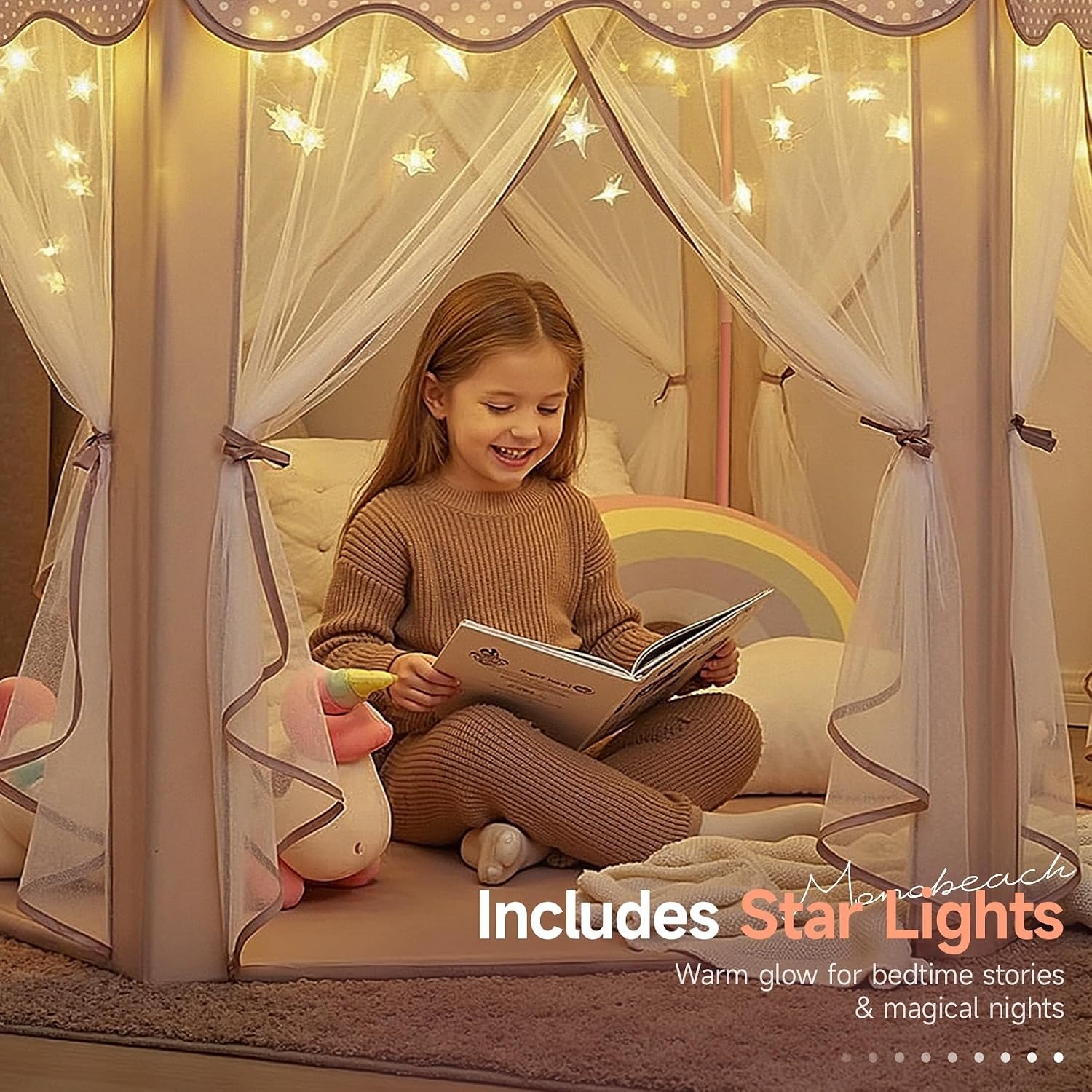
Finally, consider what comes in the box. Some tents arrive as fabric and poles only. This one includes a set of star lights, which means there is nothing extra to buy before the first play session. Anyone hunting for the best princess tent with lights usually ends up weighing that against buying a separate string.
Living with it day to day
Keep a small rug or play mat underneath. Hard floors get cold and uncomfortable quickly, and a mat also stops the fabric base dragging. A couple of cushions and a shallow book basket are enough to make it a reading nook rather than just an empty shell.
Set a simple rule early on, that the tent is for sitting and playing in, not for climbing on or hanging off. Pole frames hold up fine to normal play but not to a child using the roof as a pull-up bar. Explaining that once tends to be enough.
Cleaning is straightforward. Spot clean with a damp cloth and a little mild soap, then let it air dry fully. Do not put the panels in a washing machine or dryer, and skip bleach and the iron. Wipe the poles with a dry cloth and check the connectors every so often.
If you move it outdoors on a dry day, bring it back in afterwards. It is designed for play, not weather. Rain, wind and dew will all shorten its life, and damp fabric packed away turns musty fast.
Giving it as a gift
Play tents give well for the three to six crowd because they are usable the moment they are opened. There is no waiting for batteries, no app, no instructions to read aloud. Set it up, tie the star lights in place, and the recipient disappears inside.
It ships flat-packed, which also makes it easier to get to a party than most large toys. If it is going to a home where space is tight, mention the 55 inch footprint to the parents first. Nobody wants to be the person who gave a present that does not fit the room.
The short version
This is a brown princess castle playhouse from the maker, 55 by 55 by 53 inches, polyester fabric over a metal frame, weighing 1.81 kg. It comes with poles, connectors, the tent fabric and a set of star lights, and the recommended age is 36 months to 6 years.
Buy it if you want a dedicated corner for a young child that looks calm in a shared space, sets up without tools, and can be moved or packed away without a struggle. Measure your floor first, put a rug underneath, and expect it to be used far more as a reading and hiding spot than as an actual castle. Country of origin, certifications and warranty terms are not listed in the maker's details, so ask us if any of those matter to your decision.