
The complete guide
How To Choose A Pop Up Tent And Tunnel Set For Your Kids
The problem with a wet Saturday
Every parent knows the stretch between breakfast and lunch when the weather has ruined the plan. The child has energy. The house has furniture. Those two facts do not get along. You can put a screen on, and sometimes you do, but it never actually burns off anything.
A crawl tunnel solves a specific version of this problem. It gives a small child a loop to run. Crawl in one end, pop out the other, go again. That repetition is exactly what young bodies want, and it happens in a space the size of a rug instead of a whole hallway.
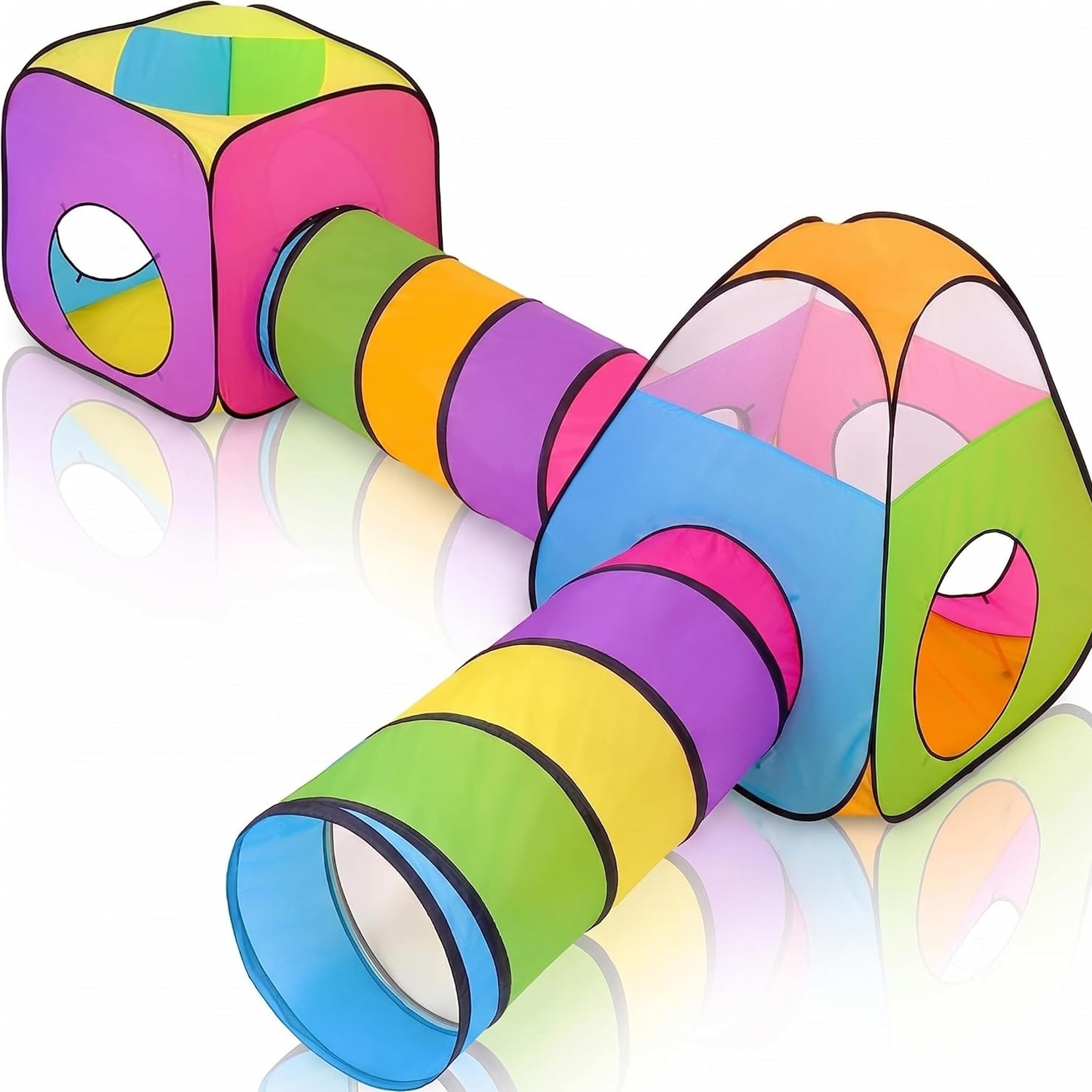
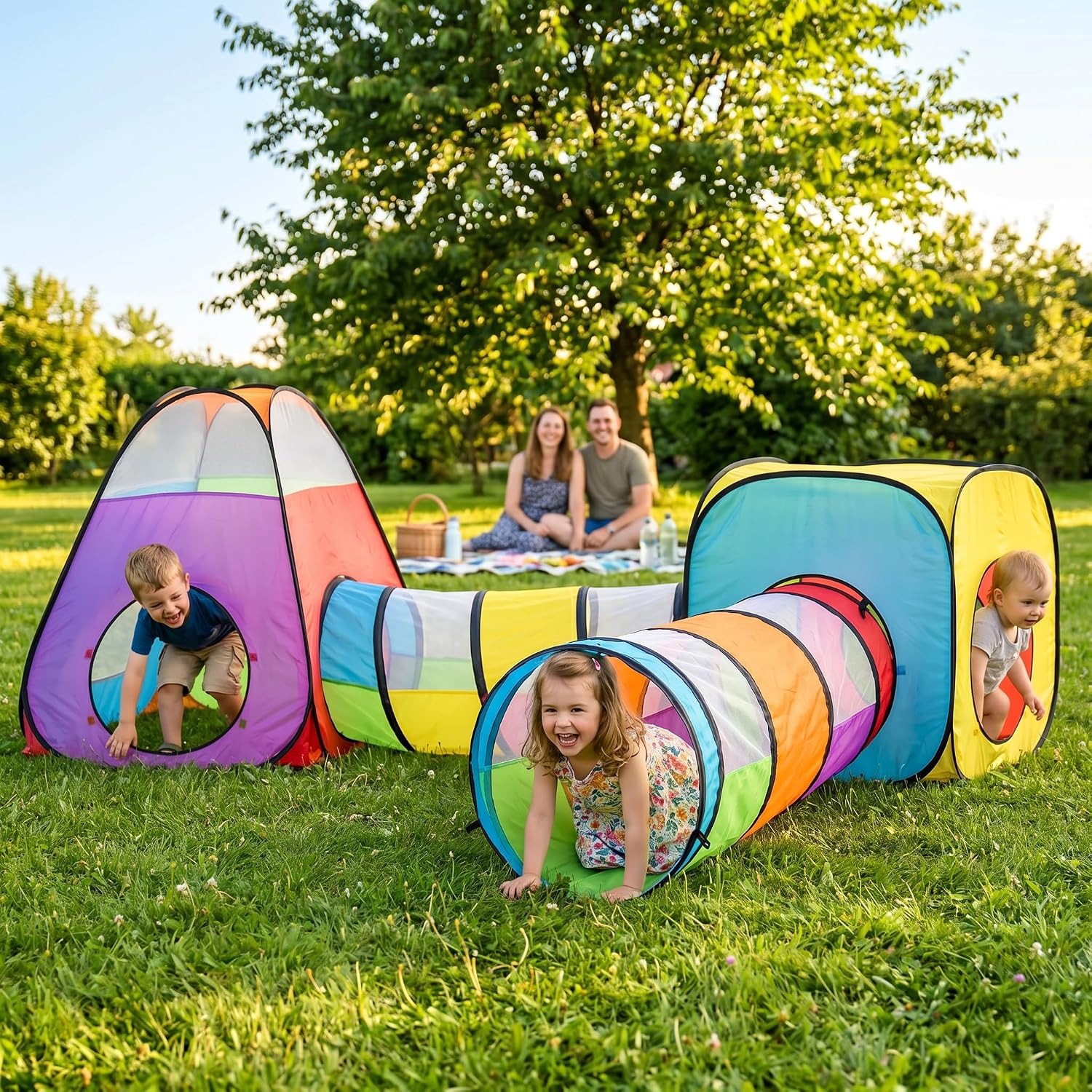
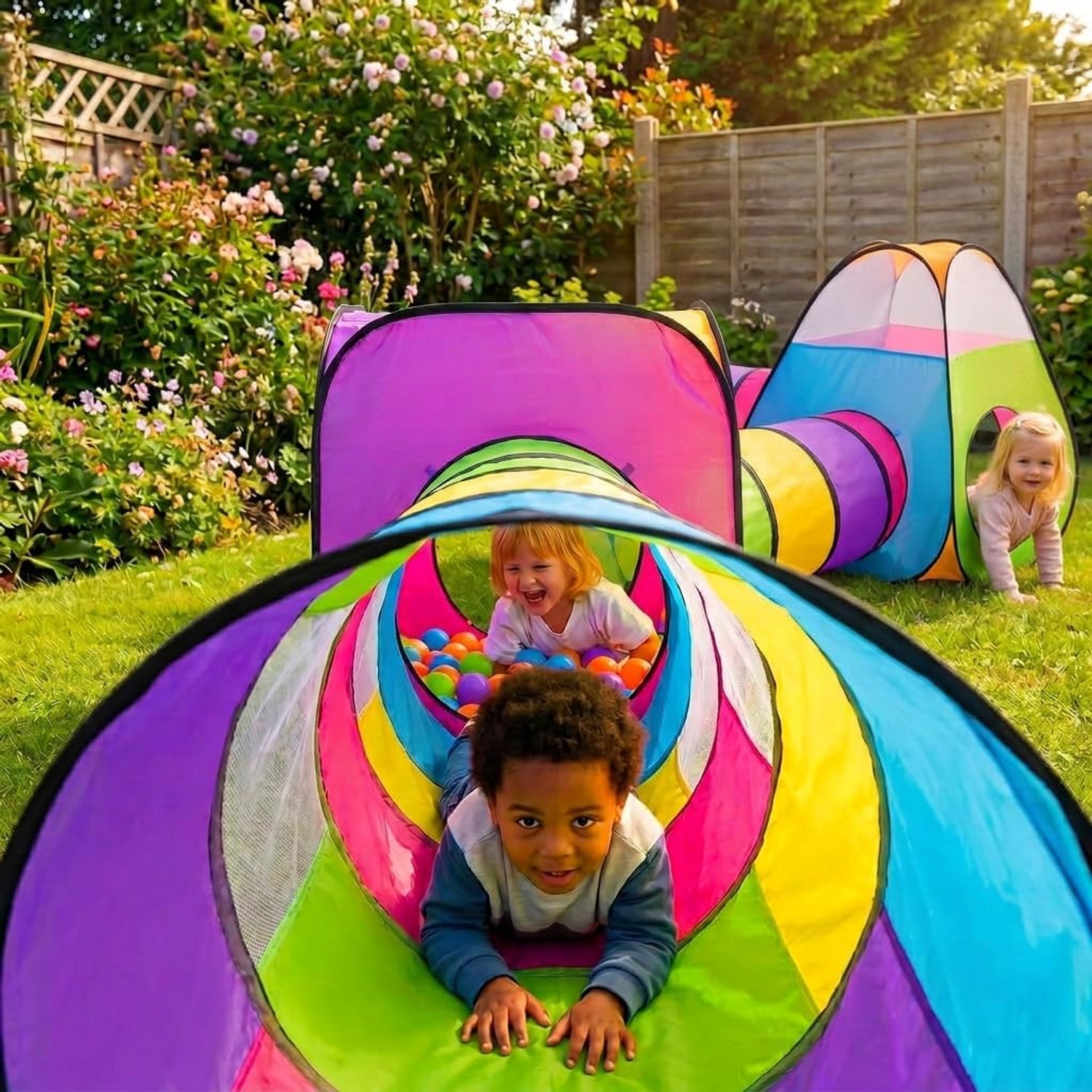
A four piece pop up tent and tunnel set takes that idea further, because it is not one fixed shape. Four connecting pieces means you can build a short run today and a long course tomorrow. The novelty resets without you buying anything new.
How a pop up set works
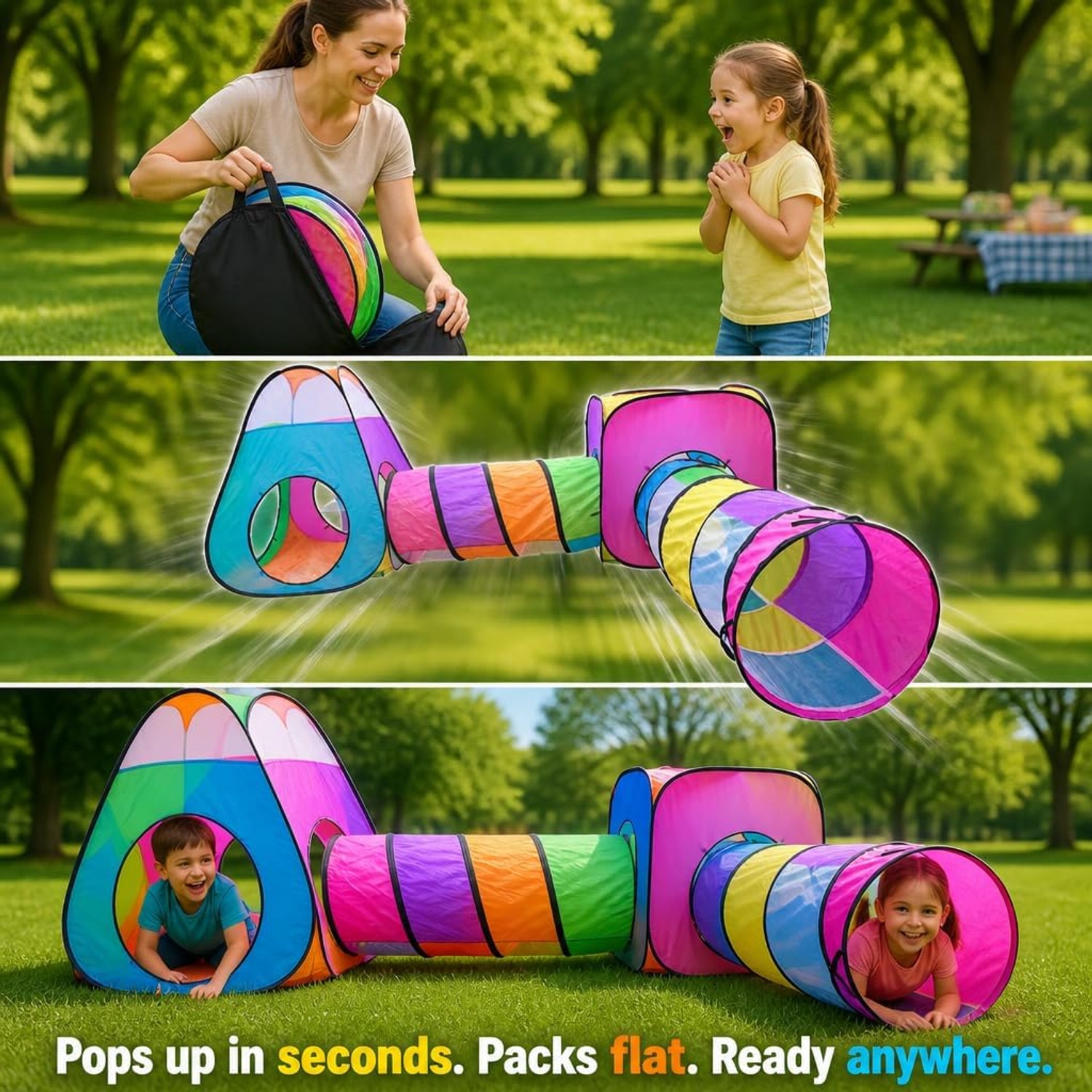
The clever part is the frame. A flexible plastic hoop is sewn into the edge of the polyester fabric. Under tension in the carry case it sits flat. The moment you release it, it springs back to its round shape and holds the tunnel or tent open on its own.
That is why there is no assembly. No poles to thread, no fittings to match up, no diagram to squint at. You open the zip, let the pieces out and they are ready.
Folding is the part that catches people out. You are not rolling it, you are twisting it. Push the sides inward so the hoop forms a figure of eight, then fold one loop over the other into smaller circles and press flat. The first attempt usually feels like wrestling. By the fourth it takes ten seconds, and plenty of six year olds can do it unaided.
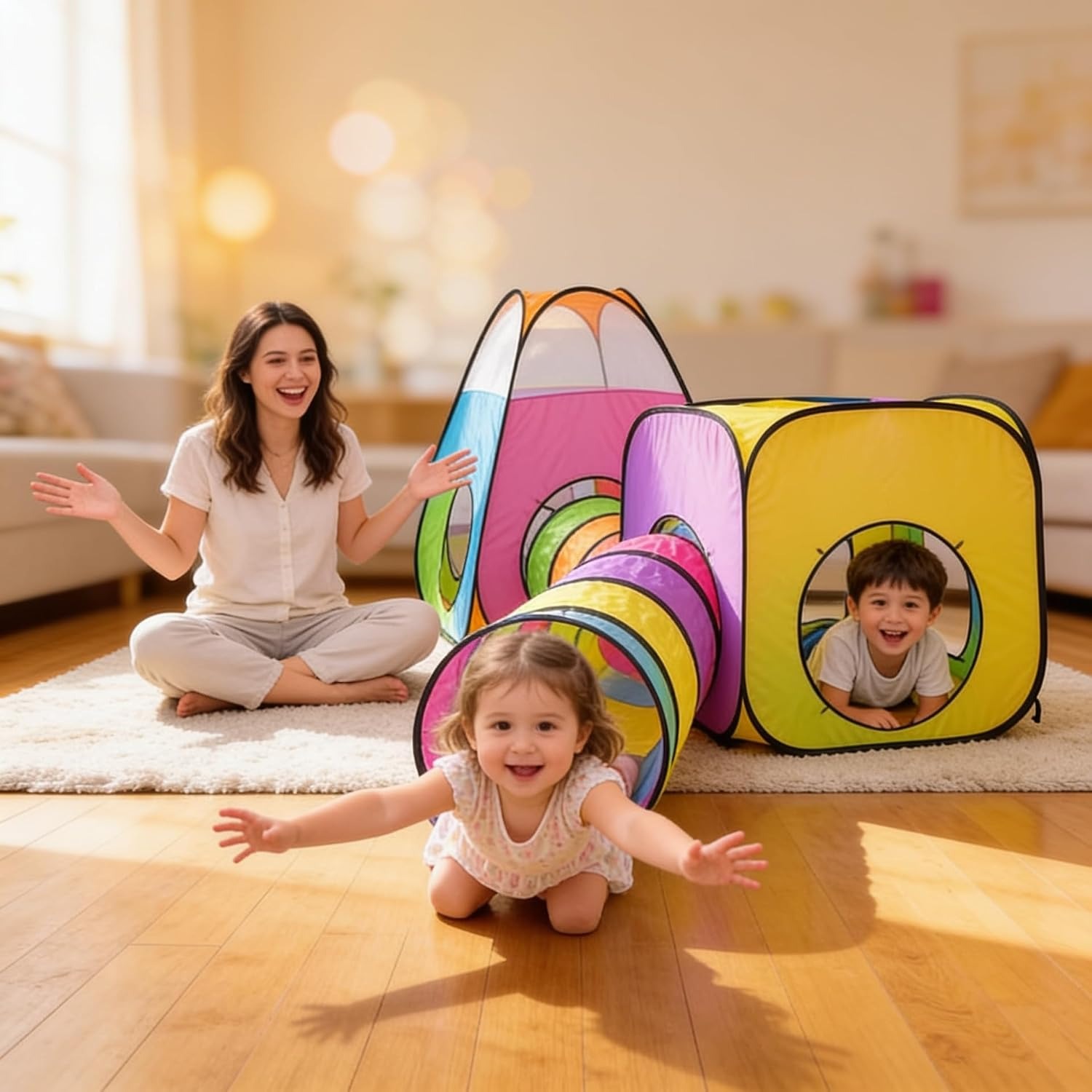
The mesh panels do two quiet jobs. They keep air moving so the inside does not get stuffy on a warm day, and they let you see what is going on without getting down on the floor. A parent who can see a child from the sofa supervises more calmly than one who has to keep checking.
Who this suits
The suggested age range runs from 12 months to 10 years, which is wide, and it is wide for a reason. The way children use it changes as they grow.
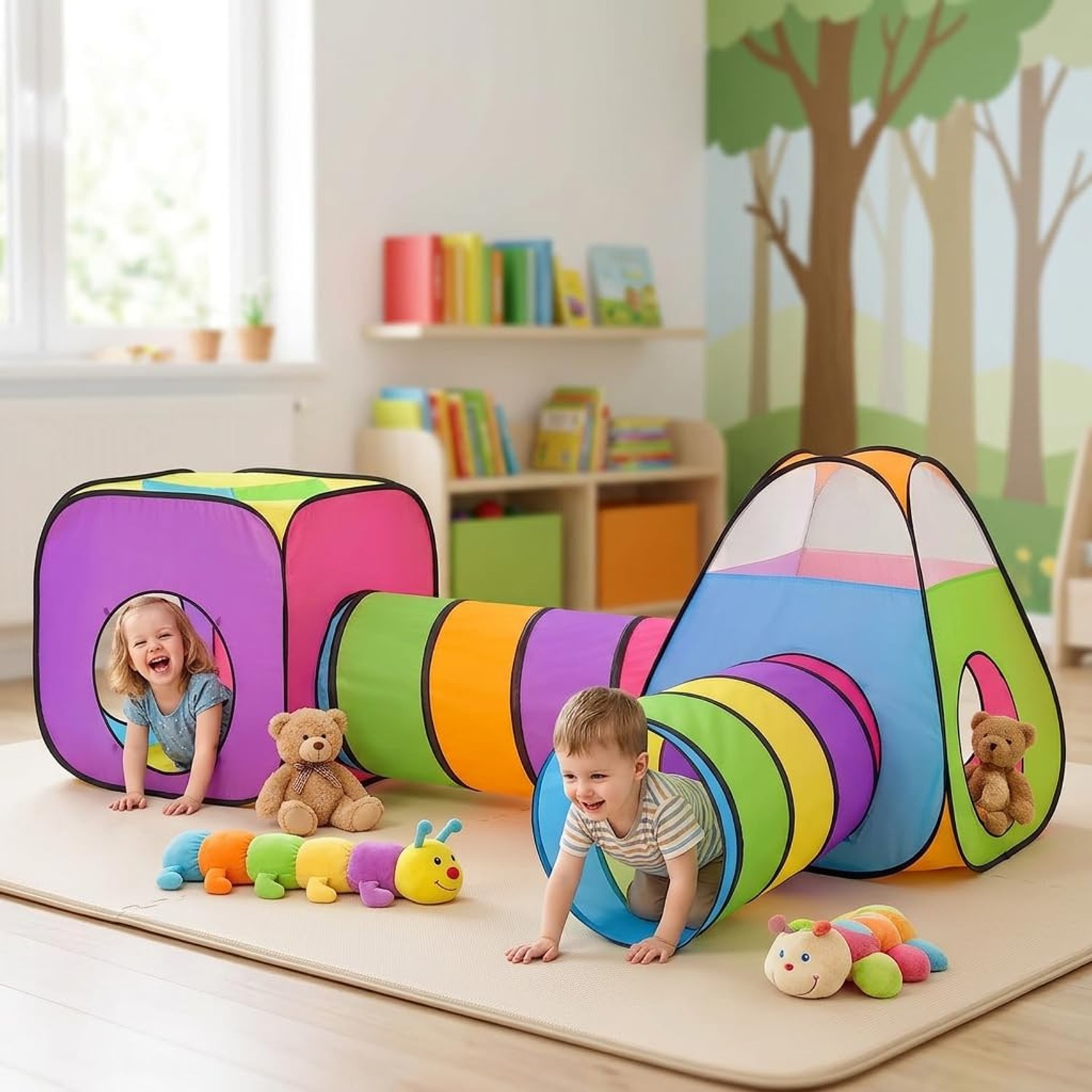
A crawling young child or new walker treats a single tunnel as a destination. They go in, they look back at you, they come out, they laugh. That is the whole game and it is enough.
Two and three year olds start chasing. They want someone at the other end. This is where a longer connected run earns its keep, because the loop gets more interesting with turns in it.
From about four upward the set becomes raw material. It is a fort, a cave, a spaceship, an obstacle course with rules that change every ninety seconds. The best play tunnel set at this age is the one that can be rearranged, and four pieces give enough variety to keep that going.
Older children, closer to the top of the range, mostly use it outdoors as a timed course or as a base in a bigger game with siblings and friends.
Matching the set to your space
Before buying any play structure, measure the floor, not the room. You need a clear run, free of coffee tables and power cables.
The listed dimensions for this set are 32 x 29 x 29 inches. For a full connected layout you want a stretch of clear floor considerably longer than that, because the pieces join end to end. In a smaller living room, set up two pieces instead of four and leave the rest in the case. Nothing is lost by doing that, and a shorter run is still plenty for a young child.
Outdoors you have more room but different problems. The whole set weighs 3 pounds, so even a light breeze will shift it. Use it on calm days, keep it on flat grass away from thorny plants and sharp edges, and bring it in when you are done. If you want the best backyard play tunnel experience, set it up on a lawn rather than concrete, since grass is kinder to both the fabric and the knees.
Storage is often the deciding factor. The set folds flat into its zip case, which slides behind a door, under a bed or onto a closet shelf. That is a real advantage over rigid play equipment that lives in the corner forever.
Things worth checking before you buy
Think about who else is in the house. If you have a crawling young child and a boisterous seven year old, a long course may create traffic problems. Two shorter runs in separate rooms often works better.
Consider how often you will travel with it. A light foldable set is easy to take to a grandparent's house, a vacation rental or a park. If that is your main use, the carry case matters as much as the tunnels.
Think about flooring too. Carpet and rugs are quieter and softer. On hard floors, put a rug or play mat underneath so knees and elbows have some padding.
And be realistic about noise. A tunnel set does not make children quieter. It makes them busier in one place, which is usually the trade you want.
Looking after it
Care is simple because there is not much to go wrong. Spot clean with a damp cloth and a little mild soap, then let the fabric dry fully before folding. Do not put it in the washing machine or tumble dryer, because the frame is sewn in and will not survive the spin.
After outdoor use, shake out grass, sand and crumbs before packing it away. Dirt left in the folds grinds against the fabric over time.
If the set gets rained on or damp from dewy grass, open it out somewhere airy and let it dry properly. Zipping damp fabric into a closed case is the fastest way to get a musty smell you then have to deal with.
Store the case somewhere dry and avoid stacking heavy boxes on top of it. The plastic frame is flexible, not indestructible, and constant pressure in one spot is the main thing that shortens its life.
Finally, give it a quick look over now and then. Check seams, check that the frame still springs back cleanly and check the mesh for tears. A small repair caught early keeps a set in service for years.
The short version
A four piece pop up tent and tunnel set is a practical answer to a common problem, which is a child with energy and a house with limits. It opens in seconds, it rearranges into different layouts, it works inside and outside, and it folds flat into a bag when you have had enough.
This one is polyester over a flexible plastic frame, weighs 3 pounds, measures 32 x 29 x 29 inches and is suggested for ages 12 months to 10 years. Mesh panels keep air moving and keep your child in sight.
Measure your floor, start with fewer pieces if space is tight, keep it out of strong wind, and dry it before you fold it. Do that and you will get years out of it rather than a season.