
The complete guide
Choosing a Princess Castle Play Tent That Actually Gets Used
The problem with most play tents
Plenty of families buy a play tent, watch their child love it for a fortnight, then find it shoved behind the sofa. The reason is almost always the same. The tent was too small, too flimsy, or too boring to hold attention once the novelty wore off.
Small pop-up tents are the usual culprit. A child fits in one for about a year, then outgrows it. Worse, if there are two children in the house, a one-person tent creates a queue and a fight. The tent that lasts is the one with enough room for a friend, enough height to sit up properly, and enough character that a child wants to make up stories inside it.
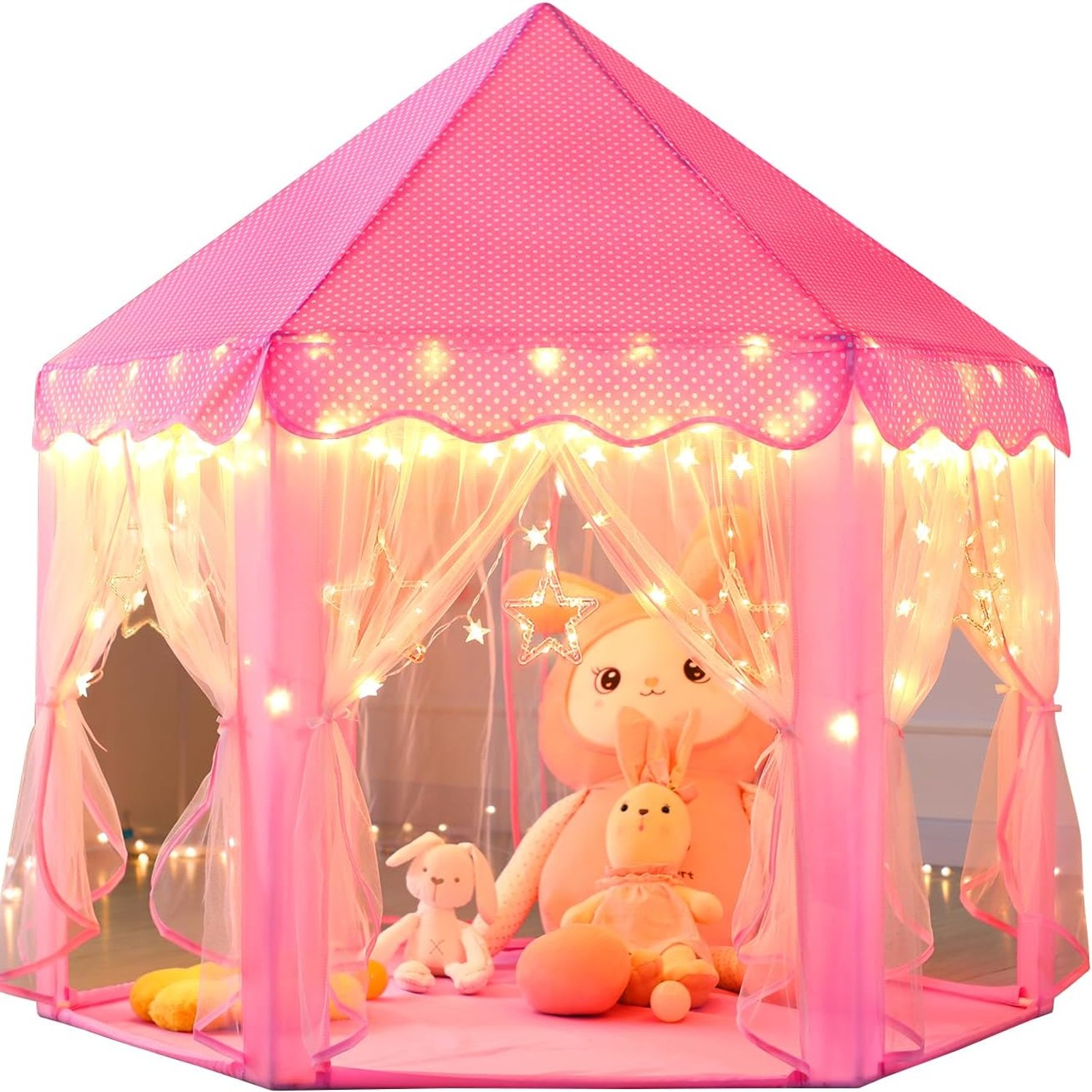
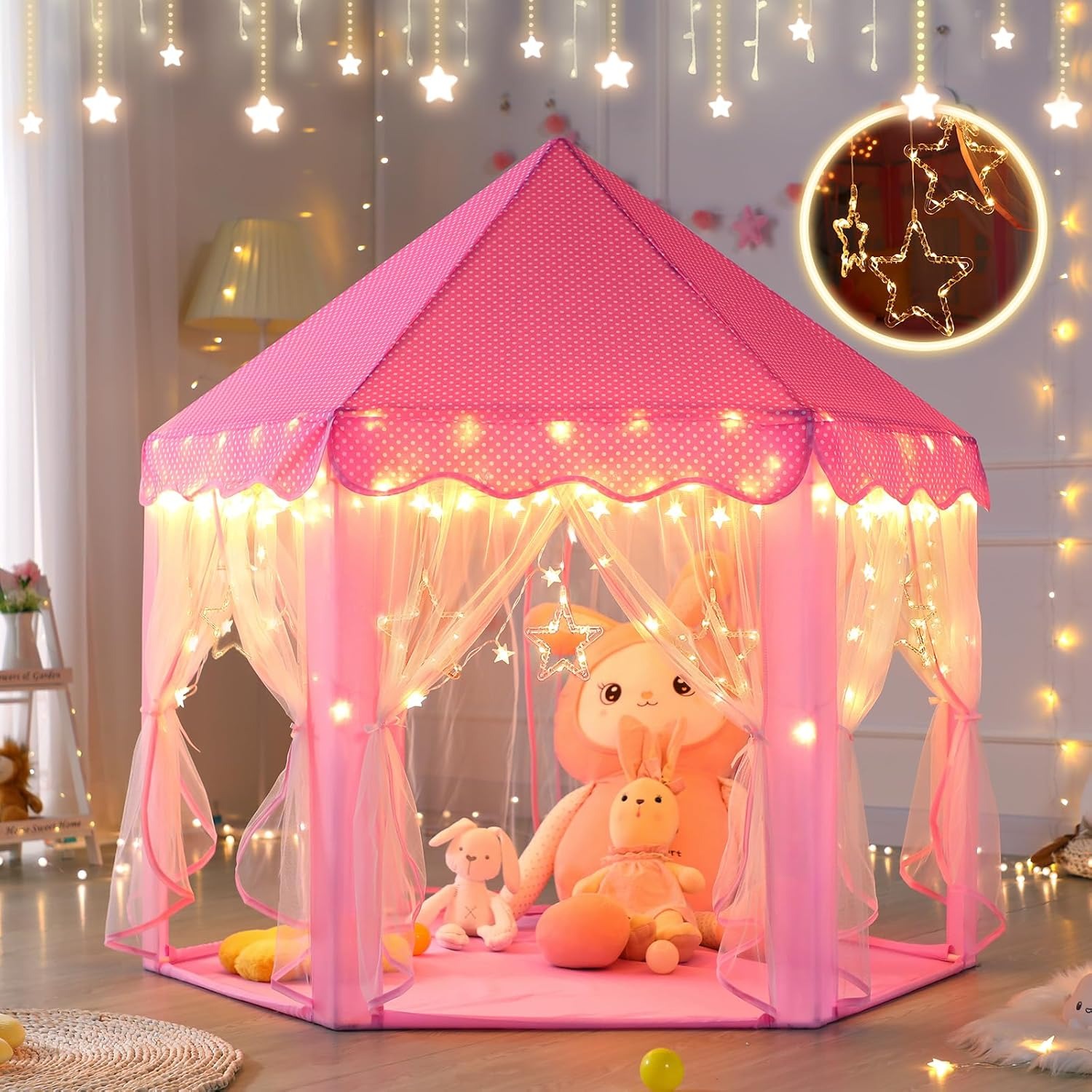
That is the brief this large princess castle play tent is built to meet. The castle shape gives it a reason to exist in a child's imagination. The size gives it a reason to exist in the room.
How it works
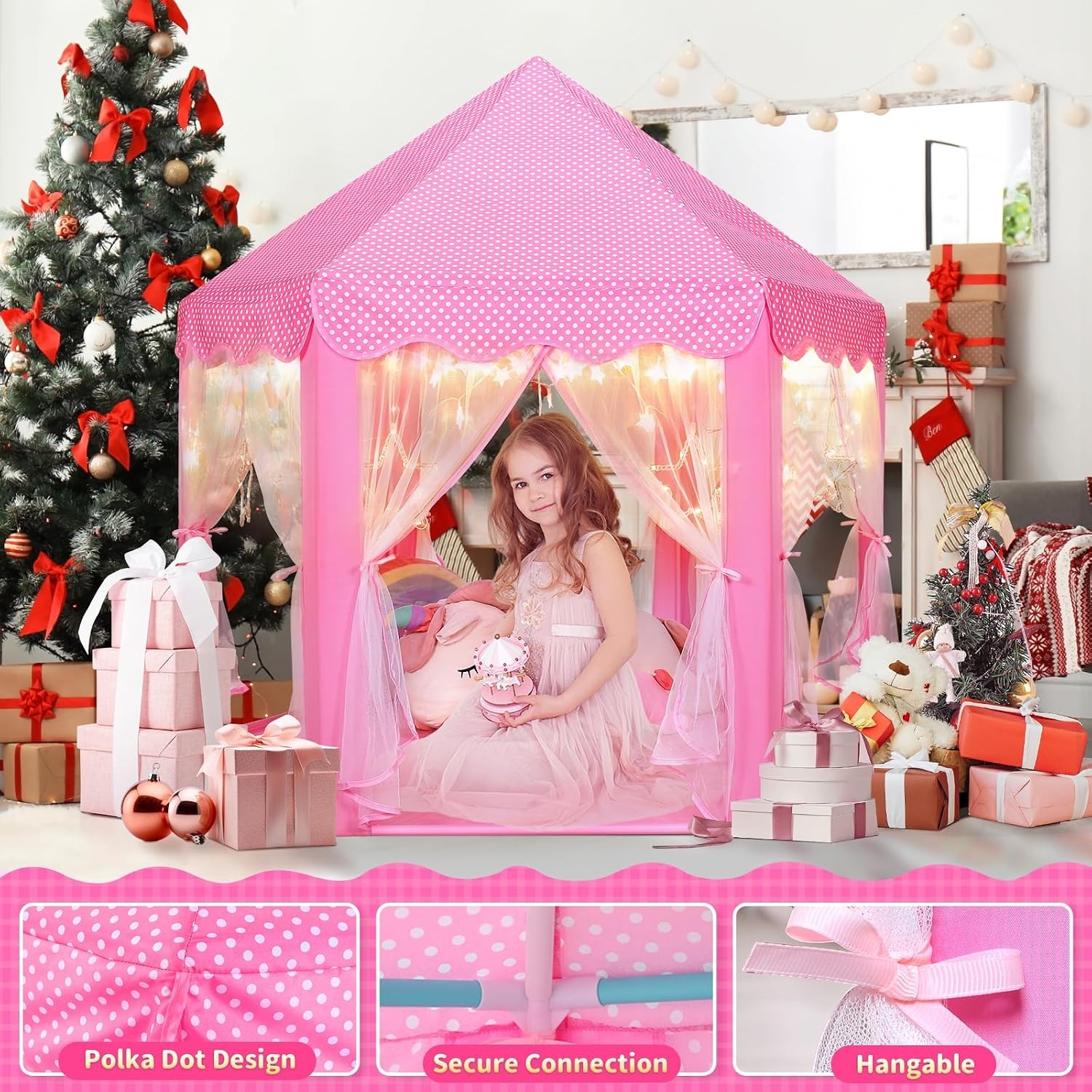
The structure is simple and that is a good thing. Fiberglass poles push into plastic connectors to make a frame, and the pink polyester shell fits over the top. There is no complicated mechanism to break and nothing you need a screwdriver for.
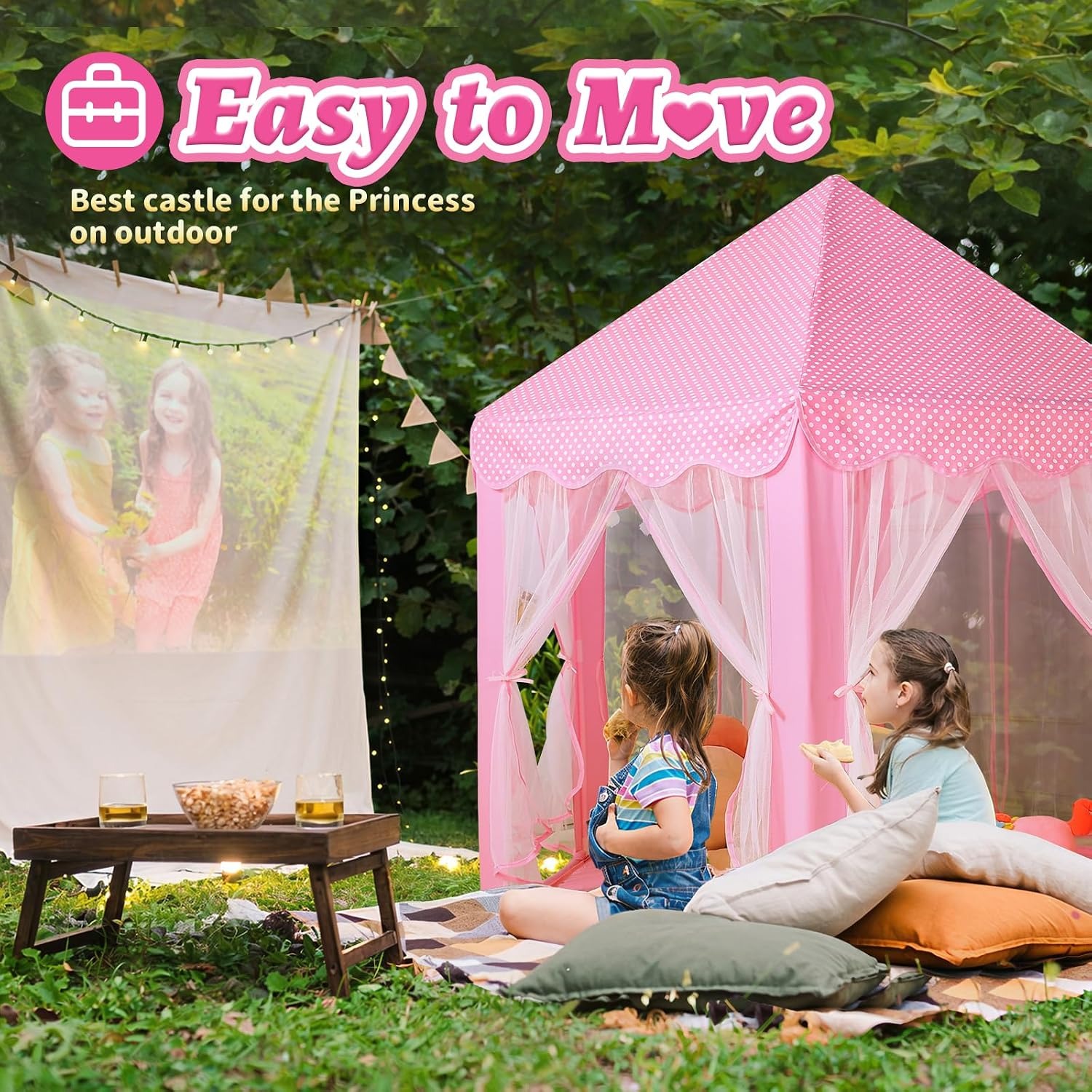
Fiberglass is a smart pick for a frame like this. It is light, which means an adult can lift the whole assembled tent and move it to another corner. It also has a bit of flex, so a knock from a passing child does not snap it. Polyester taffeta on the outside holds its color, resists creasing and wipes clean with a damp cloth, which you will appreciate the first time somebody takes a cookie inside.
The castle details do the rest. Turret shapes along the roofline and a doorway at the front make it read as a building rather than a bag of fabric. Children respond to that difference more than adults expect.
The star lights change everything
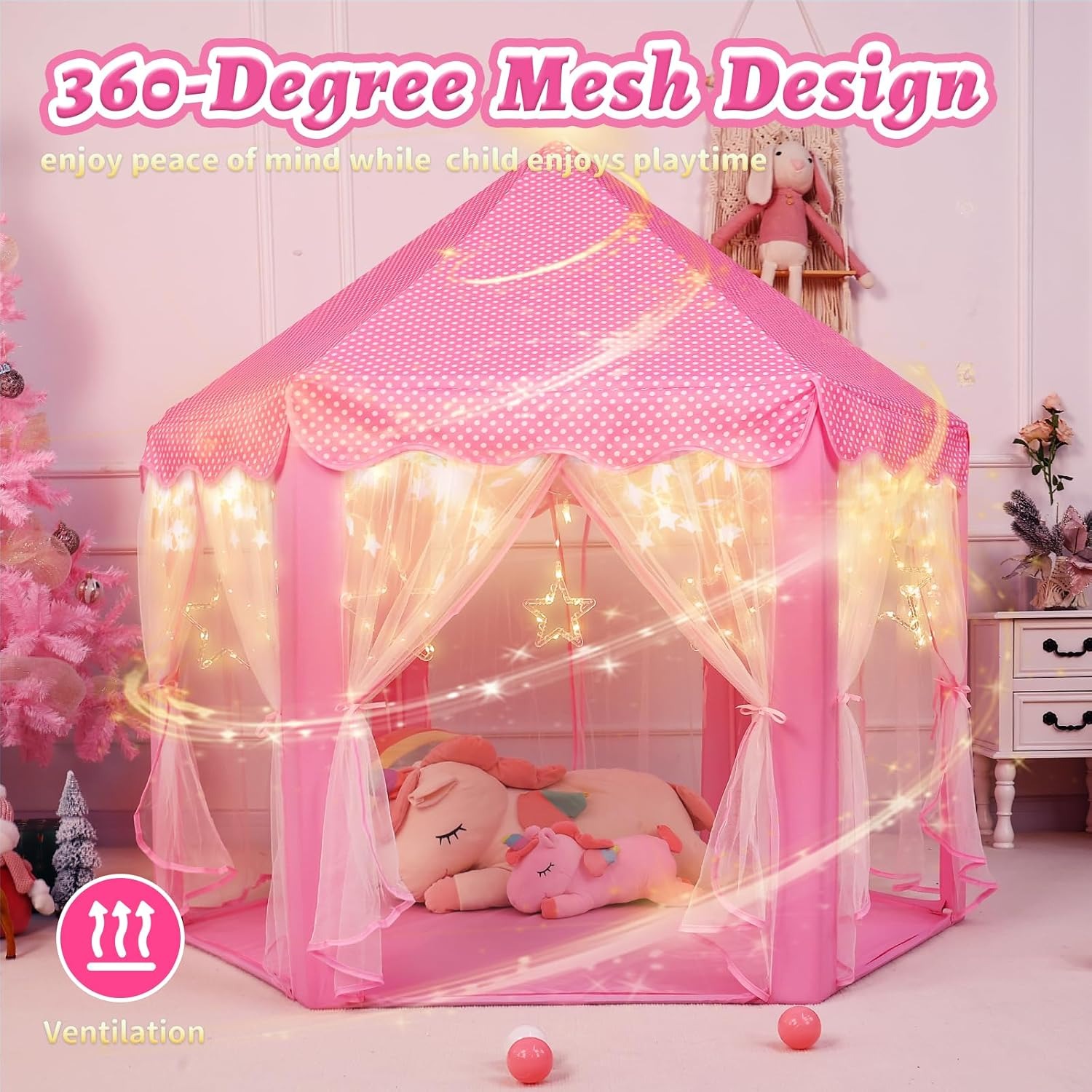
Star lights come in the box, and they are not a throwaway extra. Draped around the inside of the roof, they turn a daytime toy into an evening one.
This is where the tent earns its keep. A child who resists bedtime will often settle happily in a glowing tent with a picture book. The light is soft, the space is small and enclosed, and the whole thing feels like a treat rather than a routine. Parents who use the tent as part of a wind-down routine tend to report it still being in daily use months later.
It also makes the tent useful for the in-between hours. Late afternoon in winter, when it is dark outside and nobody wants to go to the park, a lit tent gives children somewhere to be.
Who it suits
The suggested age range is 36 months to 9 years, which is a wide span. At the younger end, a three year old treats it as a den and a place to drag every soft toy they own. At the older end, it becomes a reading spot, a space to talk to a friend away from adults, or a base for longer imaginative games.
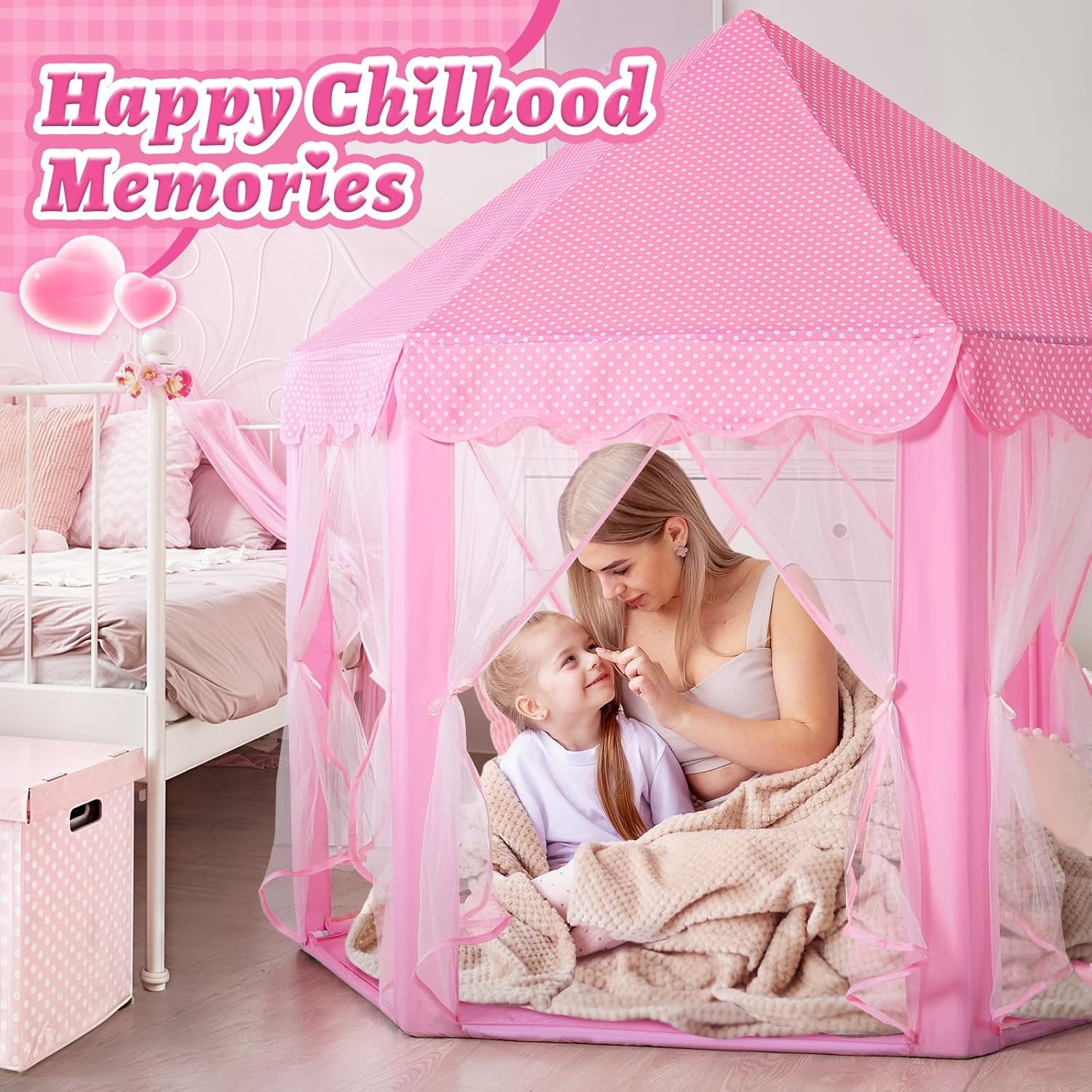
It works especially well in a few situations. Shared bedrooms benefit because it gives one child somewhere to retreat to. Only children often use it as the stage for solo play, which is valuable in its own right. Families with a spare corner in a living room or playroom get a dedicated kids zone without building anything permanent.
It is less suited to very tight rooms. At roughly 55 inches square and 55 inches tall, it needs real floor space, and shoving it against furniture on three sides spoils the effect.
How to choose and where to put it
Start with a tape measure. Mark out a square a little over five feet on each side and check that a child can still walk around at least two faces of it. Check the ceiling too, though 55 inches clears almost any room with a flat ceiling. Sloped attic ceilings are the exception worth checking.
Think about flooring next. Carpet is kindest for a play tent because it is warm and quiet. On hard floors, a rug inside makes a big difference to how long children stay put. Cushions and a small basket of books finish the job.
Position matters more than people think. Against a wall, away from radiators and out of the main walking route through the room is the sweet spot. A tent in a doorway gets knocked over and resented. A tent in a quiet corner becomes a fixture.
If you plan to use it outside too, pick flat dry ground and keep it off gravel, which can be hard on the fabric floor. Bring it in before dew settles and before the weather turns.
Setting it up the first time
Lay everything out and count the parts against the instruction sheet before you start. Poles, connectors, the fabric shell and the star lights should all be there. It takes two minutes and saves ten.
Build the frame flat on the floor first, then stand it up and slide the fabric over. Working alone is perfectly possible, though a second pair of hands makes the fabric stage easier. If a pole feels like it needs force, you probably have it in the wrong connector. Back up and check rather than pushing harder.
Once it is up, let your child be the one to put the cushions and toys in. The tent becomes theirs faster that way.
Keeping it in good shape
Care is low effort. Wipe the polyester with a damp cloth and a drop of mild soap when it needs it, then let it air dry fully. Skip bleach and strong cleaners, which fade pink fabric quickly.
Keep it away from heat sources and anything with a flame. That rule matters more than any other. Candles, heaters and fabric tents do not mix.
If you take it down for storage, bundle the poles together with an elastic band and keep the connectors in a small bag inside the folded fabric. Lost connectors are the most common reason a perfectly good tent never goes up again. Store everything somewhere dry.
For outdoor use, the rule is simple. If it gets damp, dry it before folding. Fabric packed away wet develops a smell that is hard to shift.
Getting more out of it
A few small additions make a big difference. A soft rug, two or three cushions and a shallow basket for books turn the tent into a proper nook. Some families add a battery tea light, a small cuddly toy collection or a child-height box of dress-up clothes beside the door.
Rotating what goes inside also helps. Swap the books every couple of weeks, or move the tent to a different room for a change of scene. Children treat the tent as new again when its surroundings change.
For parties, it works as a quiet corner for children who need a break from the noise, and it photographs well as a backdrop. It packs down fast afterwards.
The short version
This is a large pink castle play tent, 55 by 55 by 53 inches, made from polyester over a fiberglass frame. It fits up to three children, comes with star lights, poles, connectors and instructions, and suits ages three to nine. It works indoors and outdoors on dry days.
Buy it if you have the floor space and want a play tent that lasts beyond the first month. Measure your corner, pick a quiet spot, add a rug and some books, and it will earn its place. If the space is tight, say so before you order and we will tell you straight whether it fits.