
The complete guide
Choosing A Kids Teepee Tent That Actually Gets Used
The problem with blanket forts
Every parent has done it. Two dining chairs, a sheet, a couple of heavy books to hold the corners down. The kids are delighted for about ten minutes, and then one of them leans on a chair and the whole thing comes down on their heads. You rebuild it. It falls again. By the third collapse everyone has lost interest and you have a sheet on the floor.
Children want a space that is theirs. It is a normal part of growing up, that urge to have a small territory where adults do not quite fit. The trick is giving them something that holds its shape and does not take over the living room permanently. That is what a kids teepee tent does well, and it is why the Happy Hut Pop Up Teepee Tent sells the way it does.
How this teepee actually works
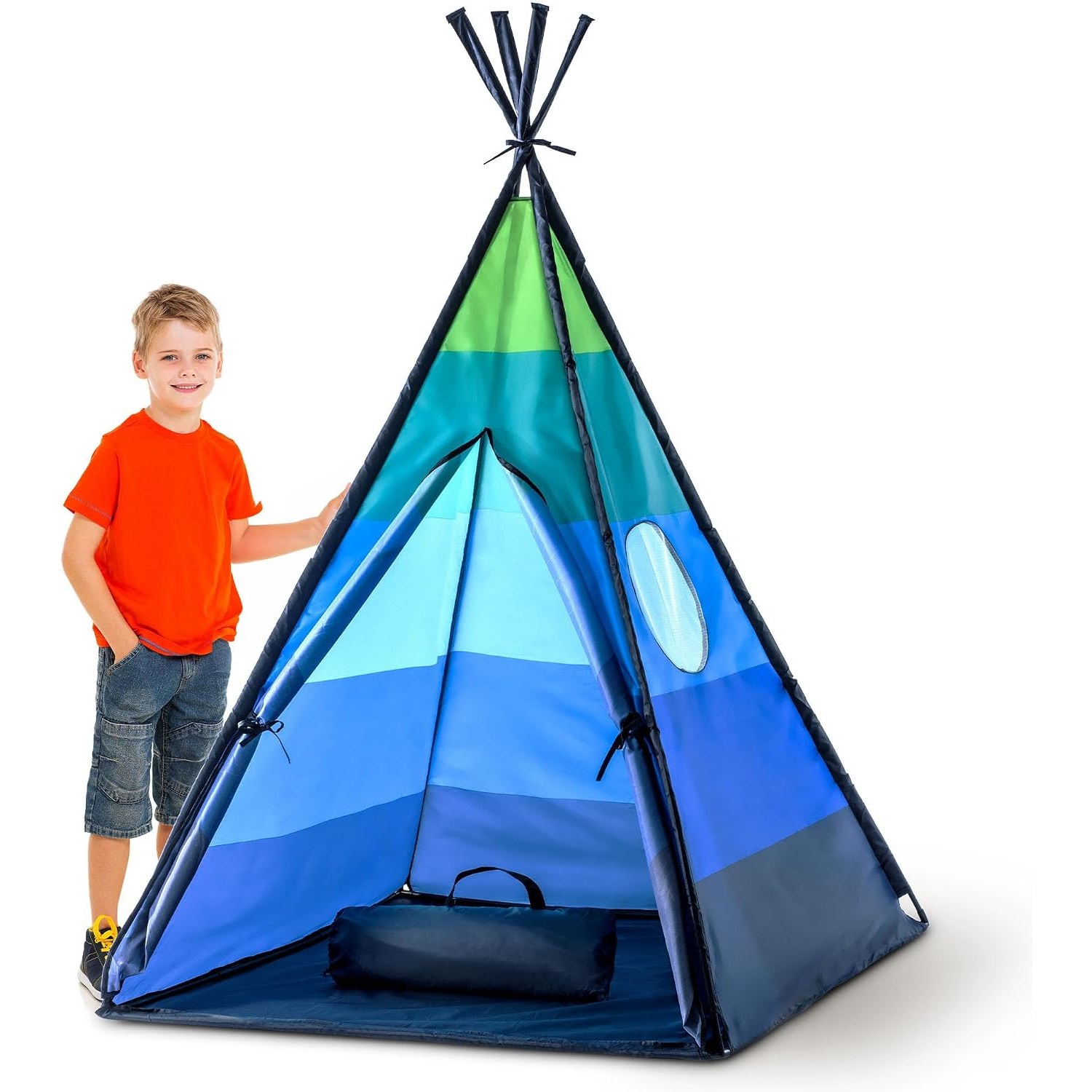
The design is deliberately plain. Foldable aluminum poles form a four-sided frame. The polyester shell slips over them and the poles tie off near the peak. No screws, no fiddly connectors, no tools. You unfold, insert, tie, done.
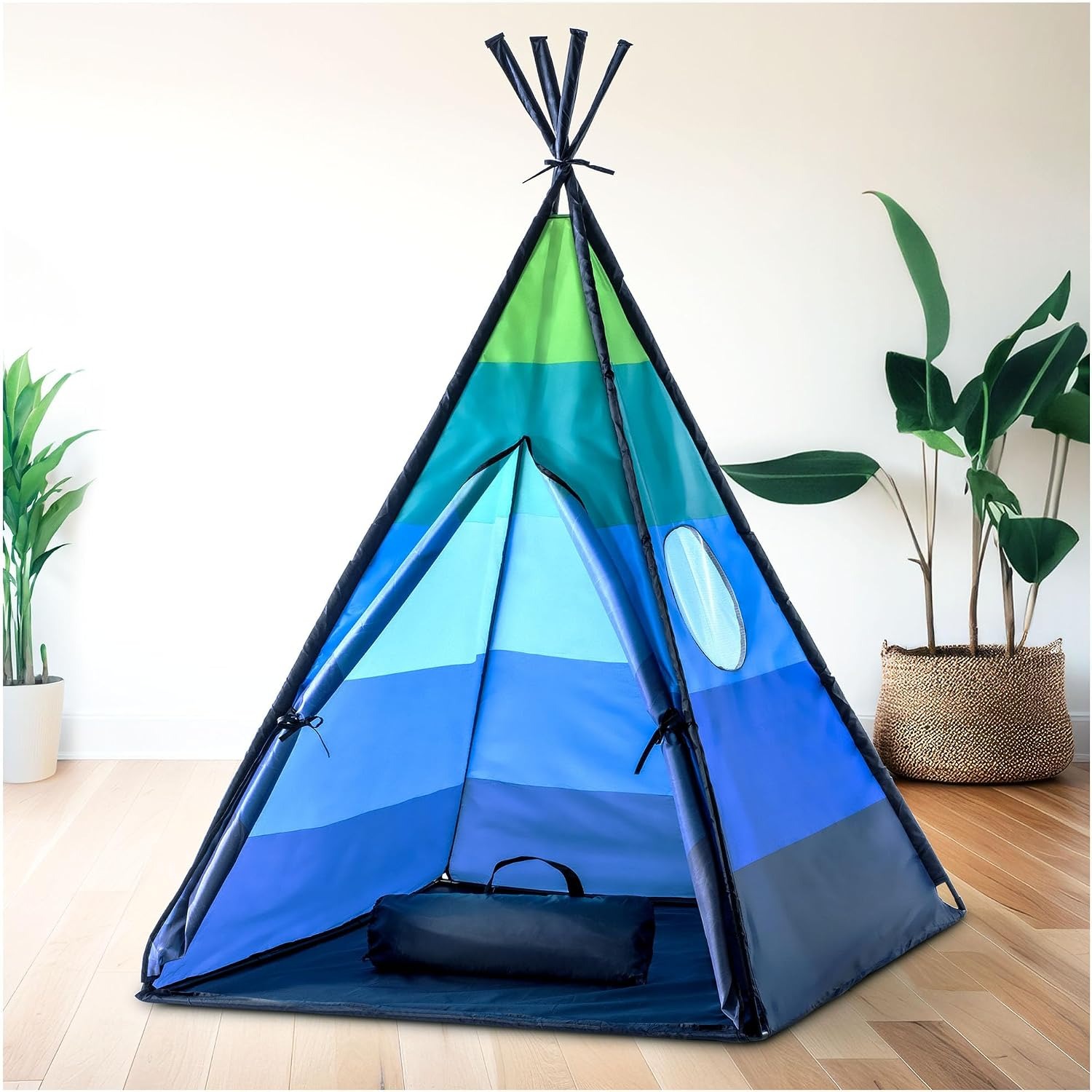
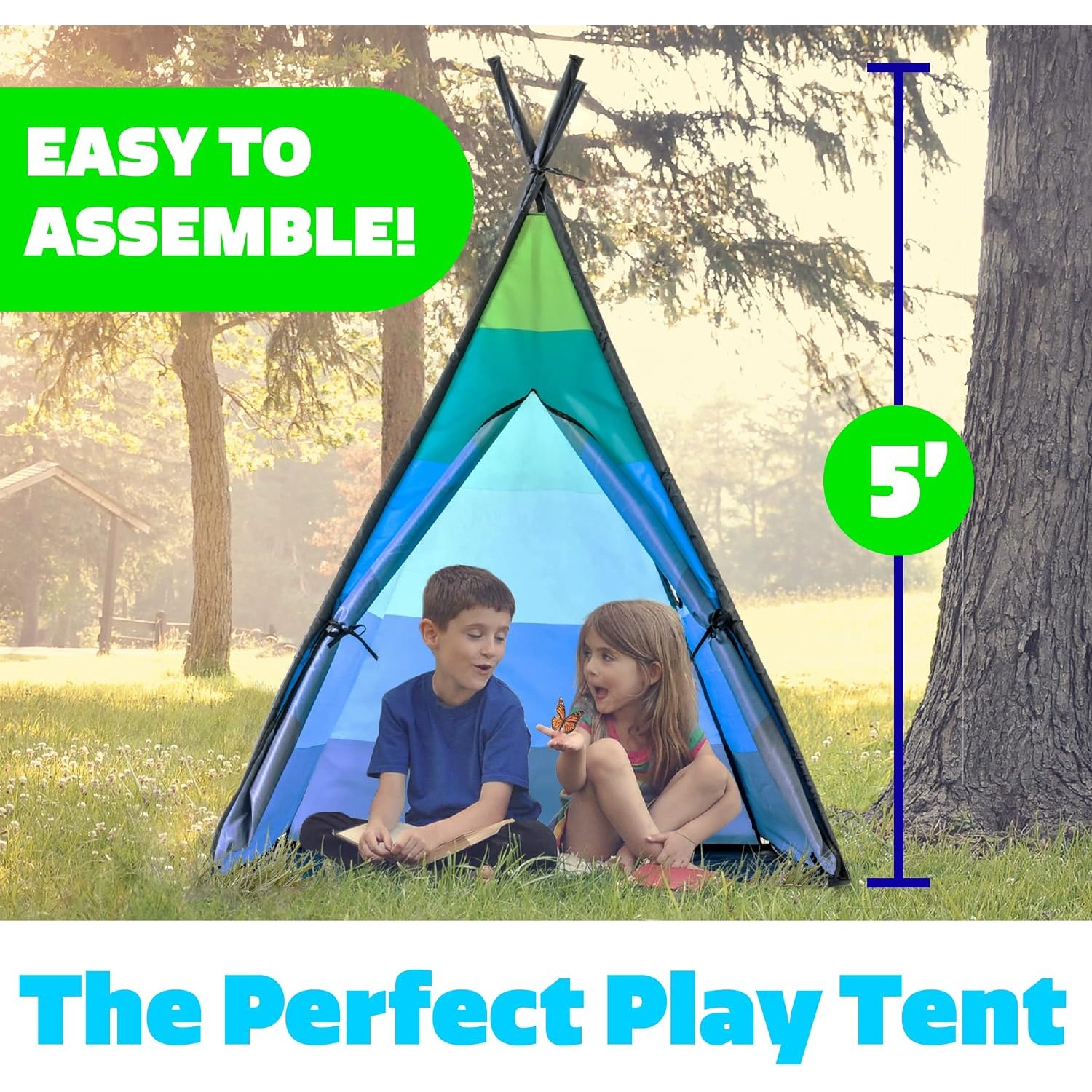
What you end up with is a square-based tent 43 inches on each side, rising to 62.5 inches at the top. That height is the part worth paying attention to. A lot of cheap play tents top out around four feet, which means children have to crawl everywhere. At just over five foot, a small child can stand up inside this one. It changes how they use it, from a crawl-in box to an actual room.
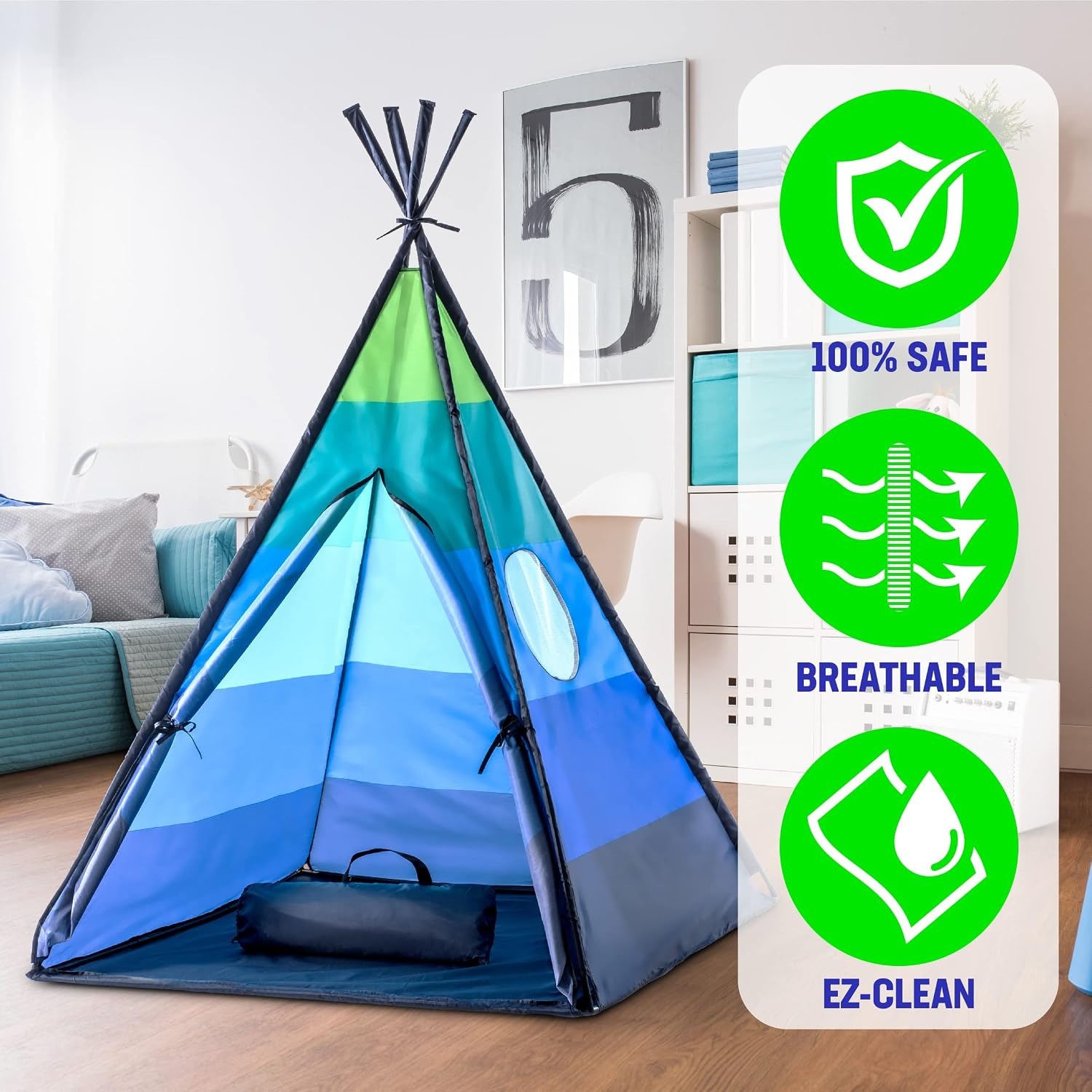
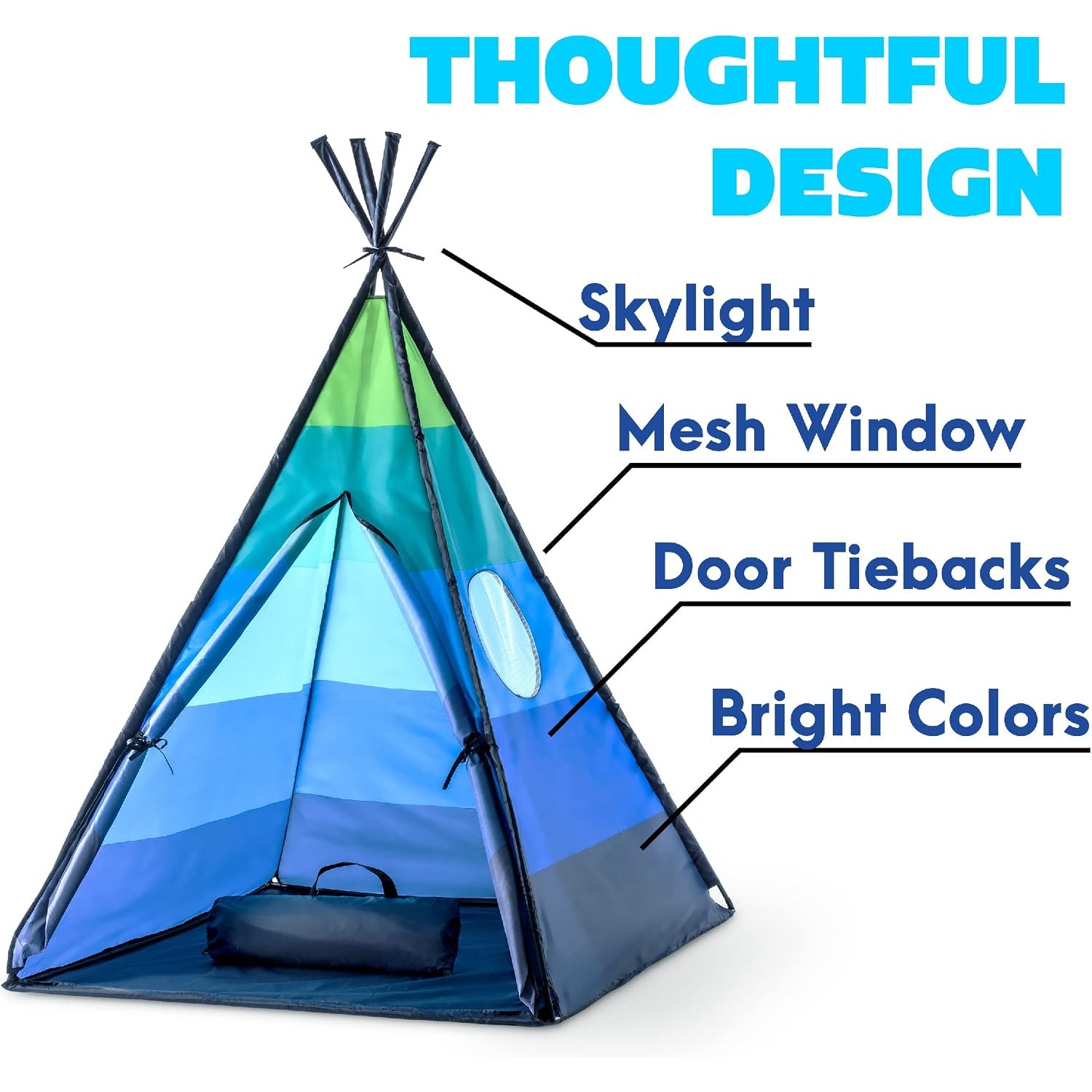
The door is wide and ties back on both sides. Mesh panels sit in the walls so air moves through, which matters more than you think when two or three kids are in there on a warm afternoon. Those same mesh windows let you glance over from the kitchen and see what is going on without having to open anything.
The whole assembly weighs 1.08 kg. That is light. You can pick it up fully built and shift it from the playroom to the bedroom with one hand.
Who it suits
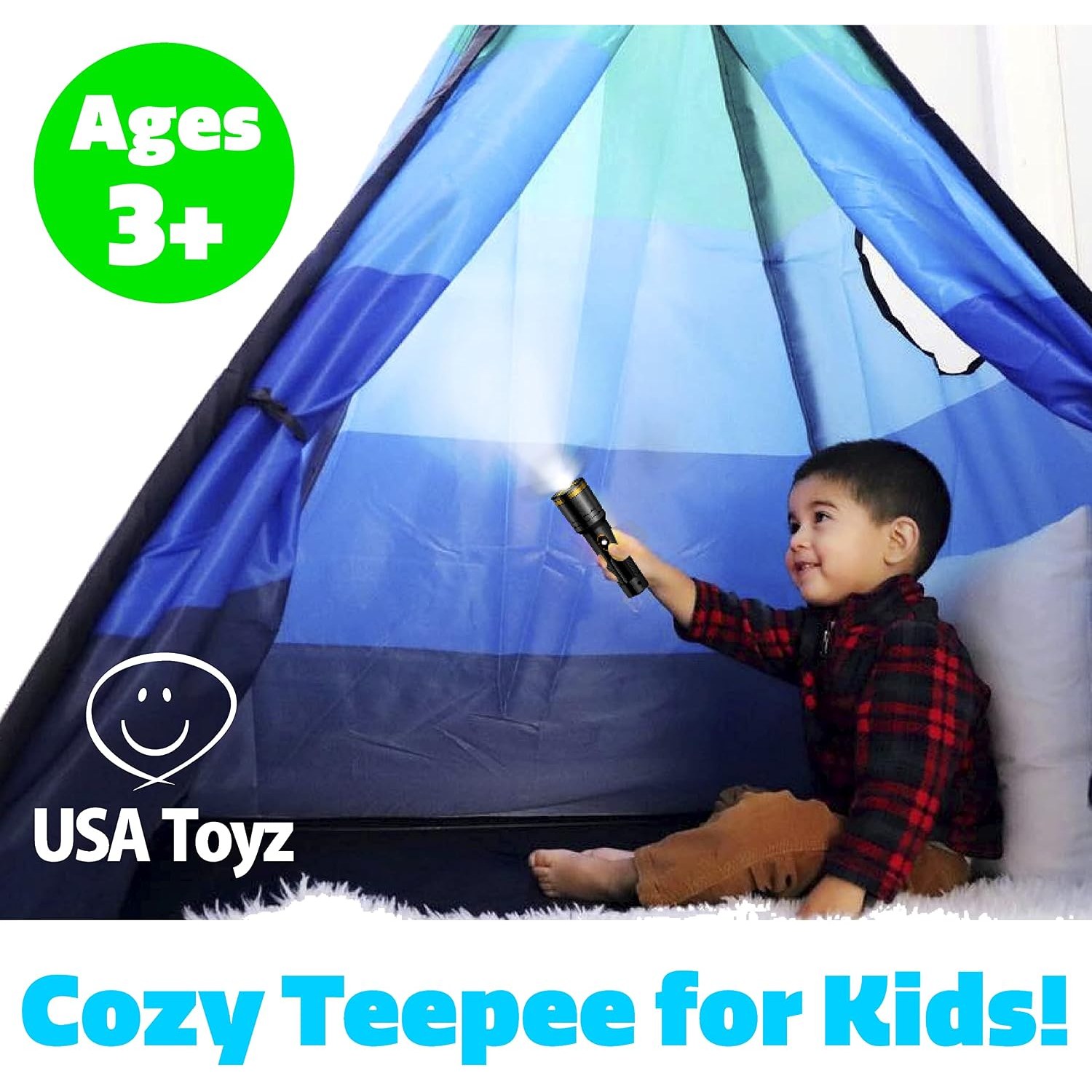
The maker recommends it for ages 3 and up. That lines up with what the tent is for. By three, most children are steady enough on their feet to go in and out without knocking the frame around, and they have the imagination to turn a blue tent into a shop, a cave or a rocket.
Younger children can enjoy it too, with an adult in the room. The caution is not about anything sharp, it is about little hands pulling on poles. Supervise until they get the idea that the tent stays standing.
At the other end, it holds up longer than people expect. Six and seven year olds use it as a reading nook tent, somewhere to take a book and a flashlight and be left alone for half an hour. If you have a child who gets overwhelmed by noise, a quiet corner with soft walls can be genuinely useful.
It also suits families who do not have a dedicated playroom. Because it folds into the included tote, you can put it up after dinner and pack it away before guests arrive. A foldable kids tent is a different proposition to a permanent plastic playhouse in the corner of the living room.
How to choose between play tents
A few things separate a tent that gets used from one that ends up at the back of a cupboard.
Height. Covered above, but worth repeating. Anything under about five feet tall limits play to sitting and lying down. Standing room doubles the uses.
Floor space. Square bases give more usable room than round ones of the same width, because kids can line toys along the walls. At 43 inches square, two children fit comfortably and three fit when they are sitting.
Frame material. Thin plastic poles flex and eventually crack at the joins. Aluminium holds its shape, stays light, and does not snap when someone leans on a wall. This tent uses aluminum.
Fabric. Polyester is the sensible choice for a kids play tent. It is light, it does not fray much, and the water-resistant finish here means juice sits on the surface long enough to wipe up rather than soaking straight through.
Pack-down. If you need the floor back, check that the poles actually fold rather than just slide apart into long sticks. These fold, and the tote is sized to take everything.
Ventilation and visibility. Mesh windows do two jobs. They stop the inside turning into a sauna, and they let a parent check in from across the room without an argument about privacy.
Setting it up well
Pick a flat spot. Carpet or a level hard floor both work. Avoid setting it on top of a duvet or a pile of cushions, because an uneven base makes the frame lean.
Give yourself a clear square a bit larger than 43 inches, plus headroom above 62.5 inches. Check for light fittings and shelves before you commit to a corner.
Once it is up, the inside is bare. Most families add something underneath, a small rug, a folded quilt or a play mat. It makes the floor kinder for knees and makes the whole thing feel more like a proper den. A couple of cushions and a soft toy or two finish the job. If you want it to be a reading spot, a battery clip light on one of the poles works well and keeps cords out of the way.
Let children decorate it in temporary ways. Clips, fabric bunting and paper taped lightly to the inside give them ownership without damaging the panels.
Keeping it clean and lasting
Care is simple. Wipe the polyester with a damp cloth, mild soap and water. Do that for everyday marks and do it promptly for anything sticky. Let it dry fully in open air before you touch it again.
Keep it out of the washing machine and the dryer. The panels are shaped to sit on the frame, and a hot wash will distort that fit. Bleach and ironing are also off the list.
The aluminum poles need almost nothing, just keep them dry. Wipe them down if the tent has been somewhere humid.
When you pack it away, make absolutely sure everything is dry. Folding damp polyester into a closed tote is how you end up with a musty smell that is hard to shift. Store the tote somewhere cool and dry, a closet shelf or under a bed.
Give the ties a quick check now and then. If one loosens, retie it before the frame starts to lean.
Using it beyond play
A few extra jobs this tent does quietly well.
It makes decent soft toy storage. Toys go in, the door ties shut, and a room looks tidier in thirty seconds.
It travels. At 1.08 kg in a tote, it fits in a trunk alongside the suitcases and gives a child something familiar in a vacation house or at a grandparent's place.
It works as a calm-down corner. Not a punishment spot, just somewhere soft and enclosed to go when things get loud. Some children settle faster in a small space with fabric walls.
And it photographs well, which is why these things turn up at birthday parties and in nursery corners.
The short version
The Happy Hut Pop Up Teepee Tent is a blue, four-sided children's teepee measuring 43 by 43 by 62.5 inches, built from water-resistant polyester over an aluminum frame. It weighs 1.08 kg, fits up to three children, and comes with a carry tote. Setup takes a few minutes with no tools.
It is recommended for ages 3 and up. The tall peak means kids can stand inside, the mesh windows keep it airy and let you see in, and the tie-back door makes it easy to get in and out.
If you want a kids play tent that stands up properly, cleans with a cloth, and disappears into a bag when you need your floor back, this one covers the basics without fuss.