
The complete guide
How to Choose a Play Tent and Tunnel Set That Actually Gets Used
The problem with young child energy indoors
Anyone with a one or two year old knows the pattern. By mid-afternoon they have energy left and you have run out of ideas. The weather is wrong, the park is closed, and the living room is not designed for a child who wants to crawl, hide and climb. So the child starts climbing the furniture instead.
A play tunnel set fixes a surprisingly specific problem. It gives a small child a physical route to move along, inside the house, without you having to rearrange the room every time. They crawl in one end and come out somewhere else. For a young child, that is genuinely exciting, and they will do it twenty times in a row.
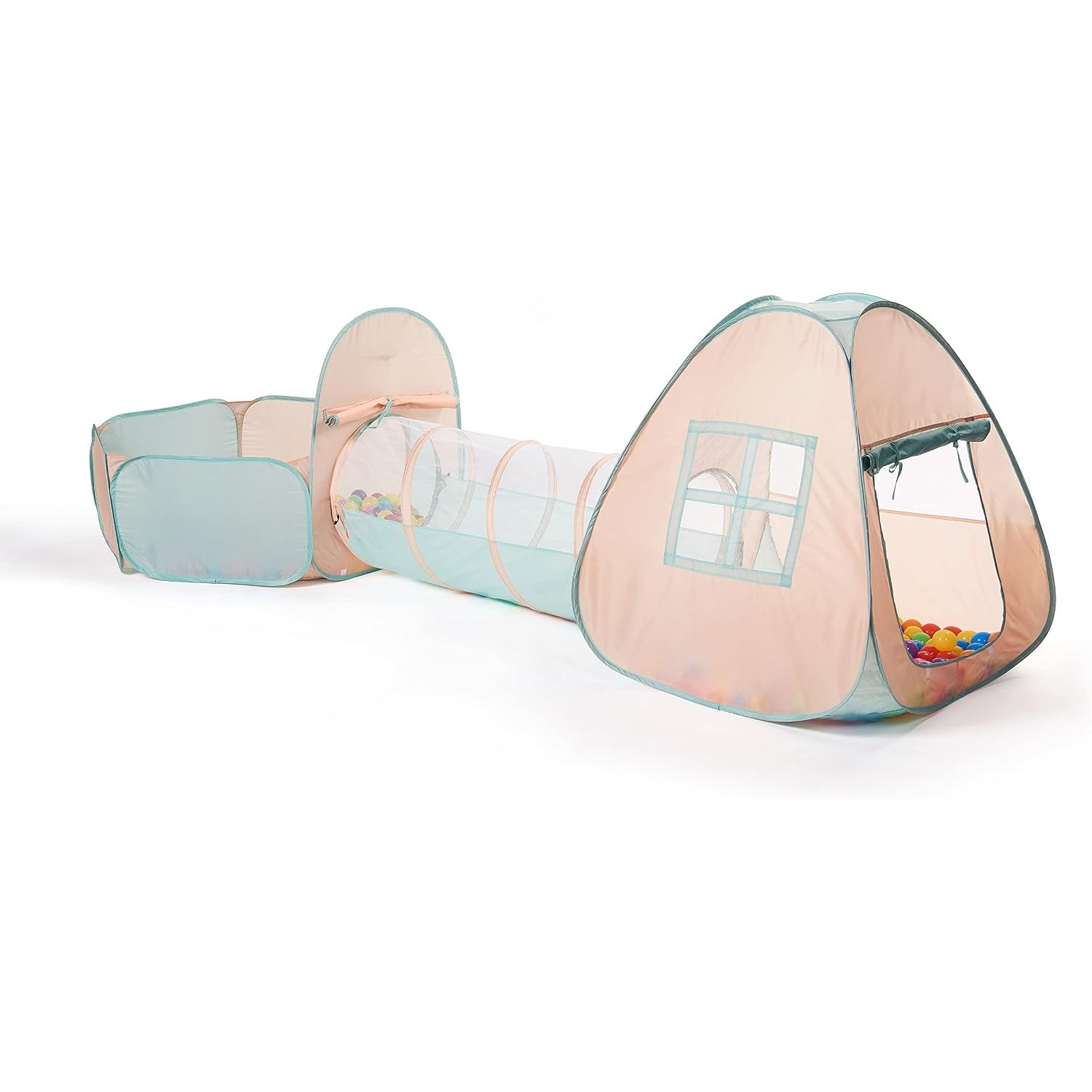
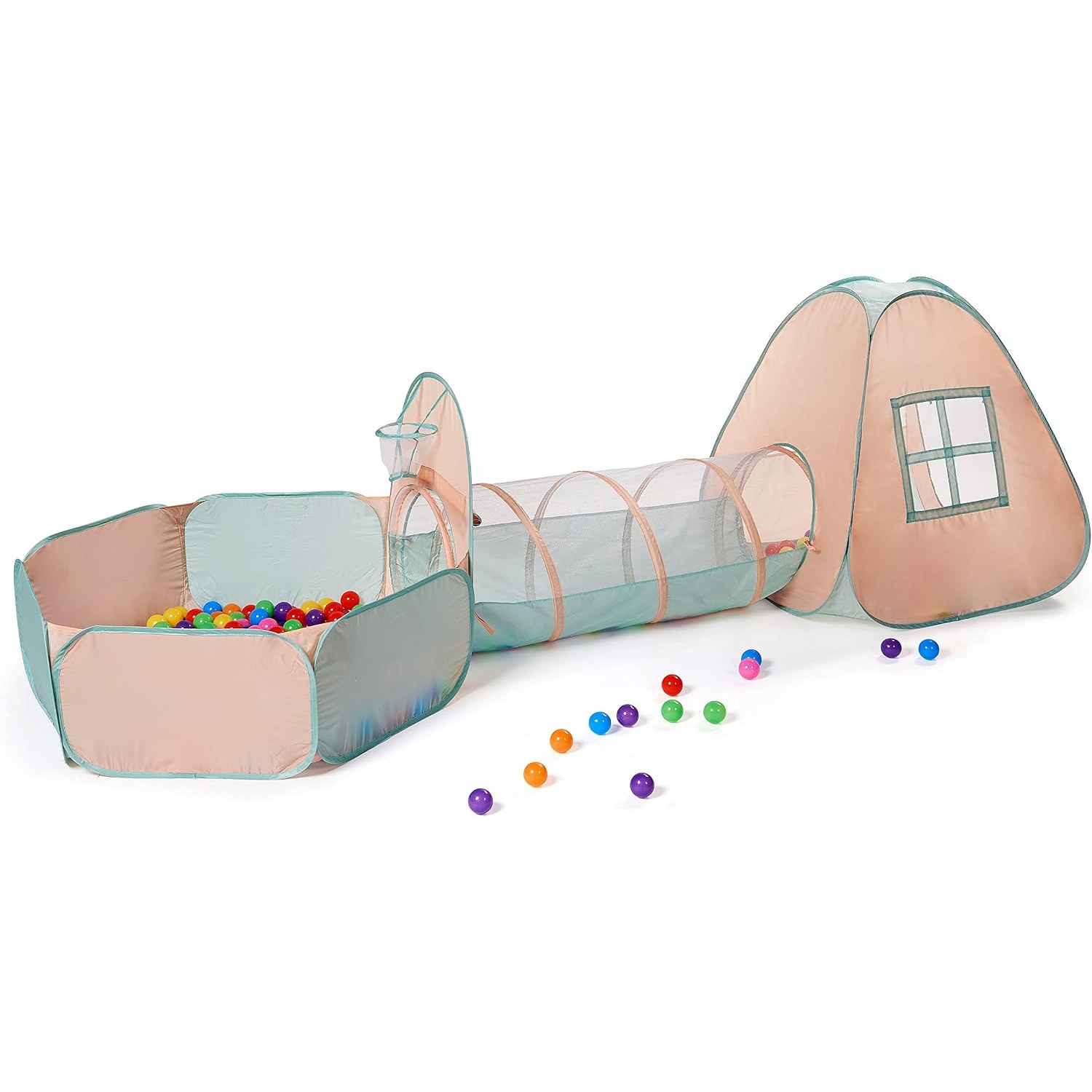
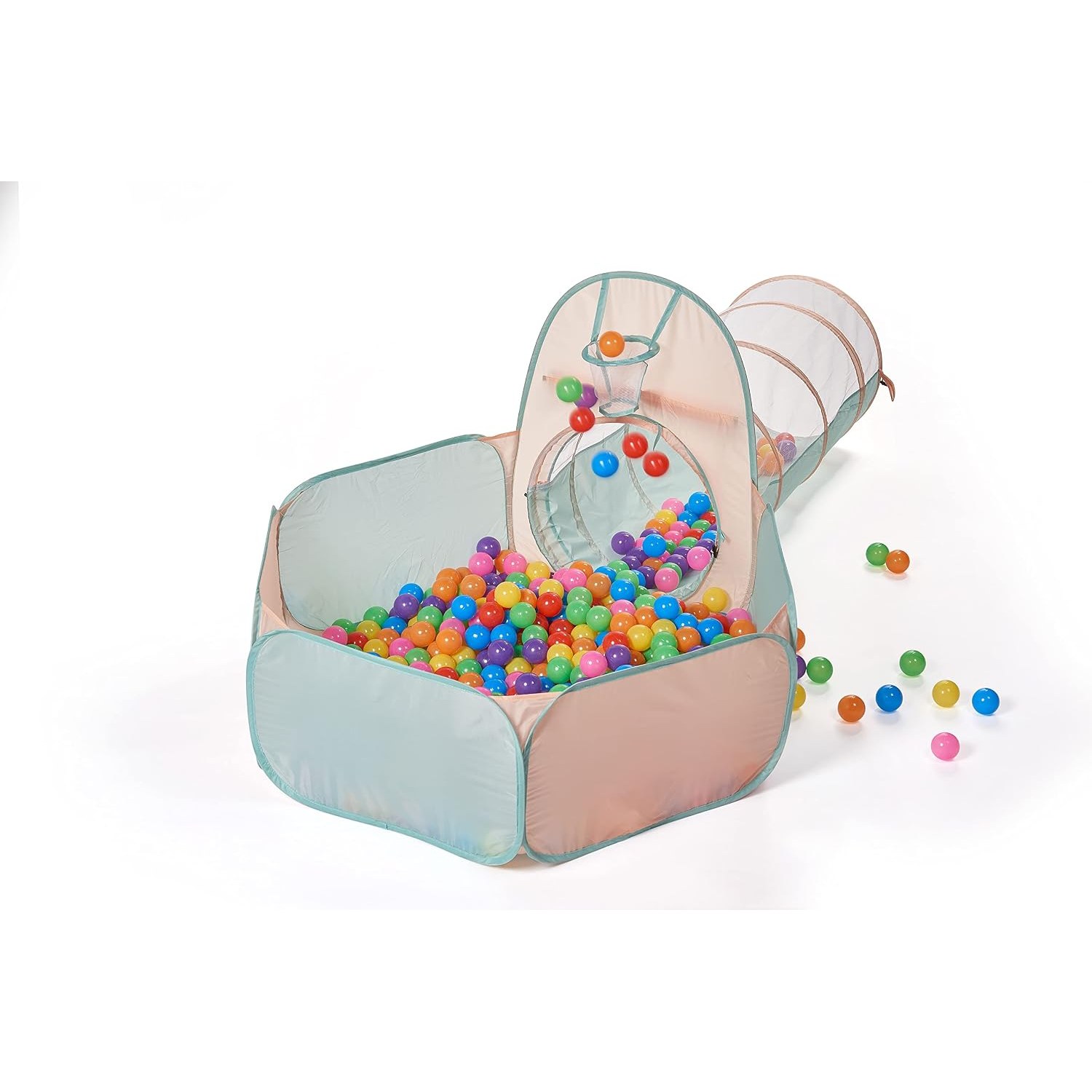
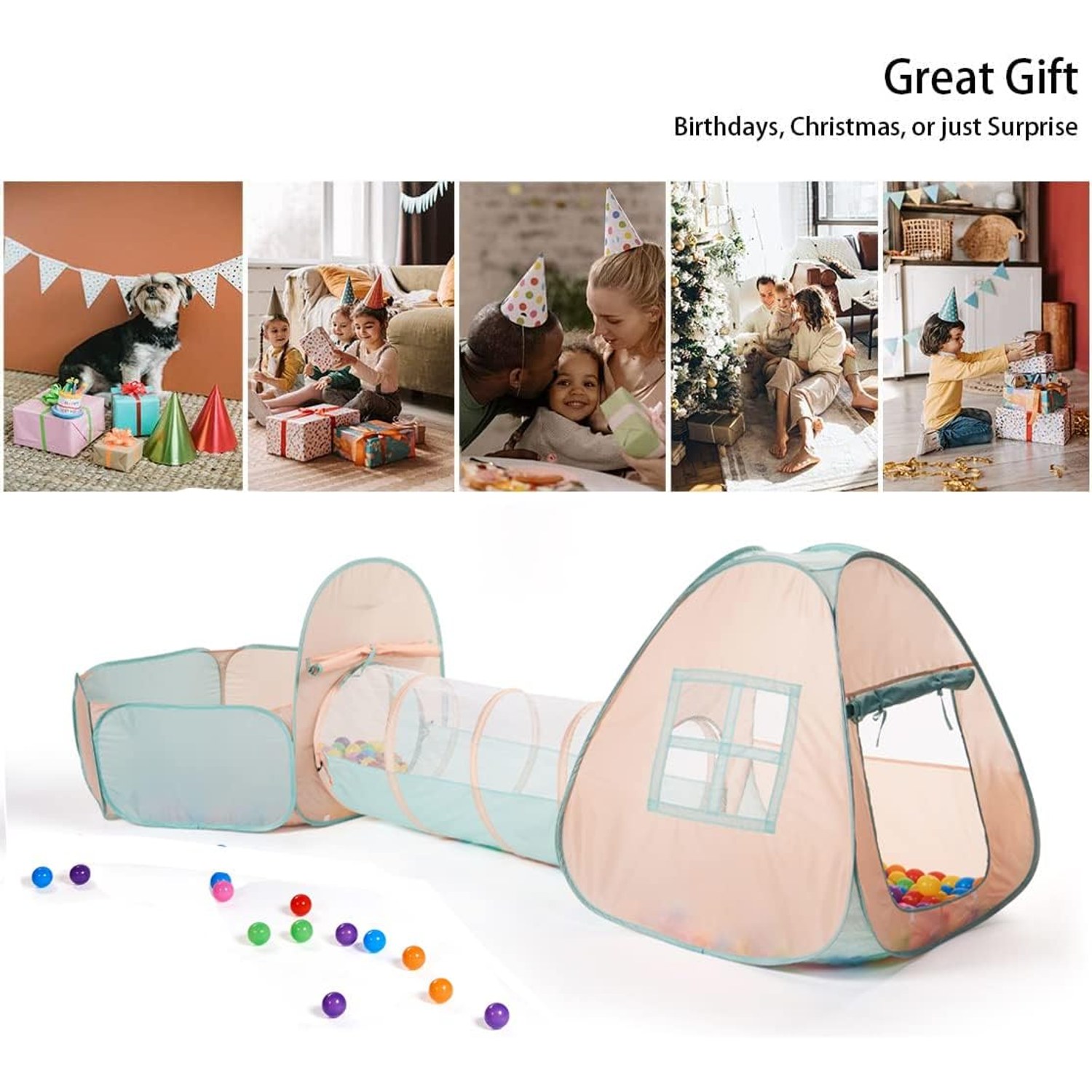
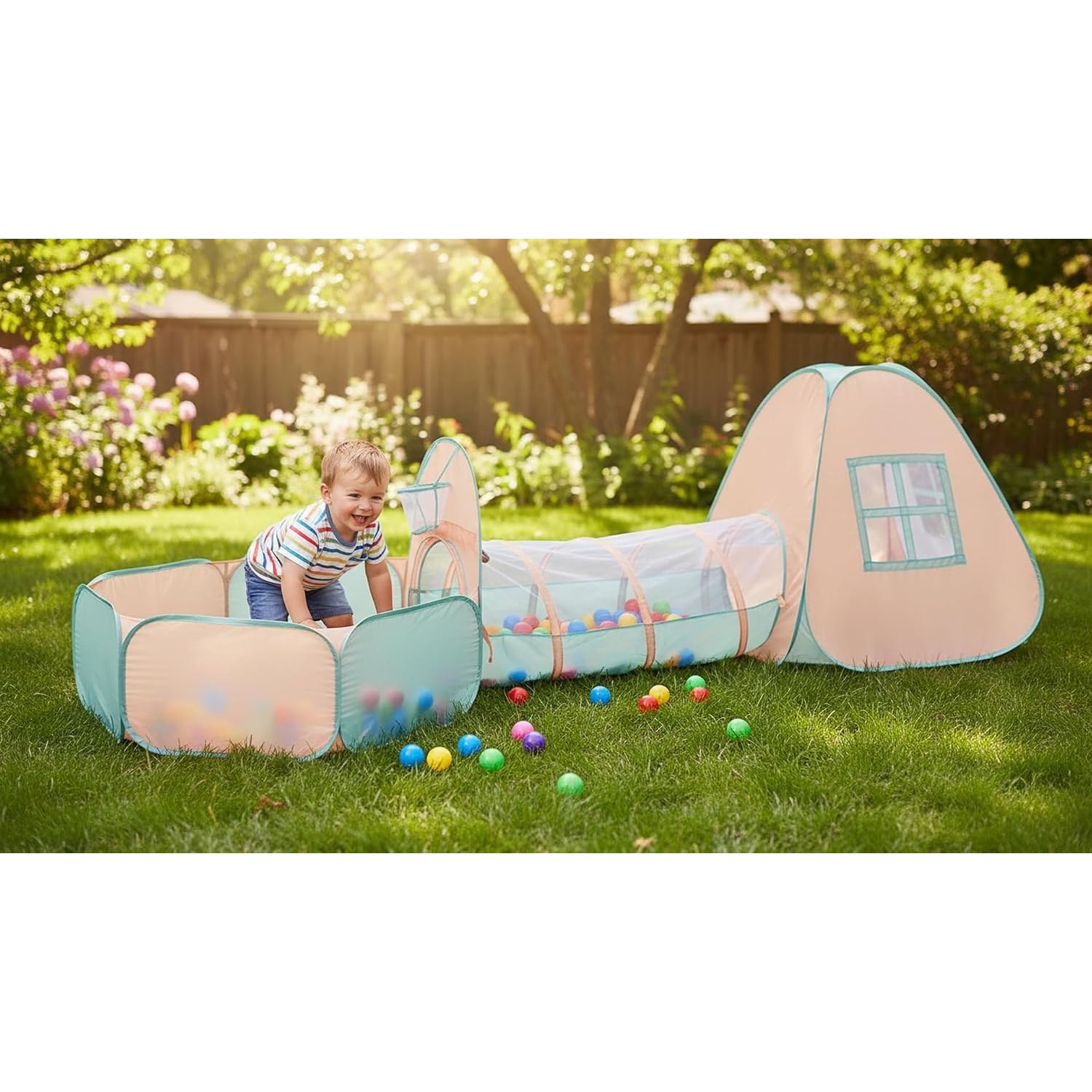
This three piece set takes that idea and adds two more places to be. There is a tent to sit inside, a tunnel to travel through, and a ball pit at the far end. Connected, they form a loop. Kids work out the loop fast and then run it until they are tired, which is the whole point.
How a pop up play set works
The structure is simple. Flexible frame loops are sewn into polyester fabric. When the set is released from its folded position, the frame springs out and holds the shape. No poles, no bolts, no instruction sheet you need to squint at.
Folding is the part people worry about. It uses the same twist-and-collapse motion as a pop up laundry basket. The first attempt is usually awkward. By the third, most people can do it in about ten seconds. Once folded, the whole set is flat and weighs 1.36 kg, so it slides behind a sofa or into a closet.
The frame material here is listed as aluminum or stainless steel, and the fabric is polyester. Those are the standard materials for this type of toy because they are light, they spring back into shape, and they survive being squashed flat repeatedly.
Measuring up before you buy
This is where most people go wrong. They look at the photo, not the numbers.
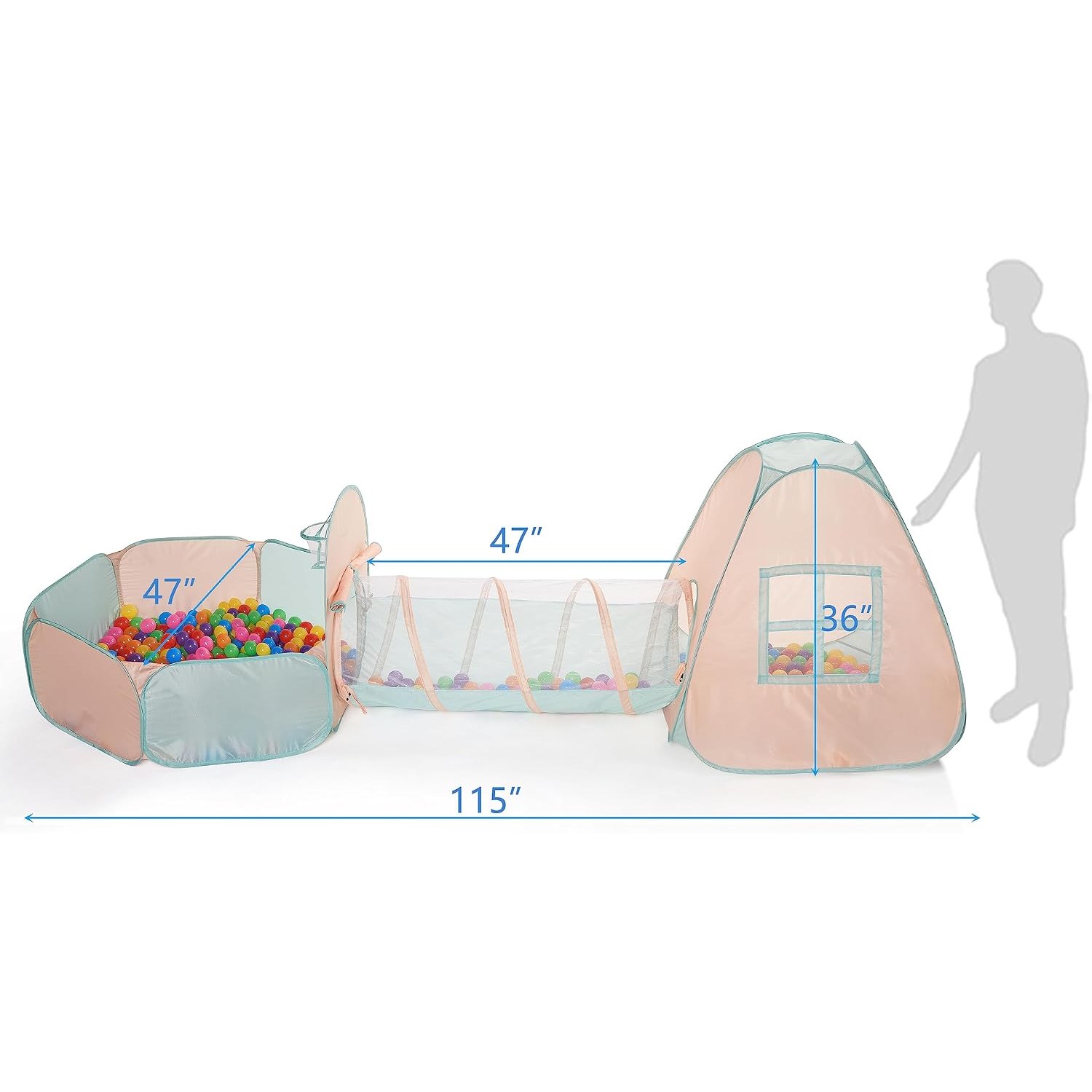
The item dimensions are 47 inches deep, 39 inches wide and 54 inches high. That height, roughly 137 cm, is the tent at its tallest point. When you stretch everything out with the tunnel attached, the full set runs 90 inches long, which is about 2.3 meters.
So before you order, get a tape measure and mark out 2.3 meters of clear floor somewhere in your home. If that is impossible, you have options. You can set up the tent and ball pit together and leave the tunnel curved rather than straight, which shortens the footprint considerably. You can also split the pieces and use the tunnel in a hallway while the tent lives in a bedroom corner.
Ceiling height is rarely an issue at 54 inches, but low-sloped attic rooms are worth checking.
Who this suits
The listed age range is young child, with a manufacturer recommendation around 36 months. In practice, children start enjoying tunnels as soon as they can crawl confidently, usually somewhere around nine to twelve months, under close supervision. The upper end tends to be around five or six, when kids get too tall to sit comfortably in the tent.
It works well in a few specific situations. Families in apartments like it because it folds away completely. Parents of only children like it because a tunnel invites repeated solo play. Daycares and playgroups use sets like this because they set up fast between sessions and pack down for cleaning.
It is less suited to a household that wants a permanent, heavy duty climbing structure. This is a fabric toy. It handles crawling, sitting and rolling. It is not built to be stood on or used as a trampoline.
What to look for in any tunnel set
A few things separate a set that gets used daily from one that ends up in the garage.
Visibility matters more than people expect. The mesh window on this tent means you can see in from across the room. Solid-sided tents force you to get down on the floor and open a flap every time you want to check, which gets old quickly.
Connection points matter too. A tunnel that attaches properly to the tent and the ball pit creates a continuous route, and that route is what drives repeat play. Loose, unconnected pieces tend to get used once and then separated.
Pack-down time is the quiet deciding factor. If putting a toy away takes five minutes, it stays out. If it takes ten seconds, it gets put away, and a toy that gets put away stays in rotation for years rather than becoming an eyesore you resent.
Finally, think about fabric. Polyester is the usual choice because it wipes clean, resists tearing better than thin nylon, and holds printed color well.
About the ball pit
Worth being clear on this. Balls are not included. The pit section arrives as an empty enclosure, and you buy play balls separately.
That is normal for sets at this price, and it has an upside. You choose how many balls you want and what size. A shallow layer is easier for a young young child to move around in, while a deeper fill feels more like a proper pit for an older child. Start with one bag, see how it looks, and add another if you want more depth.
Soft plastic play balls around 5.5 to 7 cm are the standard choice. Avoid anything small enough to be a choking risk for the age of child using it.
Looking after it
Care is undemanding. Wipe the fabric with a damp cloth and a bit of mild soap when it needs it, then let it dry completely before you fold it. Folding damp fabric is how you get musty smells and mildew spots.
Do not put it in the washing machine or the dryer. The frame loops inside the fabric will not survive that, and the fabric may distort. Skip bleach too.
Keep it out of long spells of harsh direct sun. Bright colors fade, and UV weakens synthetic fabric over time. Occasional backyard use is fine, leaving it on a sunny lawn for a fortnight is not.
Every few months, run your hands along the frame edges to check for anything poking through the fabric. If you find a worn spot, that piece is near the end of its life.
Setting it up well
Position affects how much it gets used. Put it where you naturally spend time rather than in a spare room nobody visits. Kids play where you are.
Carpet or a rug underneath makes a real difference on hard floors, both for comfort and for noise. If you have wooden floors, the set can slide a little when a child throws themselves into it, and a rug stops that.
Leave a bit of clearance around the tunnel so it can flex. Jamming it tight between a sofa and a wall stresses the frame and makes crawling through harder than it should be.
The short version
This is a three piece set, a tent with a mesh window, a crawl tunnel and a ball pit, that connects into a loop for young children to move through. It is polyester over a sprung frame, weighs 1.36 kg, pops open without tools and folds flat.
Check you have about 2.3 meters of floor if you want the full layout. Remember the balls are extra. Keep it out of the rain and heavy sun, wipe it clean, dry it before folding.
If your child is in the crawling-to-preschool window and your house feels too small for the energy they have, this is one of the simpler fixes available. It costs less than most plastic play equipment, it stores in a cupboard, and when they are done with it, it leaves no trace.