
The complete guide
How to Choose a Princess Castle Tent for Girls
Why children want a corner of their own
Watch any child in a busy house and you will notice the same thing. They go looking for a small space. Under the dining table, behind the curtains, inside a closet with the door pulled to. It is not that they want to hide from you. It is that a big open room gives them nowhere to settle, and a small enclosed one does.
A castle tent takes that instinct and gives it a proper shape. Instead of a blanket slipping off two chairs every ten minutes, there is a standing structure that holds its form, has a soft floor and a door that closes. Children treat it as theirs in a way they do not treat the living room rug. That ownership is most of the point.
It also solves a practical problem. Toys sprawl. A tent gives them a boundary. Books, dolls and small figures migrate inside and stay there, which quietly makes tidying up a shorter job.
What this tent actually is
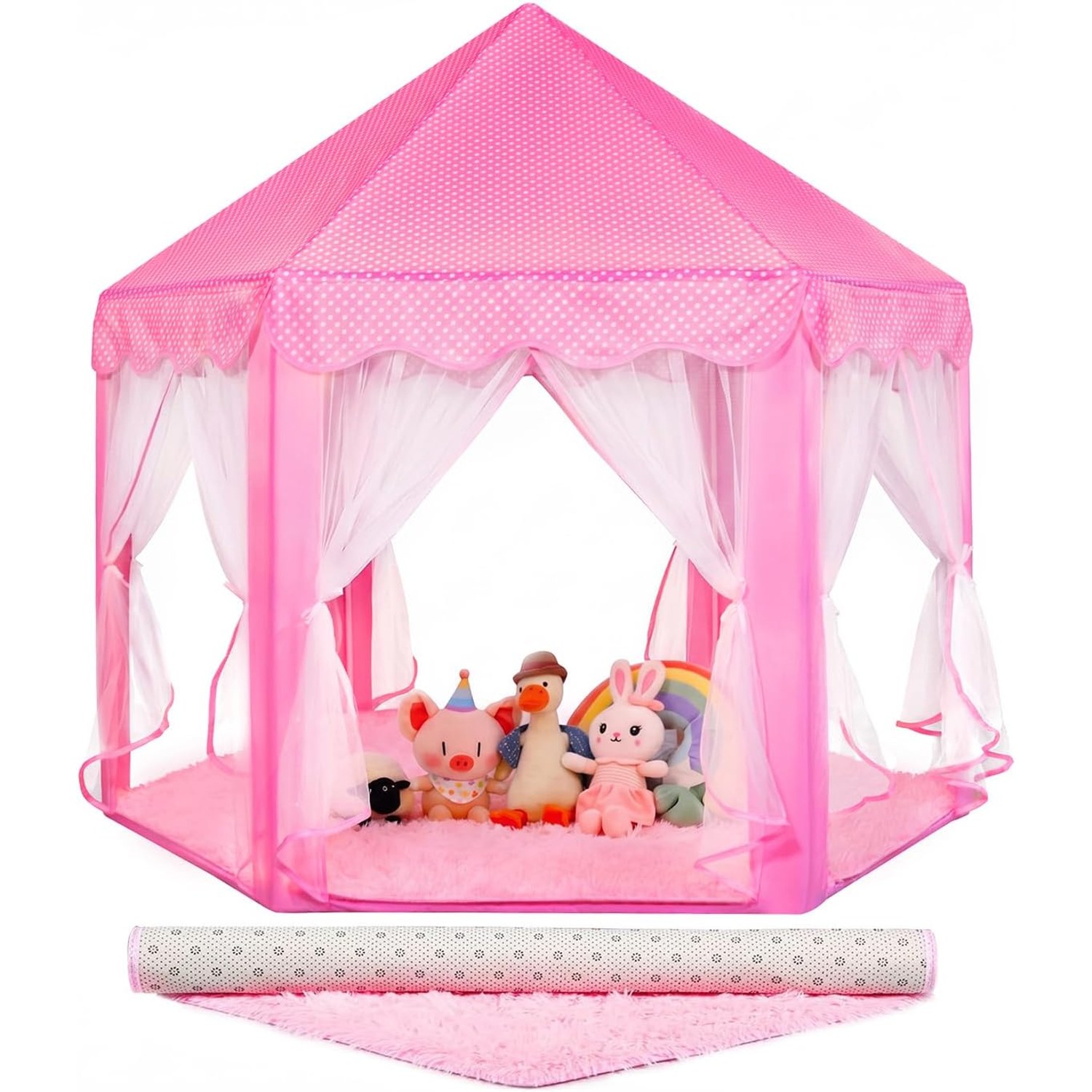
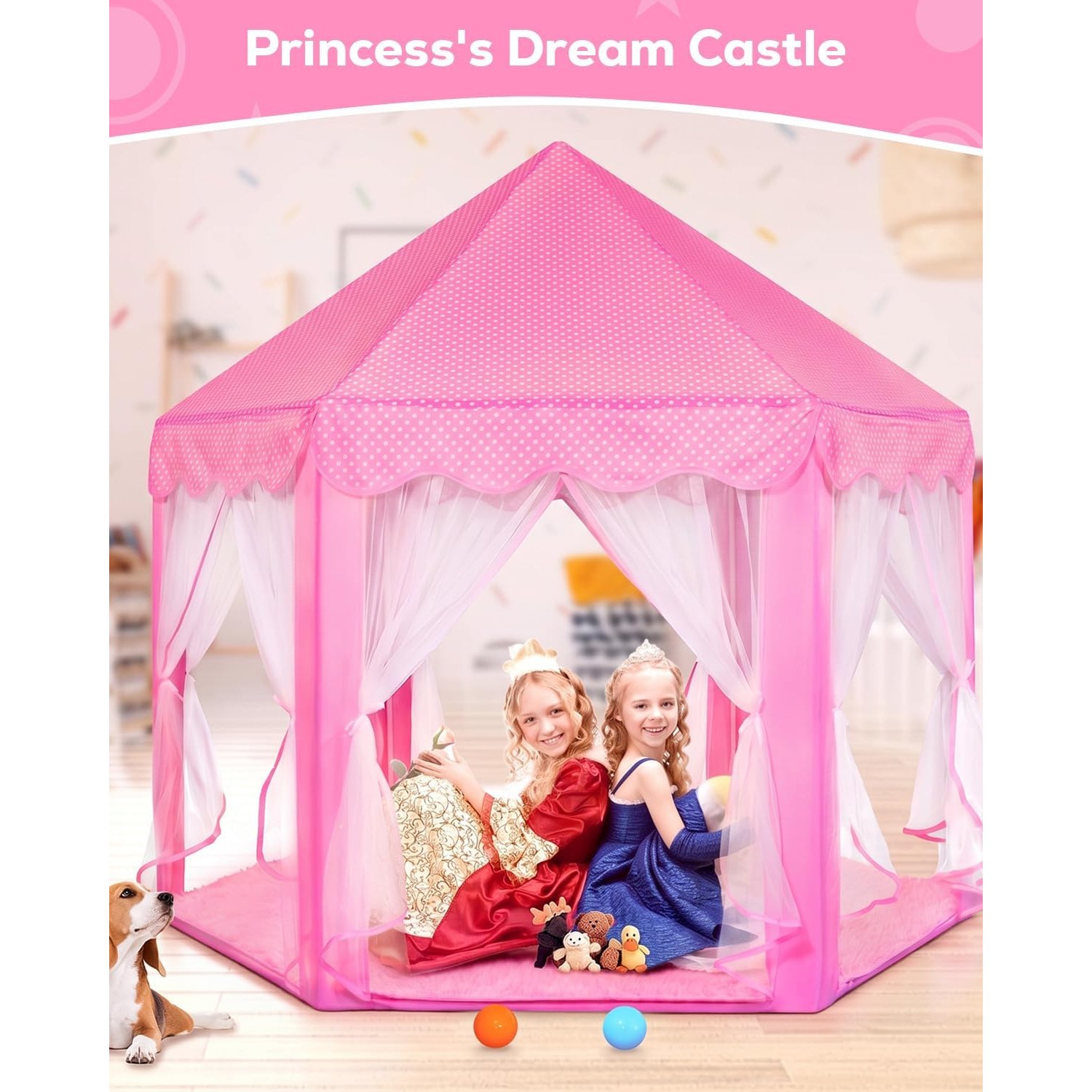
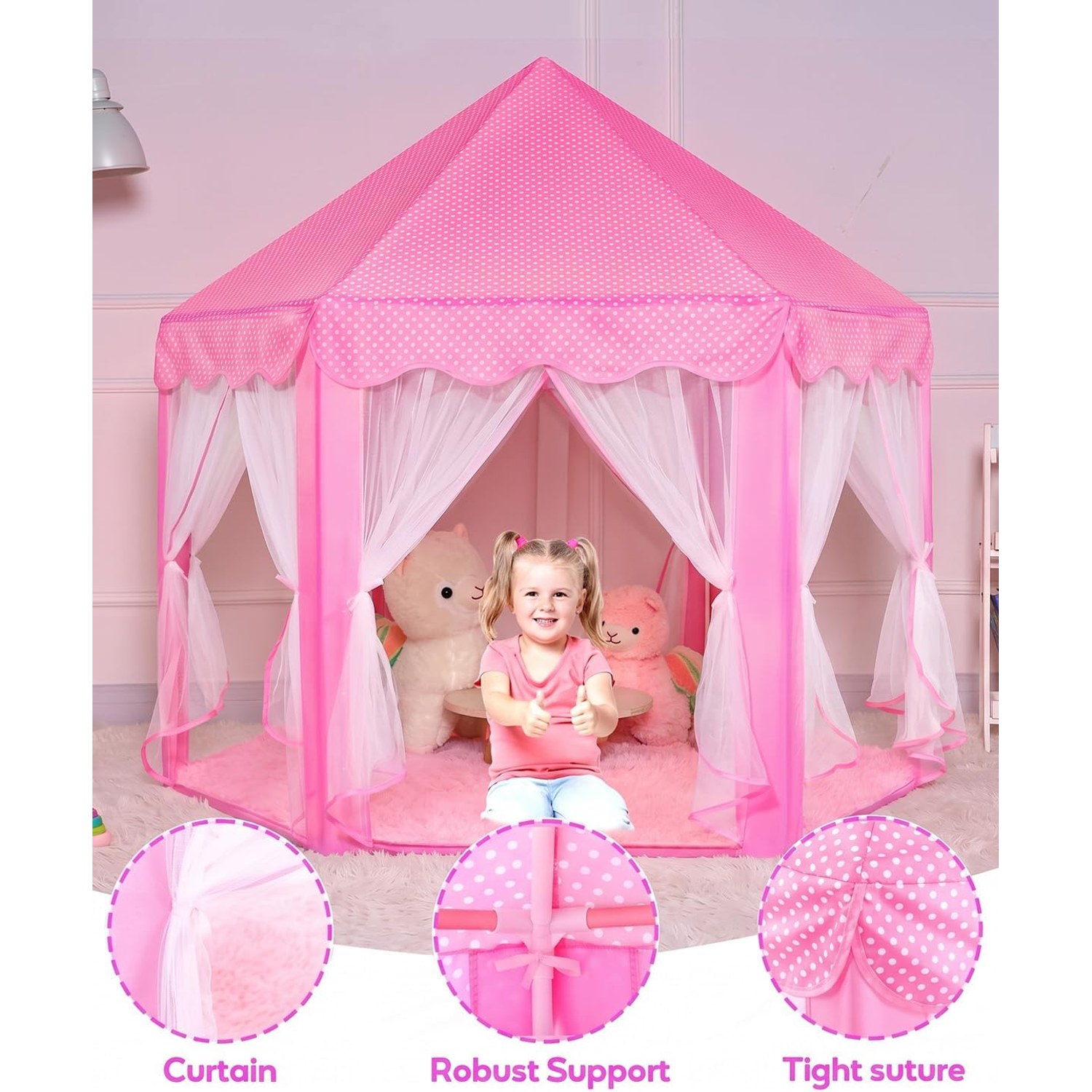
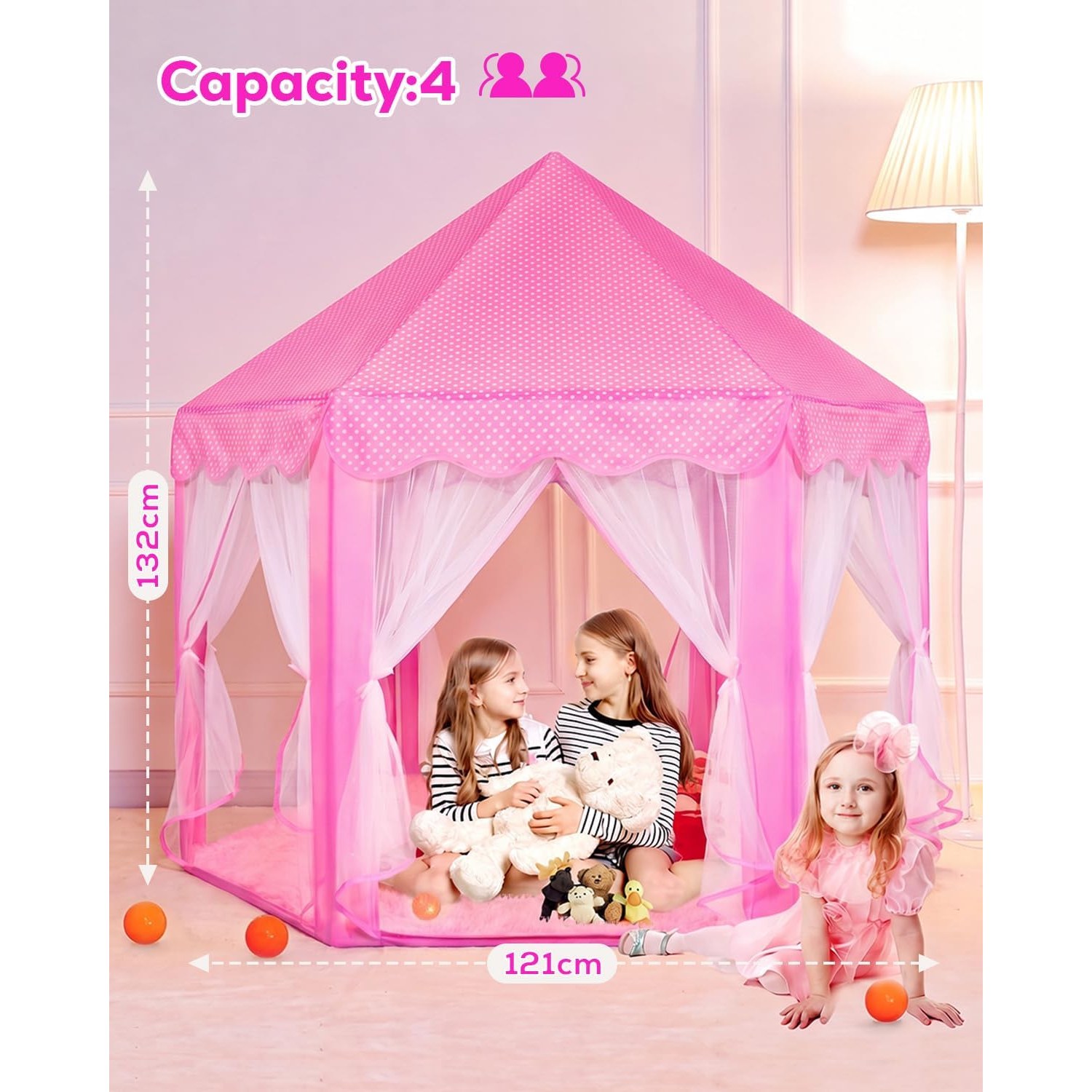
This is a hexagonal fabric playhouse. Six sides, a polyester shell, and a frame made from poles and connectors that slot together by hand. It stands 52 inches tall and measures 48 inches across, so a young child can stand up inside and two can sit together with room for a tea party or a pile of books.
Each of the six panels can be opened or closed. That flexibility is more useful than it sounds. On a loud afternoon a child can shut everything and get genuine quiet. During a game they can open two sides and make it a through route. Mesh sections let air circulate and let you see in from the doorway without crouching down and interrupting.
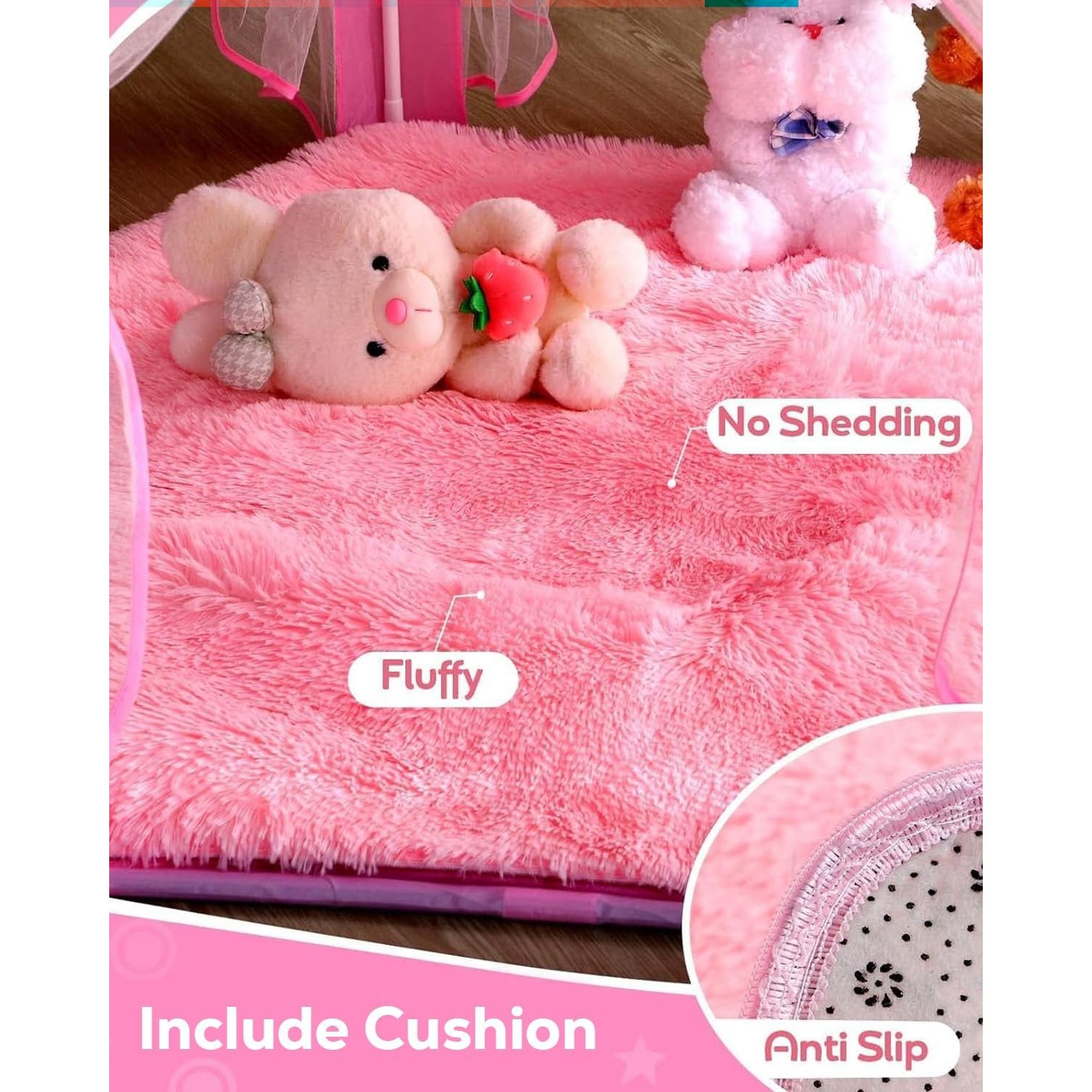
A soft rug comes with it. Worth noting, because the floor is the bit people forget. Floorboards and tile are cold and hard, and finding a mat that matches a hexagon footprint afterwards is a nuisance. Having it in the box means the inside feels finished on day one.
The package also includes the poles, the connectors, a carry bag and a step by step manual. There are no tools to find and nothing extra to buy.
Who it suits
The manufacturer gives a recommended age range of 36 months to 18 years, with the age description listed as young child. Realistically, the sweet spot is roughly three to seven. That is when den play is at its peak and when a 52 inch ceiling height still feels generous rather than cramped.
It works especially well for a few situations. Children who share a bedroom and have no corner that is purely theirs. Children who need a wind down space, where a quiet tent with a book does more than another screen. Only children who like a base for imaginative play. And families who want the best indoor playhouse for young children without building anything permanent.
It is less suited to very rough play. This is light fabric over thin poles, not a climbing frame. If your child's default mode is to launch themselves at furniture, set expectations early about how the tent gets used.
Measuring your space before you buy
This is the step people skip and then regret. Take a tape measure and mark out 48 inches by 48 inches on the floor where you want it. That is four feet square. In a lot of children's bedrooms that is doable in a corner or at the foot of a bed, but it is not nothing.
Then look up. The tent needs 52 inches of clear height, a little over four feet. Standard ceilings are fine. Sloped attic rooms, bunk bed undersides and low shelving are what catch people out.
Finally, think about the door. You want at least one panel facing into open floor so a child can get in and out without squeezing past a closet. A tent wedged so tightly that only one side is reachable loses a lot of its appeal.
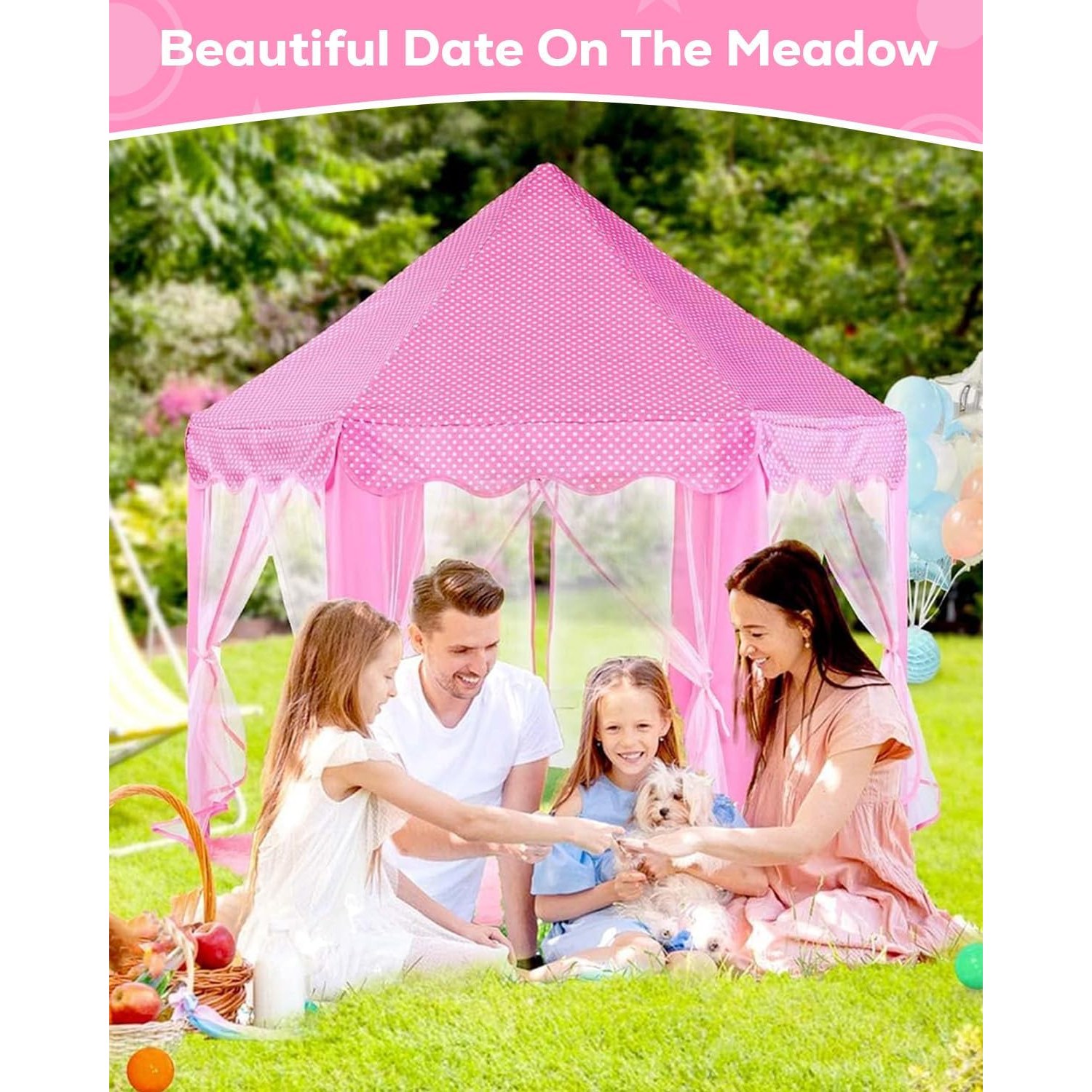
If floor space is genuinely tight, remember this one packs down. Some families set it up at weekends and pack it away on weekdays, which makes it workable in rooms where a permanent playhouse would never fit. That flexibility is a real advantage of the best indoor tent for small rooms.
Pole frames versus pop up frames
Castle tents come in two broad types. Pop up tents use a sprung wire frame that springs open in seconds and twists down into a flat disc. Pole tents, like this one, use rigid poles that push into connectors.
Pop ups win on speed. They lose on shape and sturdiness, and folding them back down defeats a lot of adults the first few times.
Pole frames take longer to put up, maybe fifteen to twenty five minutes on a first attempt and much less after that. In return you get a structure that holds a clean shape, sits firmly on the floor and does not sag at the roof. For a tent that is going to live in a bedroom for months at a time, that trade is usually the right one.
Setting it up well
A few things make the difference between a tent that lasts years and one that sags by spring.
Build it on a flat surface. A level floor keeps the frame square and stops the fabric pulling unevenly at the seams.
Seat each pole fully into its connector. Half seated joints are the main cause of a tent that slowly leans. A gentle twist as you push usually does it.
Do not over tension the fabric. It should sit smoothly without straining. Pulling it drum tight puts load on the stitching for no benefit.
If you add fairy lights, and plenty of people do, use battery powered LEDs that stay cool. Clip them to the inner frame, keep cable runs tidy and switch them off when the room is empty. Never run mains powered lighting inside a fabric structure.
Keeping it clean and lasting
Polyester is forgiving. A damp cloth with a little mild soap handles most marks, from felt tip to juice. Work from the outside of a stain inward so you do not spread it, then let the fabric air dry fully before you fold anything.
Skip the washing machine. Structured tent fabric can distort and the seams take a beating. Spot cleaning covers almost everything real life throws at it.
The rug can be shaken out regularly and spot cleaned the same way. If it gets properly grubby, check whether a gentle hand wash and flat drying suits it better than a machine cycle.
For storage, take the poles apart rather than leaving the frame standing in a cupboard under pressure. Fold the fabric loosely instead of creasing it into hard lines in the same place every time. Everything goes back into the carry bag, which keeps the poles together and stops one going missing behind a sofa.
Keep it away from radiators and heaters. Fabric and heat sources are a bad mix, and prolonged direct sunlight will fade the pink over time.
Making it feel like a home
The tent itself is the shell. What a child does with it is the fun part, and a little encouragement goes a long way.
A couple of cushions and a small blanket turn it from a toy into a reading nook. A shallow basket keeps favorite books within reach without filling the floor. Some families hang a small fabric bunting inside, or let the child decorate a paper sign for the door.
Resist the urge to furnish it yourself. The best play tent for 3 year old girl setups tend to be the ones the child arranged, rearranged and then arranged again. Your job is the frame and the rug. Everything after that is theirs.
As a gift
It presents well. A boxed tent that becomes a whole castle is the kind of present that gets remembered, and the princess theme is instantly readable to a child who already loves the idea. The carry bag means it can travel to a grandparent's house or come along to a party.
If you are buying it for someone else's home, a quiet word about floor space first is kind. Four feet square is a real commitment in a small flat, and it is better to know before the wrapping comes off.
The short version
This is a pink hexagonal castle playhouse, 48 inches across and 52 inches tall, made from polyester over a metal pole frame. Six sides that each open or close, mesh panels for air and visibility, a soft rug in the box, plus poles, connectors, a carry bag and an instruction manual. Recommended from 36 months up.
Measure your 48 inch square first. Build it on a level floor and seat the poles properly. Keep it indoors or in a sheltered spot, wipe it clean rather than washing it, and pack it into the bag when it is not in use.
Do that, and you have handed a child something small houses rarely give them. A door they can close, on a space that belongs to them.