
The complete guide
Choosing a Princess Castle Play Tent, A Parent's Buying Guide
The problem a play tent actually solves
Most kids' rooms are busy. There is a bed, a closet, a toy box, maybe a desk, and somewhere in all of that a child is supposed to find a quiet spot to read, play or just be left alone for twenty minutes. That spot usually ends up being under a table with a blanket over it, which works right up until someone needs the table.
A play tent gives that instinct a permanent home. It marks out a space that belongs to the child, with a door they control and walls they can disappear behind. Child development people call it enclosure play, but you do not need the term to recognize it. Kids have been building forts out of sofa cushions forever.
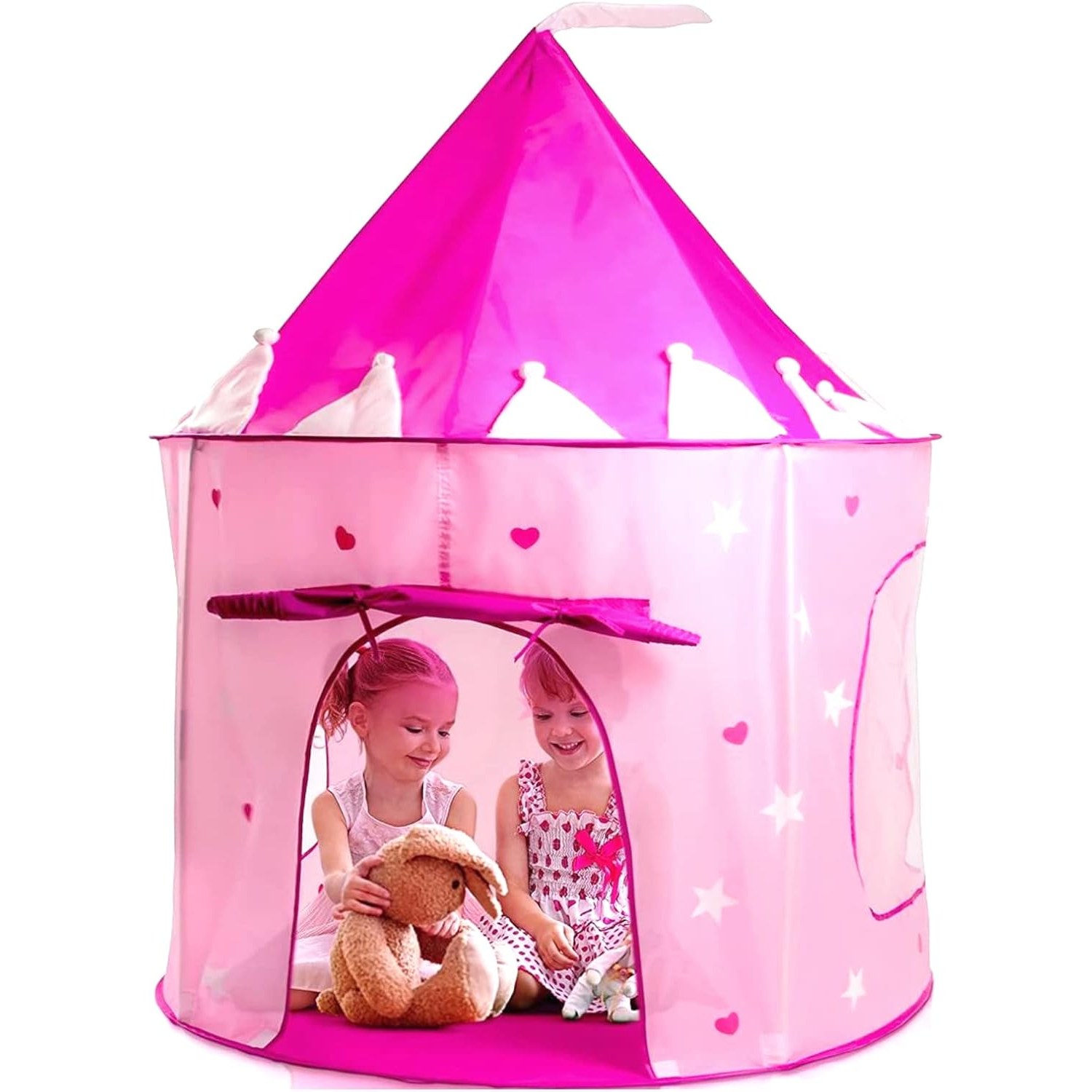
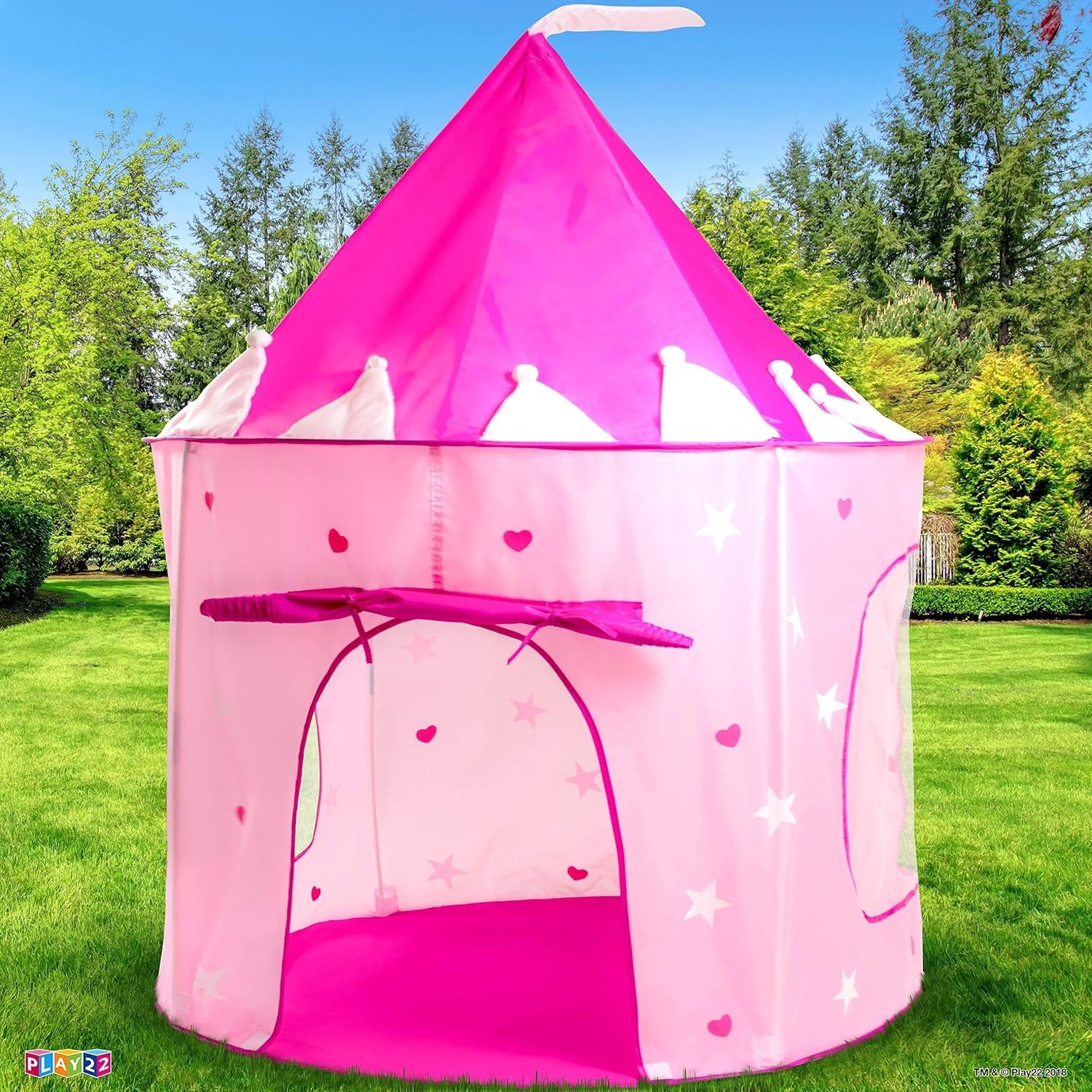
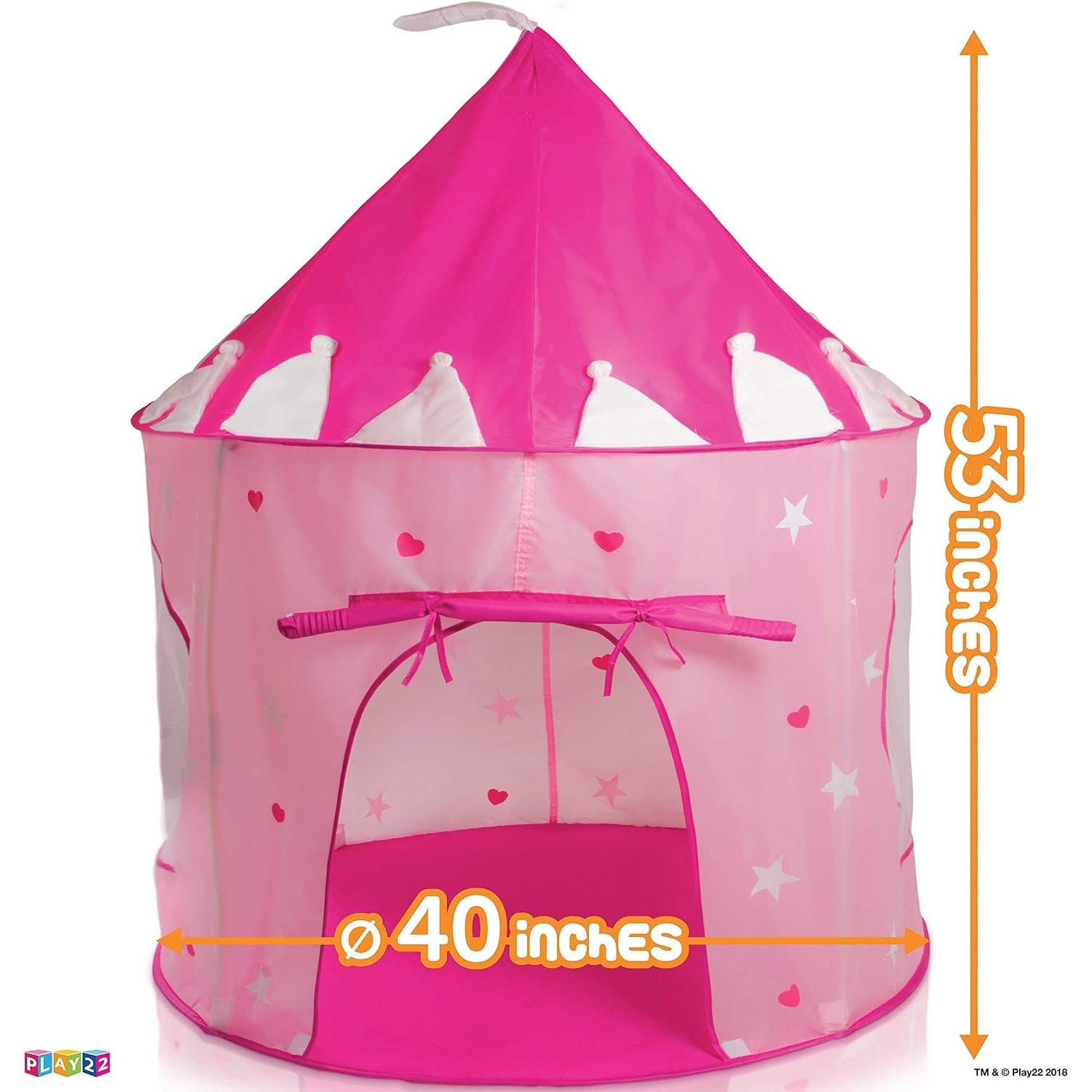
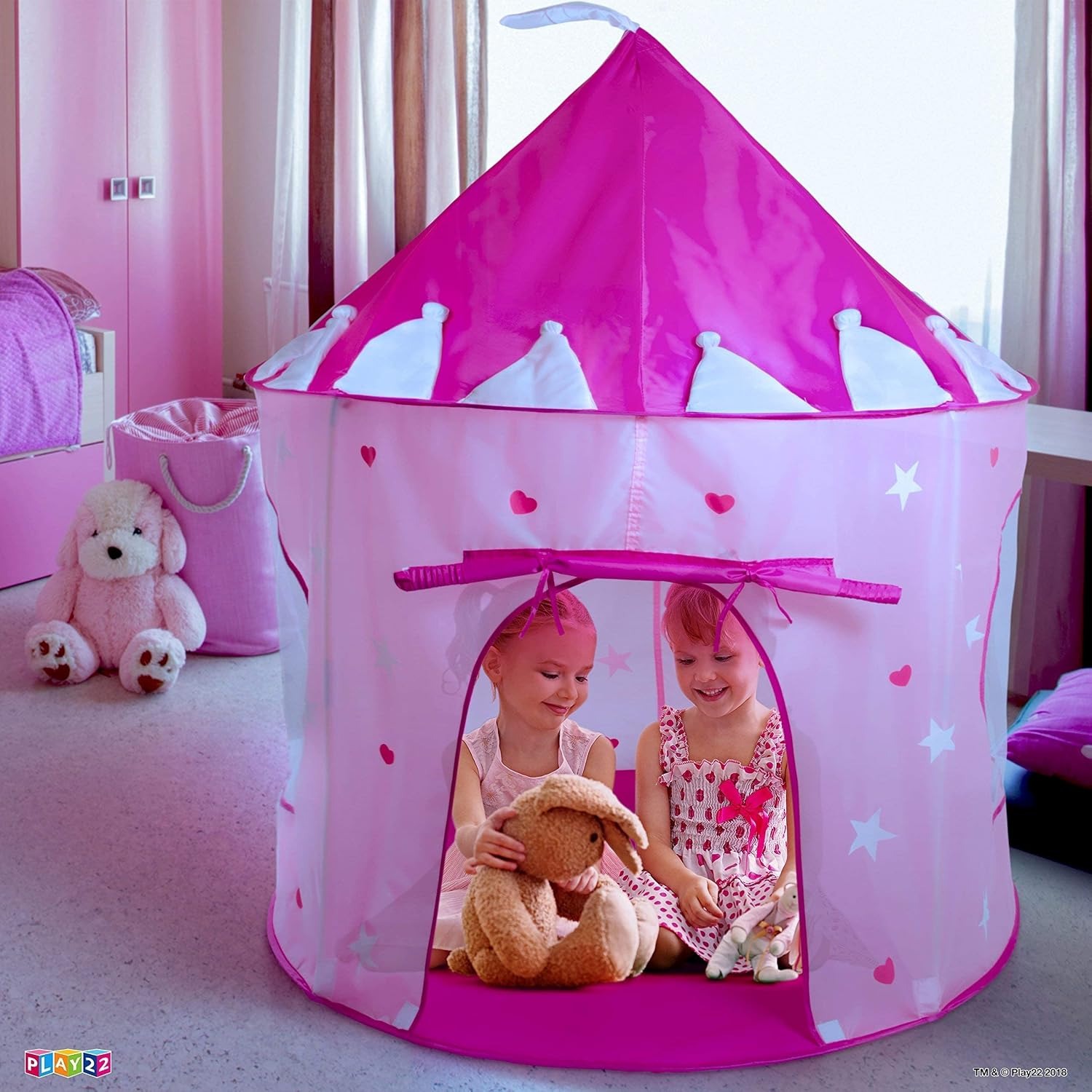
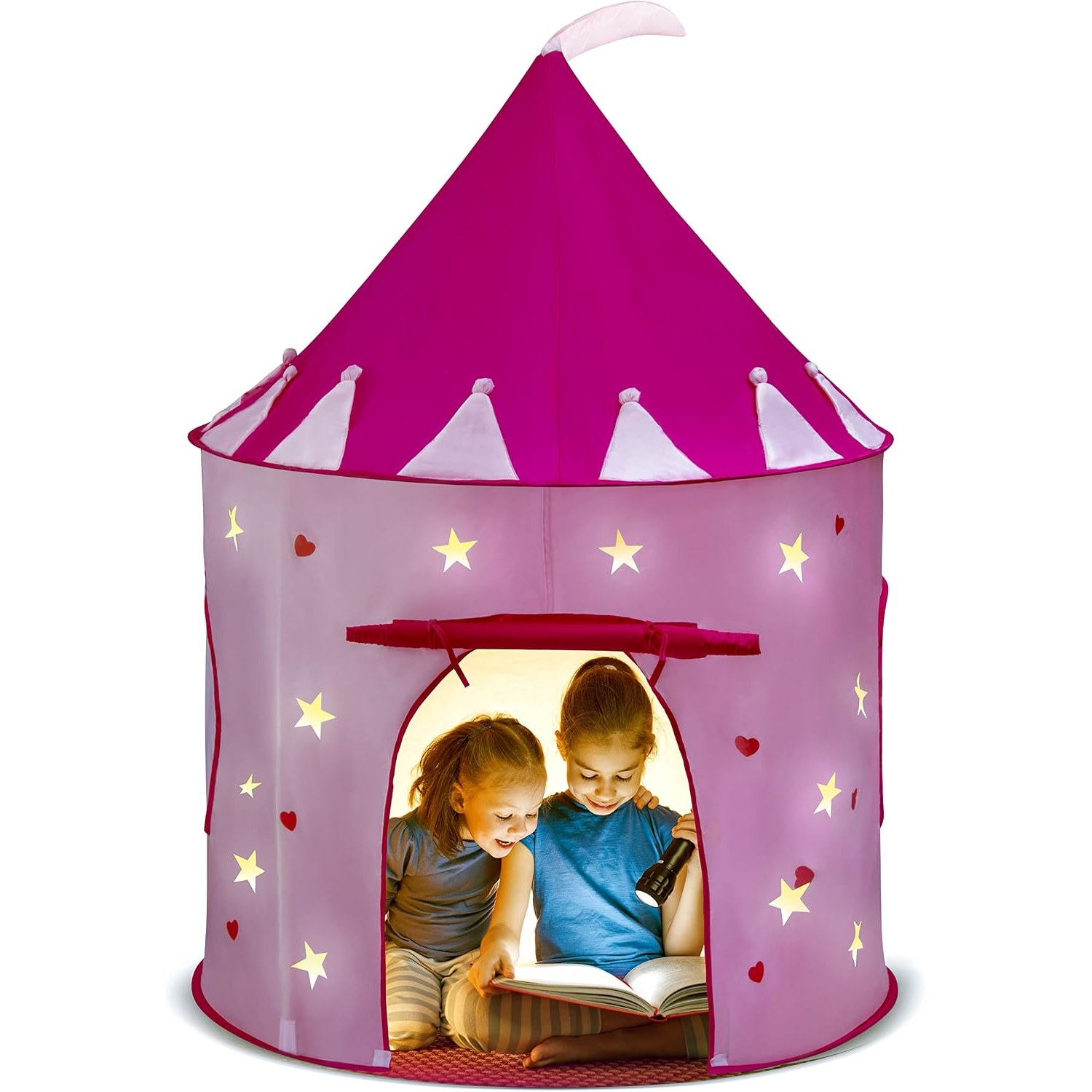
The the maker princess castle tent takes that idea and makes it a proper object: 40 inches square, 53 inches tall, pink, printed like a castle, with stars that glow once the lights go off. It is simple, and simple is the point.
How this tent works
The structure is a pop-up frame with fiberglass support rods. You open the tent, it springs into shape, and then the rods slide in to hold everything steady. An adult should do that part, especially the first time, because getting the rods seated correctly is what stops the tent sagging after a week of enthusiastic use.
The canopy itself is polyester. It is light, it holds printed color well, and it wipes clean, which matters more than you might think once juice and crayons get involved. Total weight is 1.04 kg, so a six year old can carry the packed tent around the house without complaint.
Two mesh windows sit on the sides. They do two jobs. First, air moves through, so the inside does not turn stuffy and warm after half an hour of two children sitting in there. Second, you can see in without crouching at the door and interrupting whatever game is happening. Both of those things decide whether a tent gets used for months or abandoned in a fortnight.
The front door rolls up. Leave it open for a cave with a view, or drop it down when a child wants to be properly hidden. There is no fastening to fight with, which is deliberate.
The glow stars, and why they matter more than they sound
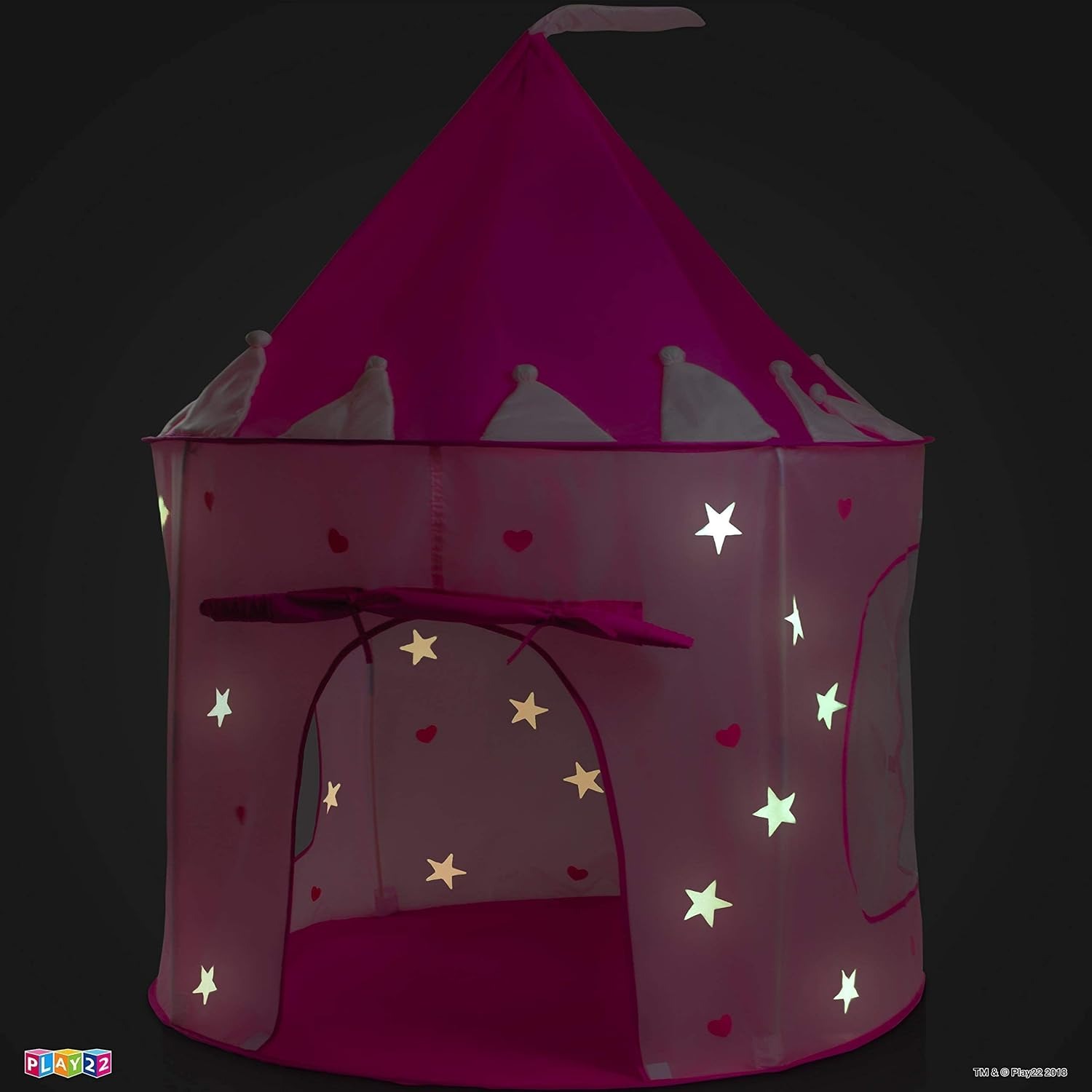
The glow in the dark stars are printed into the fabric. They soak up light from a lamp or daylight during the day, then give off a soft shine when the room goes dark. Nothing plugs in. Nothing needs charging. You simply leave the tent in a normally lit room and it does the rest.
For a lot of families this is the feature that turns a daytime toy into an evening one. A child who resists going to bed will often happily sit in a glowing tent with a book. A child who does not like a fully dark room gets a gentle, unthreatening light source that is theirs. If you have been looking at the best glow in the dark tent for kids and wondering whether it is a gimmick, it is not, though it is worth setting expectations. The glow is soft and it fades over the night. It is a night-light, not a lamp.
Who it suits
The manufacturer recommends ages 3 and up. In practice the sweet spot runs from about three to seven, which is when pretend play is at its strongest and a 53 inch high tent still feels like a real building.
It fits two to three children, so it works for siblings, a friend over to play, or one child with a generous pile of cushions and soft toys. A single child will have room to lie down diagonally, which is usually how reading in a tent ends up happening.
Think about where it will live before you buy. A 40 inch square is roughly the size of a large bath mat. That fits in most bedroom corners, but if your child's room is already full, the living room or a playroom may be the better home. The height clears standard ceilings with plenty to spare.
It also travels. Grandparents' houses, vacation rentals, birthday parties, day care reading corners. Because it folds into its zippered bag and weighs almost nothing, taking it along is a genuine option rather than a theoretical one.
How to choose between play tents
A few things separate a tent that lasts from one that does not.
Frame type is the first. Pop-up frames with support rods, like this one, go up fast and pack down small. Pole-and-sleeve tents are sturdier but take longer to build and are more of a commitment, since most people leave them up permanently.
Ventilation is the second. If a tent has no mesh at all, it gets warm and children stop using it. Two mesh windows plus a roll-up door is a reasonable amount of airflow for this size.
Weight and packability come third. At 1.04 kg with a carry bag included, this one is easy to move and easy to put away. If you have the floor space to leave a tent up permanently, weight matters less. If the tent needs to vanish before guests arrive, it matters a lot.
Then there is the theme. This is a pink princess castle, and that is a specific look. Some children want exactly that and nothing else. Others would rather have a rocket or a plain dome. Theme drives whether a tent gets played in, so it is worth asking your child rather than guessing.
Finally, consider whether you want it to double as a ball pit. The 40 inch base takes play balls well, and a lot of families use it that way. Balls are sold separately, and you will want enough to cover the floor without pushing out against the walls.
Setting it up well
Pick a flat surface. Carpet, a rug or a play mat is kinder than bare floorboards, both for comfort and for the tent's base. If you are setting up outside, choose level grass and avoid anything sharp underneath.
Keep it away from heaters, candles and open flame. That is standard for any fabric structure and worth saying out loud.
Give the glow stars a chance to charge. A tent set up in a dim corner all day will not glow much at night. A tent that spends the afternoon in a room with the curtains open will.
Care and storage
Cleaning is straightforward. Wipe the panels with a damp cloth and a little mild soap, then let the tent air dry fully before folding it. Do not put it in a washing machine, do not bleach it, and do not tumble dry it. Polyester handles spot cleaning well and handles machine abuse badly.
Store the fiberglass rods straight. Bent rods are the main thing that kills a pop-up tent, and they bend when they are stuffed into a cupboard at an angle under something heavy. Slide them into the carry bag alongside the folded tent and keep the bag flat and dry.
Folding takes practice. The first attempt is always awkward. By the third you will have the knack, and it becomes a thirty second job.
The short version
This is a light, well-ventilated pink castle tent that pops up in minutes, fits two or three kids, and has glow in the dark stars that need nothing but daylight to work. It is 40 inches square, 53 inches high, weighs 1.04 kg, and folds into the zippered bag it comes with.
It suits children around three to seven who like pretend play, reading nooks or just having somewhere of their own. It is not a camping tent and it is not waterproof, so keep it dry. Beyond that, it asks very little: set it up, let it catch some light, and let your child get on with it.