
The complete guide
How To Choose A Princess Castle Play Tent That Kids Actually Use
The problem with most kids' play tents
Plenty of play tents get used hard for a fortnight and then live in the back of a cupboard. The reasons are usually the same. The tent is too short, so children have to crouch and the novelty fades fast. Or it is fiddly to put up, so nobody bothers after the first time. Or it takes over the entire room and gets packed away out of sheer frustration.
A good castle tent solves all three at once. It needs enough height that a child can sit up straight or stand in the middle. It needs a setup that one adult can manage while holding a cup of tea. And it needs a footprint that fits an ordinary bedroom without pushing the furniture against the walls.
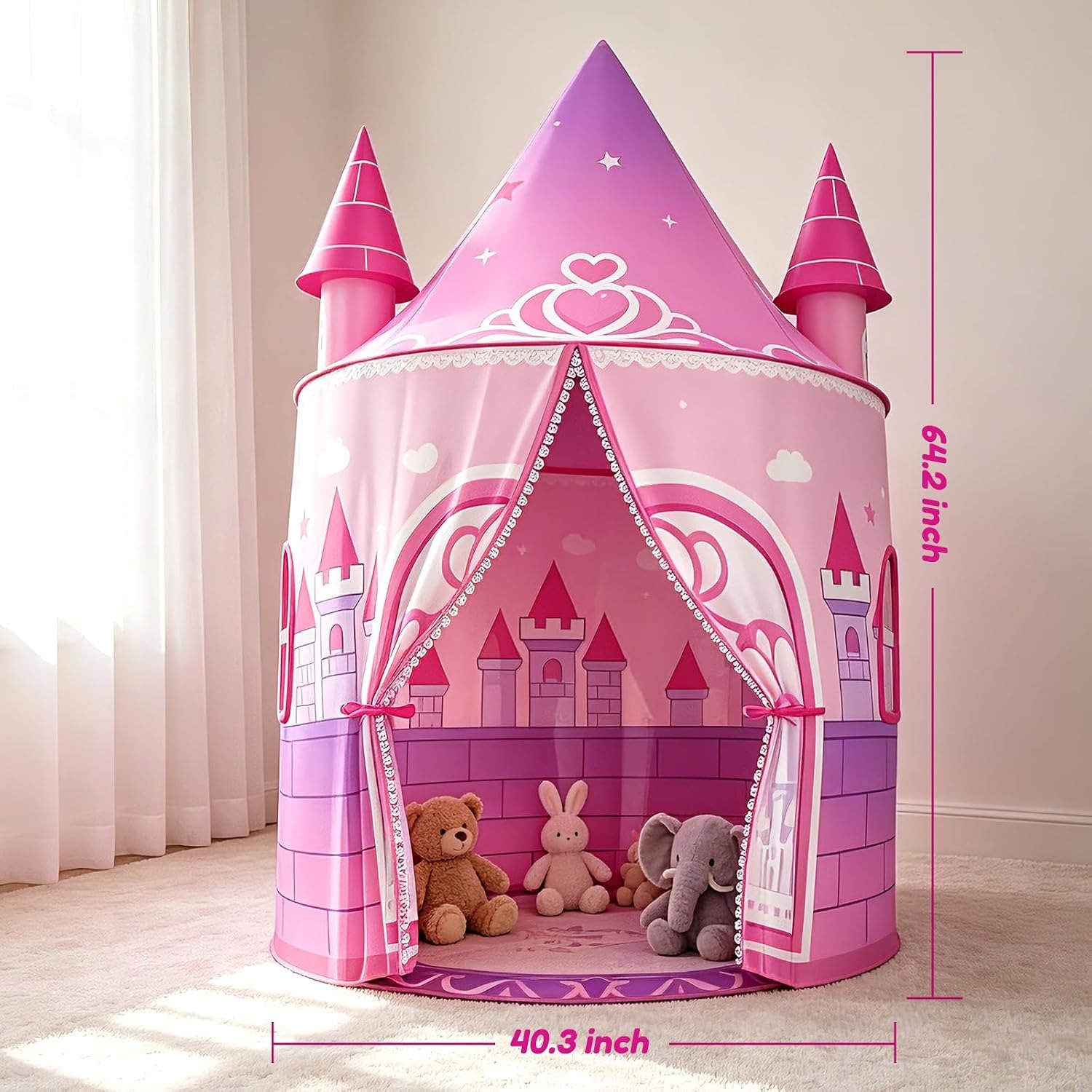
This tall princess castle play tent is built around those three points. It stands 64.2 inches high, which is a little over five feet. The base is roughly 40.3 inches square, a touch over three feet. Six support poles slide into place in a two-step process with no tools involved. That combination is what keeps a tent in daily use rather than in storage.
What makes a castle tent different
A plain dome tent is a shelter. A castle tent is a setting. The difference matters more than you might think with young children.
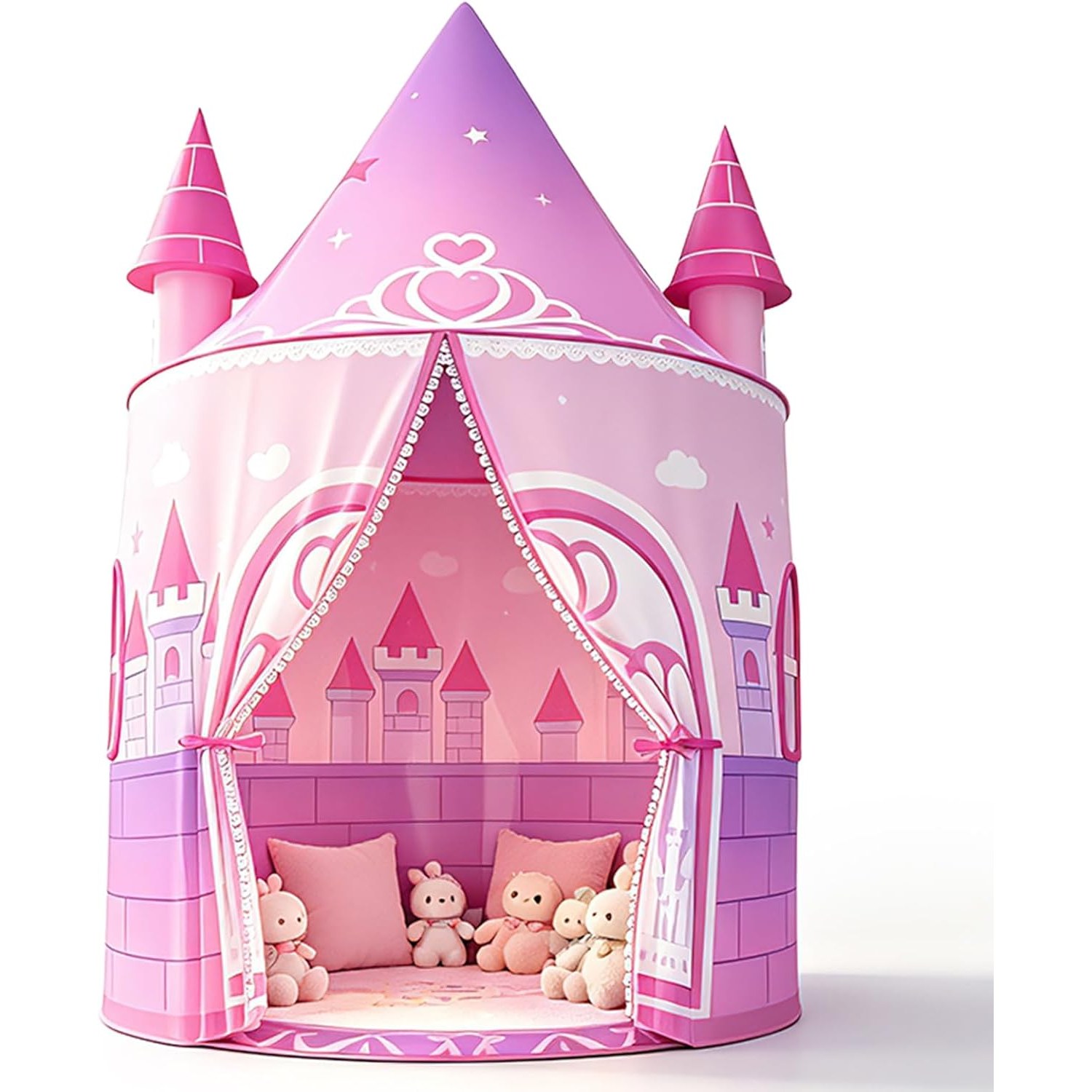
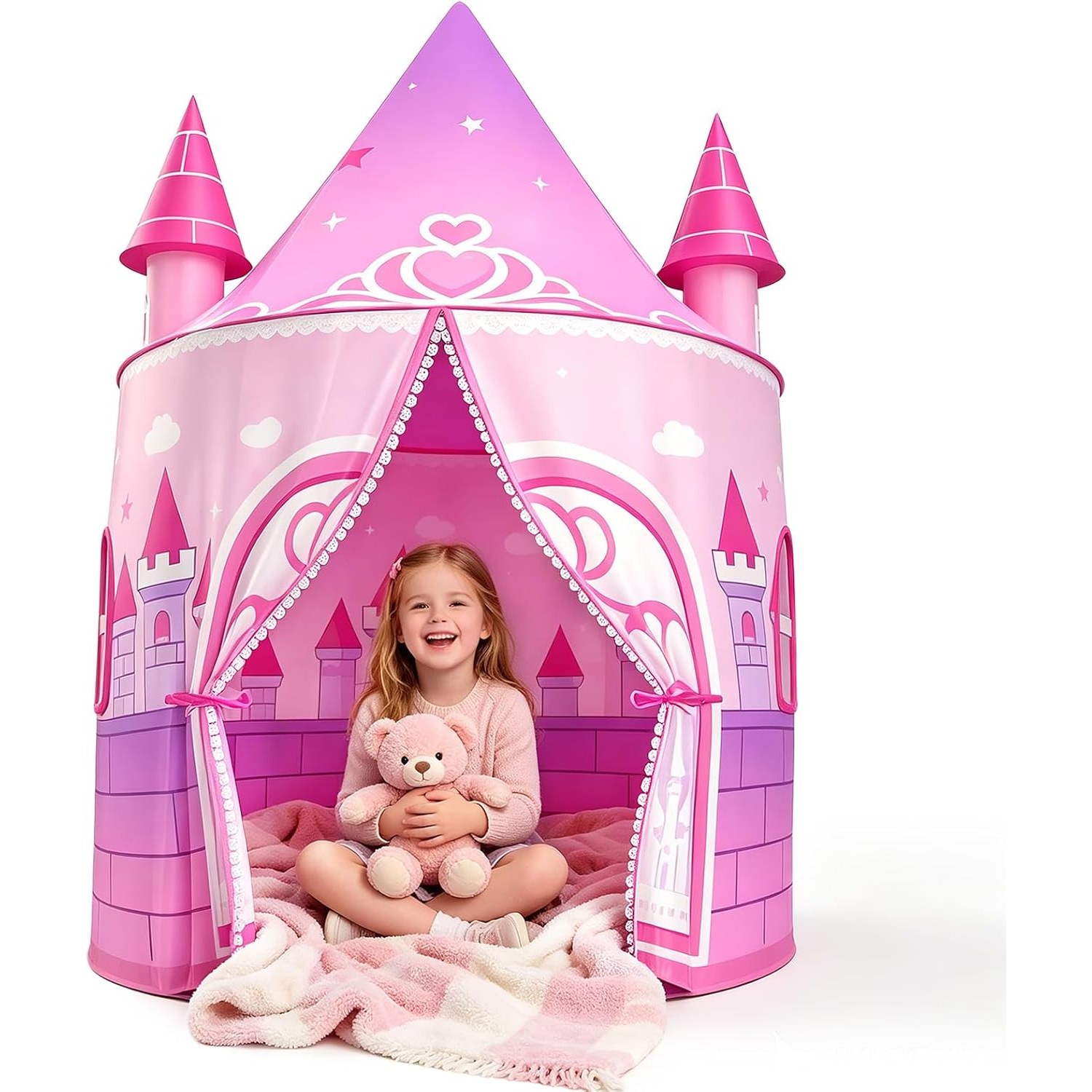
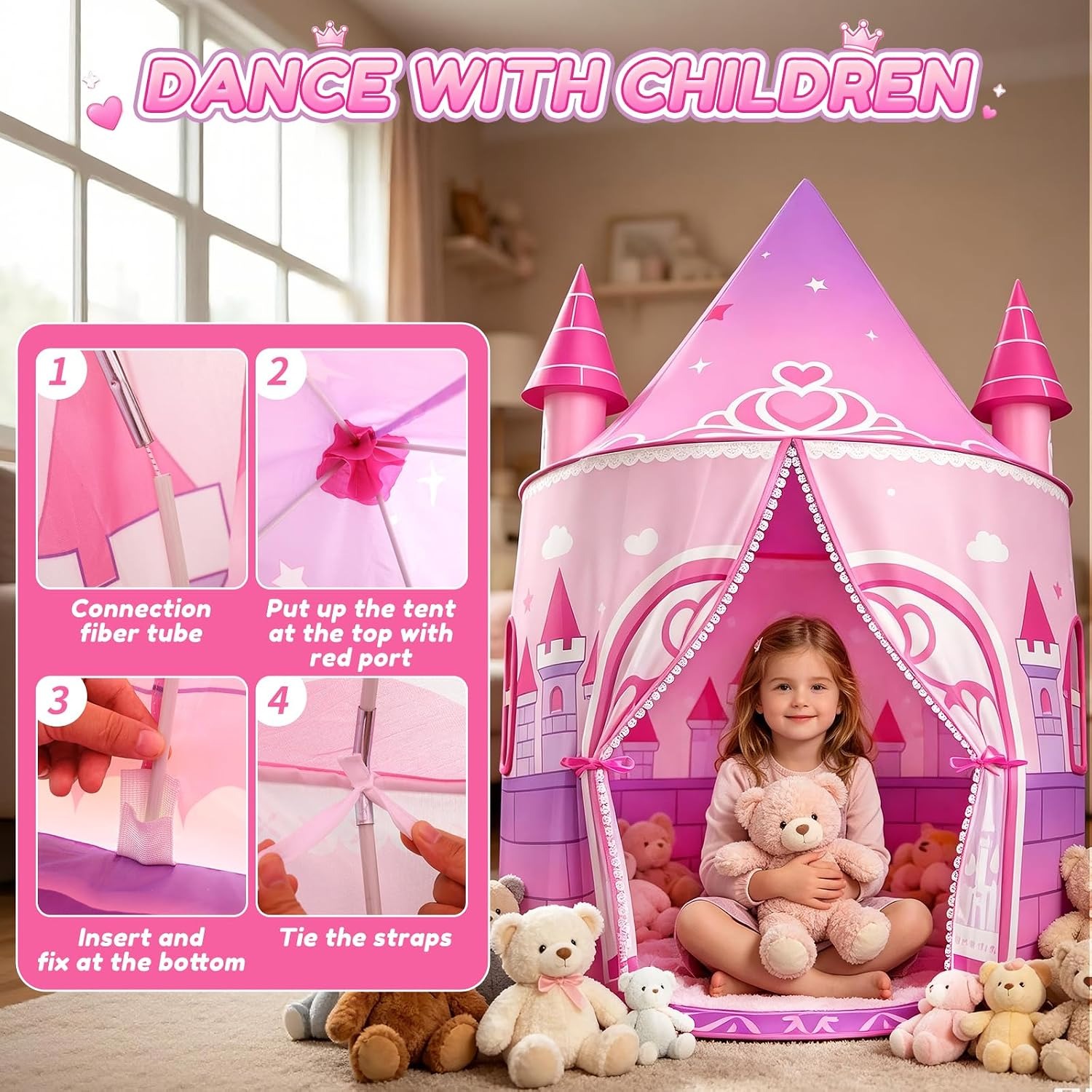
The pale pink panels on this one carry crown shapes and tower graphics, which gives a child an immediate starting point for a story. They are not just sitting in a fabric box, they are in a castle. That single idea tends to pull in dress-ups, soft toys, tea sets and storybooks without any prompting from adults. Role play starts on its own.
There is also a quieter benefit. An enclosed space gives children somewhere to go when the house is noisy or busy. Lots of parents end up using a castle playhouse for young children and older kids alike as a wind-down corner, with a cushion and a stack of picture books inside. It becomes a reading nook tent for kids as much as a play structure.
Height, footprint and how many children fit
Height is the spec people most often get wrong. A tent that is 30 or 40 inches tall sounds fine on paper and then turns out to be a crawl space. At 64.2 inches, this one has proper standing room in the center for most young children, and school-age kids can sit up comfortably without ducking.
The 40.3 inch square base is a sensible middle ground. One child has room to spread out with toys. Two siblings fit nicely with a bit of gear. Three is the stated maximum for pretend play and reading, and at three it is a cosy fit rather than a roomy one. If you are shopping for a large kids play tent to host a whole playdate group, think of this as a three-at-a-time space with children rotating through.
Before ordering, lay a towel or a sheet of newspaper on the floor roughly three and a half feet square. Stand back and look at it. That is the space the tent will claim. Corners work well, as do the ends of beds and the quieter half of a living room.
Setting it up and taking it down
The setup is two steps, and it is tool-free. The six support poles go in, and the tent takes shape. Most people manage the first build in under ten minutes including unpacking the box, and repeat setups are faster once you know where everything goes.
That speed matters more than it sounds. If a tent takes half an hour and a toolbox, it goes up once a year. If it takes five minutes, it comes out on rainy afternoons, during school holidays and whenever a friend visits. The low effort is what turns a pop up castle tent into something that actually earns its keep.
Taking it down is the same process in reverse. Pull the poles, fold the fabric and the whole thing tucks under a bed or into a closet. Families who are short on floor space often set it up on weekends and pack it away during the week.
Indoor or outdoor use
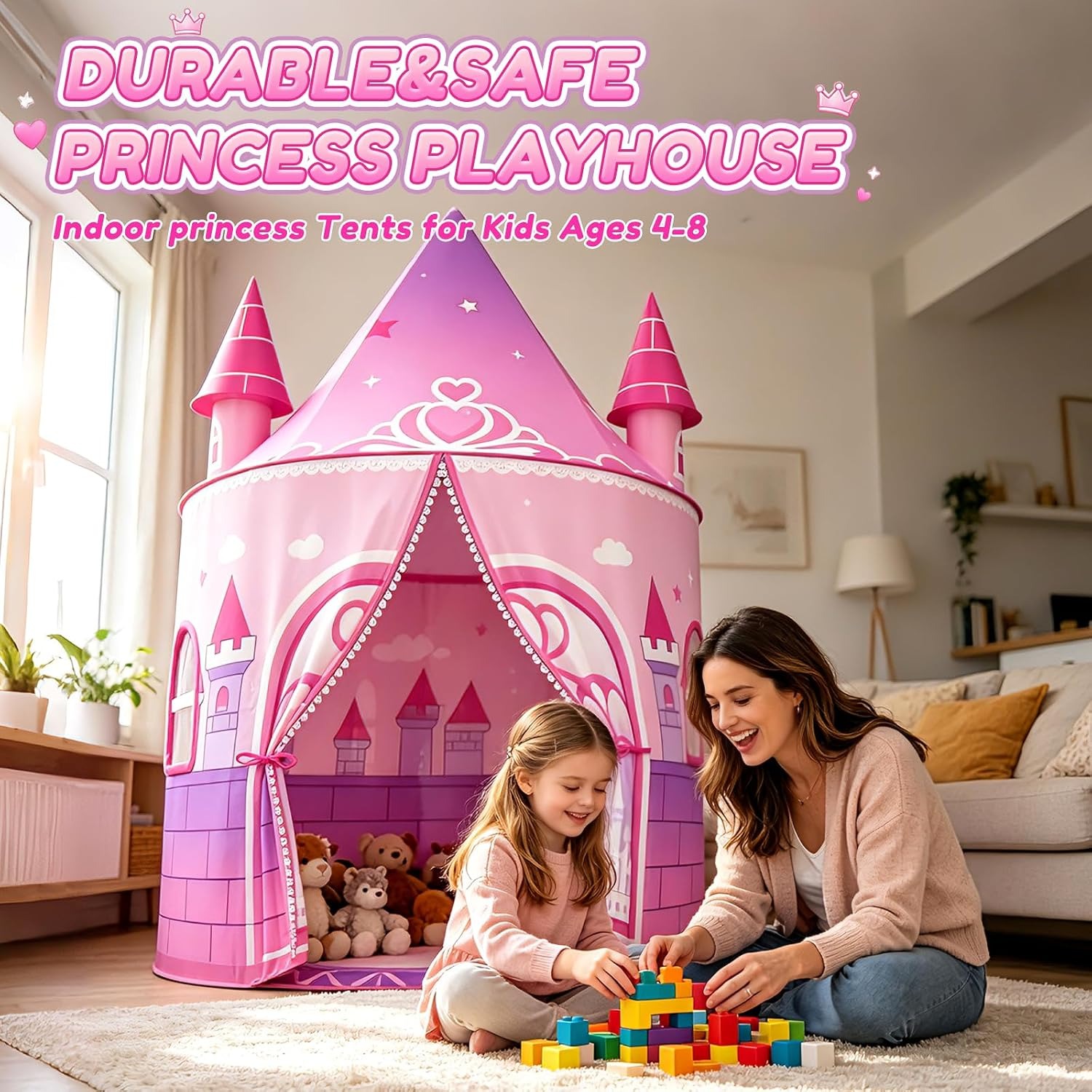
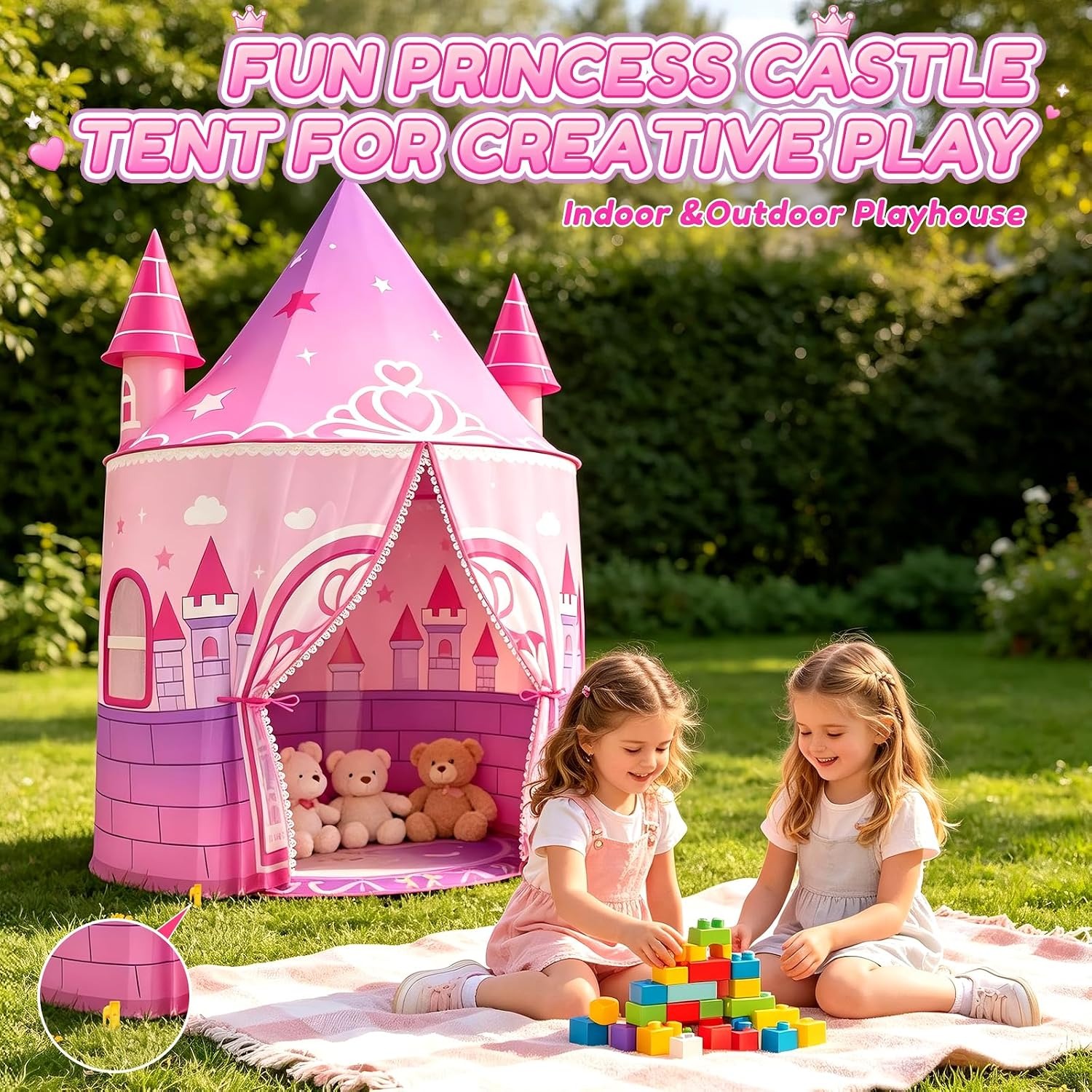
The tent is designed for both. Indoors it suits bedrooms, playrooms and living rooms, and it sits happily on carpet, floorboards or a rug.
Outdoors is where the four included ground stakes come in. Peg the tent into a lawn and it has something to hold onto, which makes a real difference on a breezy afternoon. It turns into a shaded base for a backyard picnic, a backyard tea party or a long summer afternoon where the kids want somewhere of their own.
A few sensible rules apply to any indoor outdoor tent for kids. Set it up on flat ground. Keep it clear of backyard tools, barbecues and anything with sharp edges. Shake off grass and dirt before bringing it back inside, and do not leave it out overnight in the rain. A tent that gets packed away dry lasts much longer than one that sits damp in the backyard.
Who this suits, and who it does not
This is a good match if you have a child aged 3 or over who is into pretend play, dress-ups or princess toys. It also suits families who want a quiet corner in a shared room, and parents looking for a birthday or Christmas gift that is not another plastic toy destined for the bottom of a box.
It is less of a fit for young children and very young young children, who are better served by low, soft play equipment with no poles. It is also not a camping tent. It is not weatherproof gear for an overnight outdoors, and it should not be treated as such.
If three or more children will be in it constantly, be realistic about the footprint. Three is the upper limit, and busy play with three kids in a three-foot square gets lively quickly.
Looking after it
Care is straightforward. Wipe the panels with a damp cloth and a little mild soap when they pick up marks, then let everything air dry fully before folding. Do not soak the fabric and do not put it through a washing machine.
Keep the poles clean and dry. Store them with the tent in a dry cupboard rather than a damp shed or garage. Every so often, check the poles for bends and the stake points for wear, especially if the tent gets used outside regularly.
Teach children to crawl or walk through the entry rather than lean on the walls. A pole frame copes well with normal play but not with being climbed on. That single habit does more for the tent's lifespan than anything else.
A note on the specs
The recorded details are worth knowing. The listed color is pale pink and the recorded material type is plastic. The item dimensions are given as 64.2 inches deep by 40.3 wide by 40.3 high, with packed dimensions of 40.55 x 40.54 x 64.17 inches. The included component is the play tent.
If any of those matter for your purchase, treat them as unlisted rather than assumed. Toys, cushions and rugs shown in lifestyle images are not part of the set.
The short version
If you want a castle tent that gets used rather than stored, height and setup speed are the two things to check. This one gives you 64.2 inches of height, a 40.3 inch square base, six poles that go in by hand with no tools, and four ground stakes for outdoor play. It suits ages 3 and up, fits up to three children, and works indoors or in the backyard.
It is a simple product with a clear job. It gives a child a space that feels like theirs, and it does it in about five minutes of setup.