
The complete guide
How to Choose a Princess Castle Play Tent That Actually Gets Used
The problem with most kids' play spaces
Children do not need much room. What they need is room that is clearly theirs. Walk into any house with young kids and you will see the evidence: a den made from a clothes horse and two blankets, a fort behind the couch, a cardboard box that has somehow survived four months because it became a spaceship.
The instinct is strong and it shows up early. Small, enclosed spaces feel safe. A child who is wound up after school will often settle faster in a corner with walls around them than on a big open rug with the TV going.
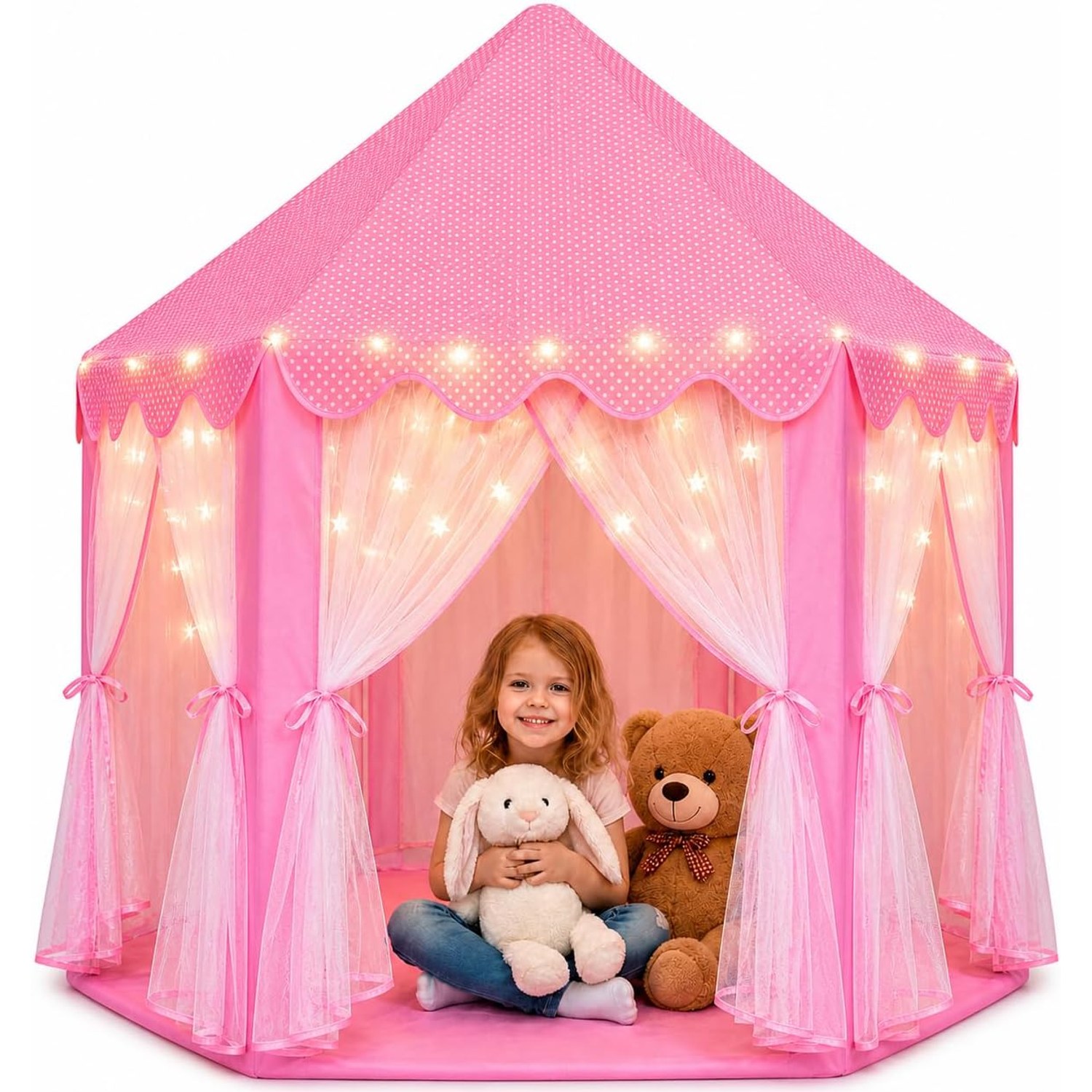
The trouble is that the blanket fort collapses every twenty minutes, and the cardboard box starts to smell. A proper pink princess play tent solves the same problem with something that stands up on its own, looks good enough to leave out, and folds away when you need the floor back.
What this tent actually is
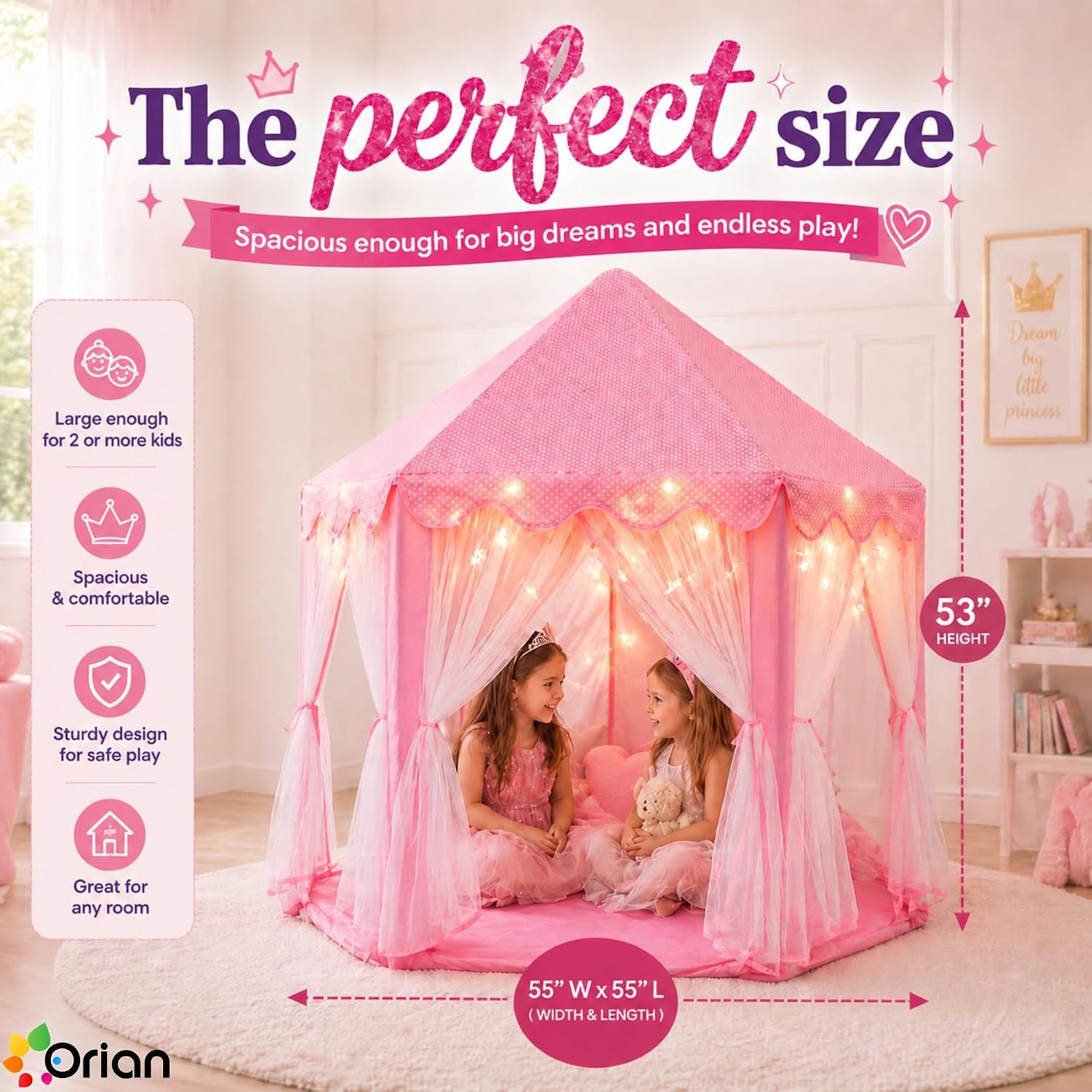
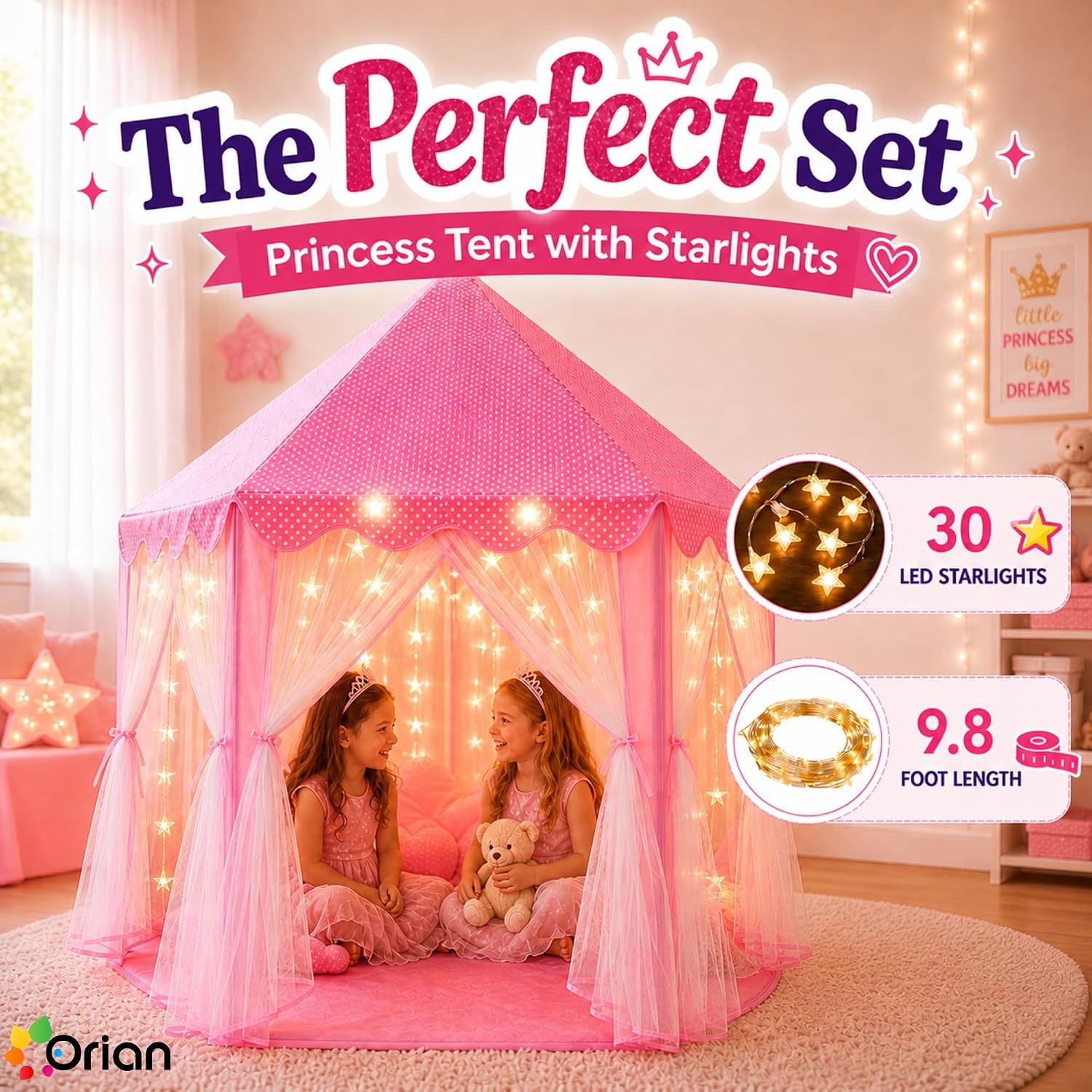
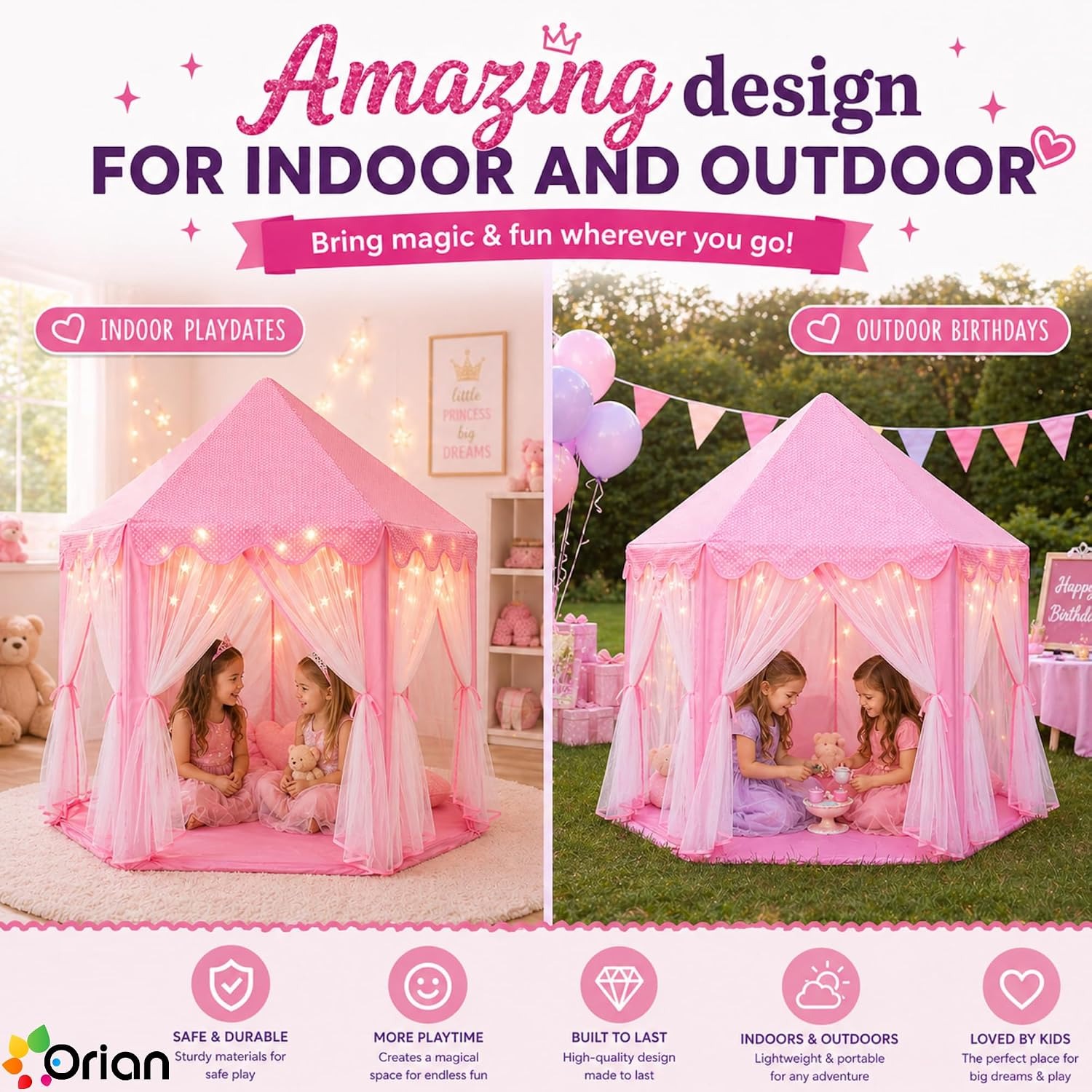
This is a polyester castle tent, 55 inches square and 53 inches tall, built around a pole frame with a doorway at the front and a turret roof on top. It weighs 1.63 kg. LED star lights come with the set.
Those numbers matter more than the marketing. At roughly 140 cm square, this is not a tiny pop-up that a four-year-old outgrows in a season. There is real floor space inside, enough for cushions, a book pile, and a second child. The 53 inch height means most children under about seven can stand up in it rather than shuffling around on their knees.
The weight is the other quiet advantage. At 3.6 pounds assembled, a parent can pick it up with one hand and carry it from the bedroom to the living room. That sounds minor until you own one. Tents that are awkward to move end up living in one spot and getting used half as much.
Why the star lights change things
Plenty of play tents are just fabric over poles. They get a burst of excitement on day one and then sit there.
The star lights are what keep this one in rotation. A soft glow inside turns the tent from a toy into a destination. Children who will not sit still for a book on the couch will happily take the same book into a lit tent and stay there for twenty minutes. Parents often buy a castle tent for the castle and end up valuing it most as a reading nook.
It also helps at the end of the day. Low, warm light signals wind-down in a way that overhead lighting does not. If you are trying to build a calmer bedtime routine, having a cosy lit space to read in before the actual bed is a useful step.
Who it suits
The manufacturer puts the age at three and up, and that is about right. Three to seven is the sweet spot. Under three, the frame and any cords need supervision, and the child may not get much out of pretend play yet. Over seven or eight, headroom starts to run out, although plenty of older kids still squeeze in for a read.
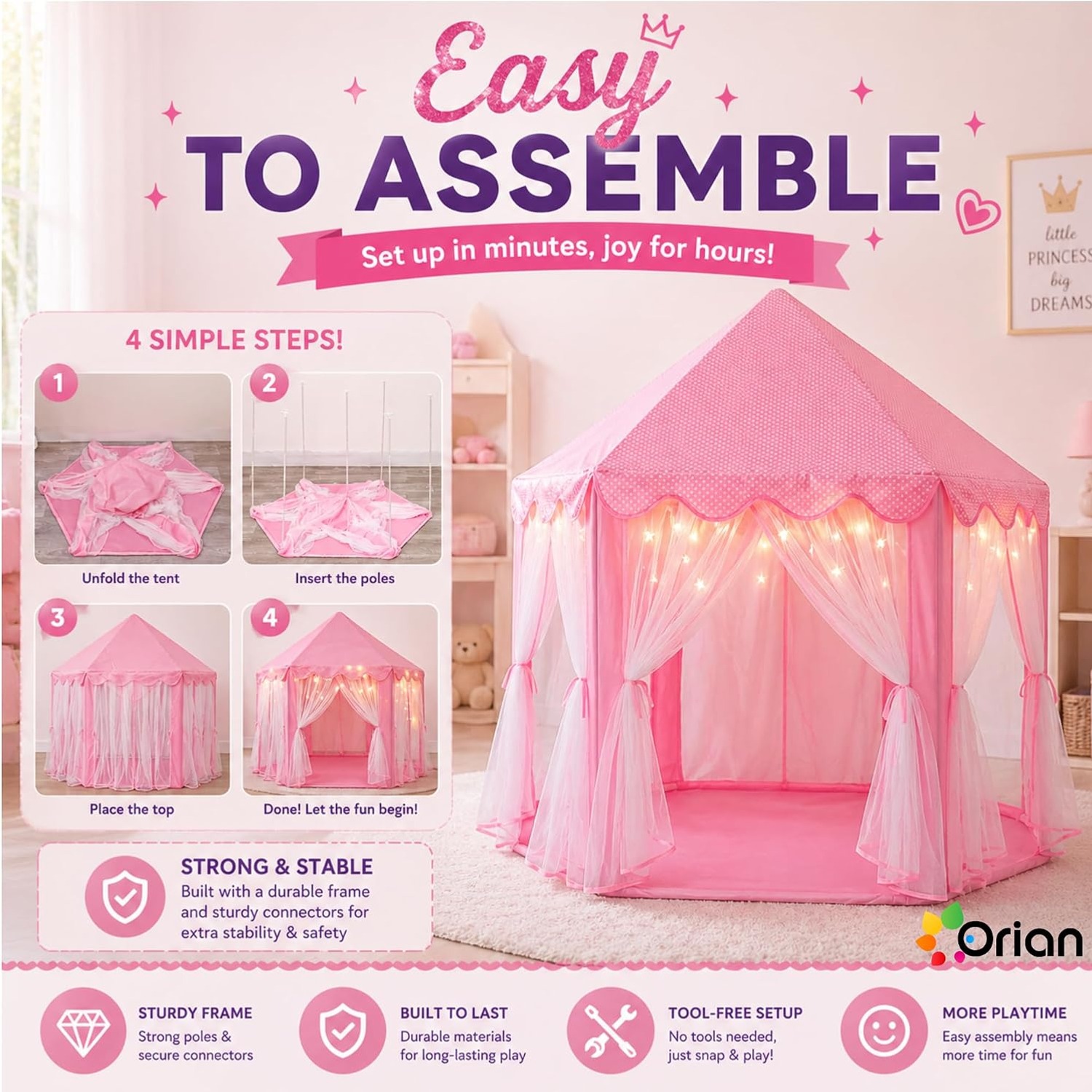
It suits homes where floor space is shared. Because it folds flat, you are not committing a permanent corner of the living room to a playhouse. Set it up Saturday morning, pack it away Sunday night, and nobody has to step around it all week.
It also suits households that move play outdoors in good weather. With supervision on dry flat ground, the tent works on a lawn or patio. Just treat it as a play item rather than camping kit. No overnight use, no wind, no rain.
How to choose between play tents
A few things separate a tent that lasts from one that gets abandoned.
Size first. Measure the floor space you actually have and compare it to the 55 inch square footprint. Then check the height against your child. A tent they cannot stand in gets used for sitting games only, which is fine, but know that going in.
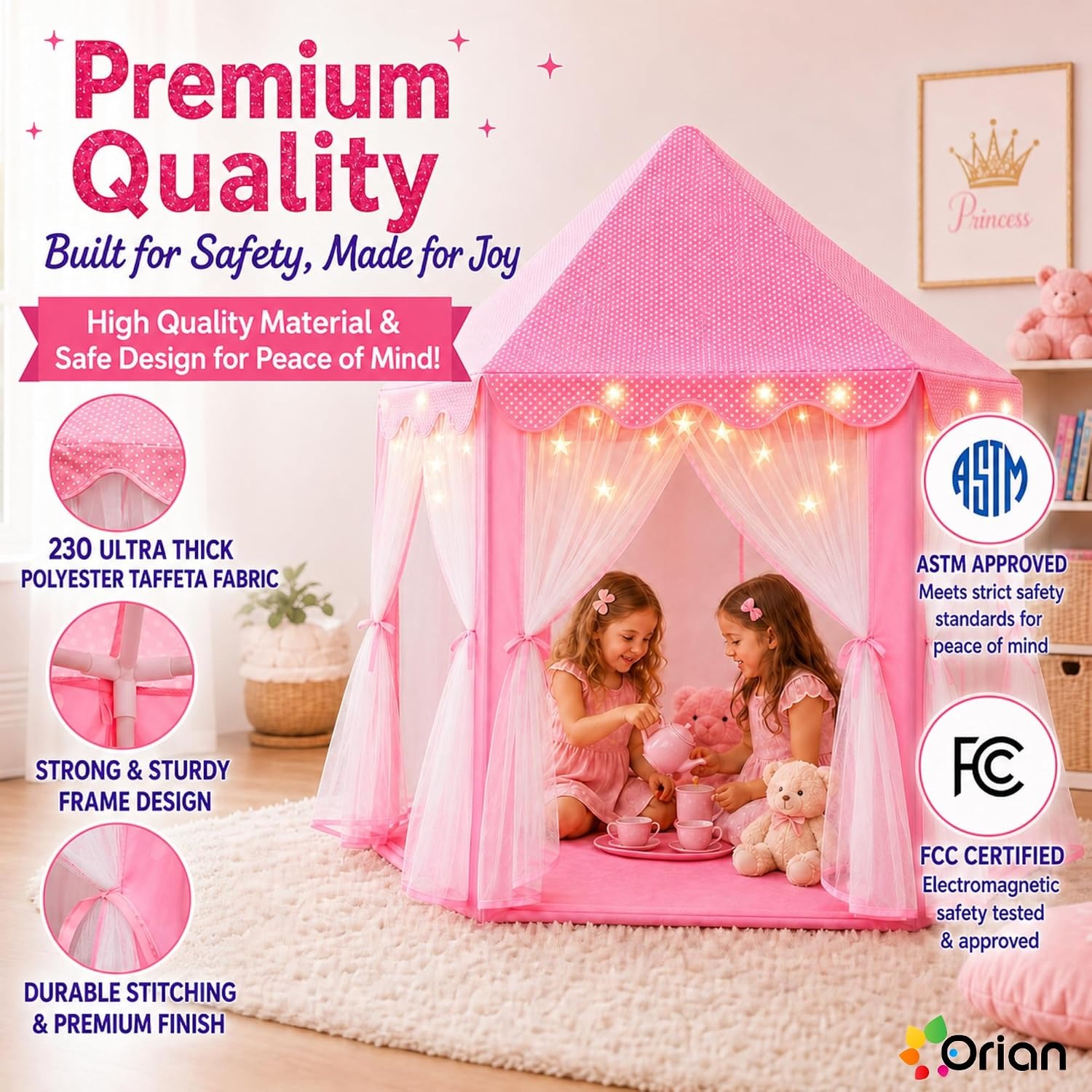
Material second. Polyester is the standard for good reason. It is light, keeps its color, and wipes clean, which matters more than you would think once snacks start migrating inside. Fabric you can clean with a damp cloth is the difference between a tent that looks tired in six months and one that still looks fine.
Then the frame. Pole-and-sleeve designs like this one assemble in minutes and come apart just as fast. Pop-up tents are quicker still but can be a nightmare to fold back down. A frame that comes apart properly is easier to store flat.
Finally, think about whether there is a reason to stay in it. That is where the lights earn their place. A tent with a reason to linger gets used daily. One without usually does not.
Setting it up well
The tent itself is only half the job. The other half is what you put inside.
Start with the floor. Set the tent on a rug or carpet rather than bare boards, or lay a folded blanket inside. Knees and elbows take a beating on hard floors, and kids leave faster when it is uncomfortable.
Add one good cushion. Not four. One large floor cushion or a couple of flat pillows gives something to lean against without filling the space.
Keep a small basket of books just inside the door. Rotate the contents every couple of weeks. The novelty of new books in the tent does more for reading time than almost anything else.
Leave the doorway clear. Tents stop being fun when getting in requires moving three things first.
Looking after it
Cleaning is simple. A damp cloth and a drop of mild soap handle most marks. Let the fabric dry fully before you fold it, because packing away a damp tent is how you end up with a musty one.
Skip the washing machine. The cycle can stretch panels, strain stitching, and damage the light fittings. Spot cleaning as you go is both easier and kinder to the tent.
When you pack it down, fold loosely and store the poles straight. Bent poles never sit right again. Keep the whole thing dry in storage, and keep it well away from heaters, candles, and anything with a flame.
For the lights, avoid tight kinks in the strand and never pull on the cord to move the tent. Treat them gently and LEDs tend to last a very long time.
What it costs you in space
This is worth being honest about. A 55 inch square tent takes up real room. In a small bedroom it will dominate a corner. If you are tight on space, the fold-away option is not a nice extra, it is the whole plan. Set it up for weekends and holidays, pack it down for school weeks.
In a playroom or a larger bedroom, leave it standing. Permanent setups get used far more often, because nobody has to decide to assemble something before play can start.
The short version
A pink princess play tent works because it gives a child a room of their own inside a room that is not. This one is 55 by 55 by 53 inches, made from wipe-clean polyester, weighs 1.63 kg, and comes with LED star lights that turn it into a reading spot as well as a castle.
It is rated for ages three and up, folds flat for storage, and moves easily between the bedroom, the living room, and the back backyard on a dry day.
Put a rug and a cushion inside, keep a few books by the door, and it will earn its corner.