

The complete guide
How to Choose a Kids Play Tent That Actually Gets Used
The problem with a room that has no corner of its own
Kids need somewhere small. It sounds odd when you say it out loud, because we spend a lot of effort giving children room to spread out. But most children, especially between three and eight, go looking for enclosure. They build forts out of sofa cushions. They crawl under the dining table and pull a blanket over the gap. They sit in the closet with a flashlight.
That instinct is not a problem to solve. It is a signal. A small enclosed space gives a child a sense of control and a break from the noise of the house. The trouble is that cushion forts collapse, blanket tents take over the living room, and the closet was not designed for it.
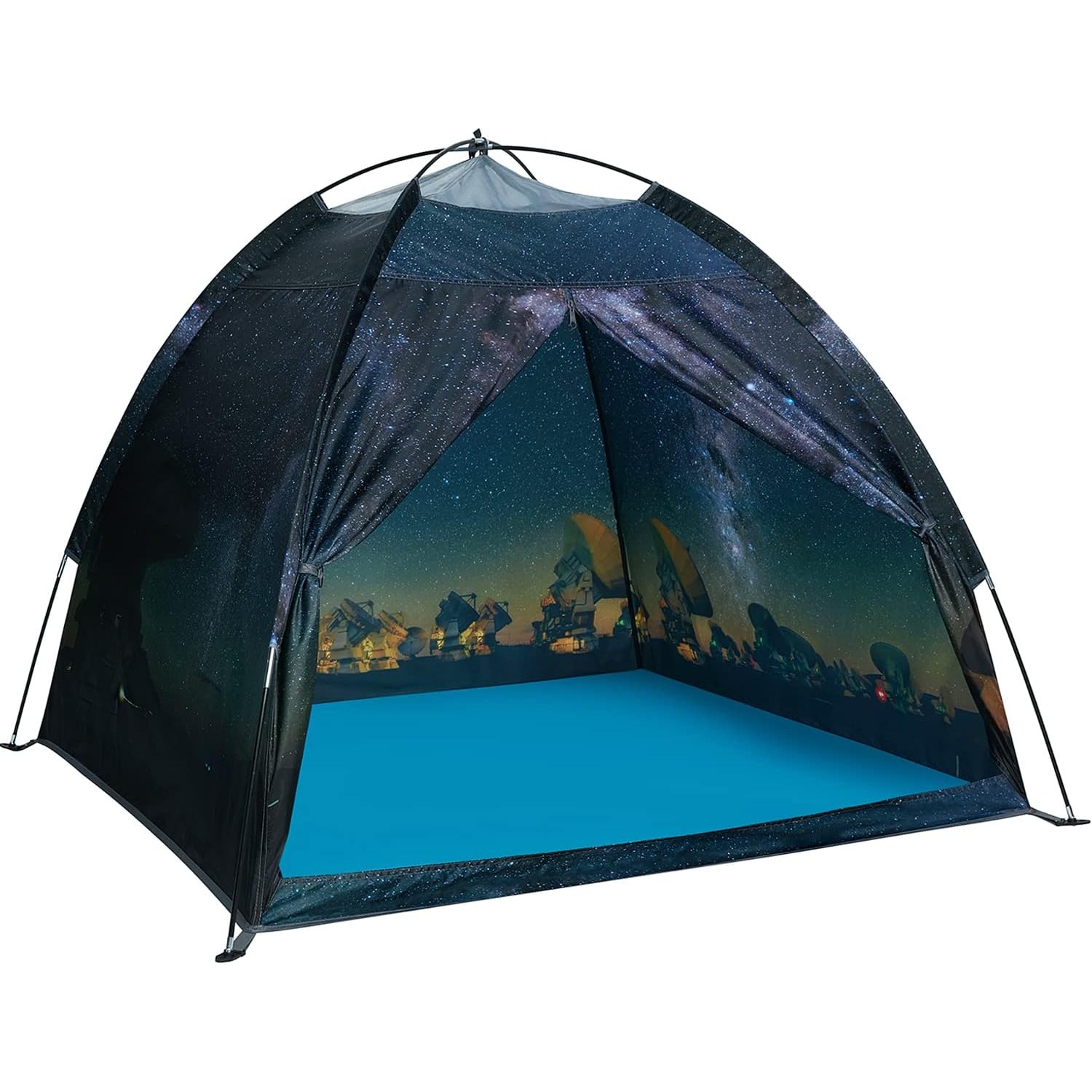
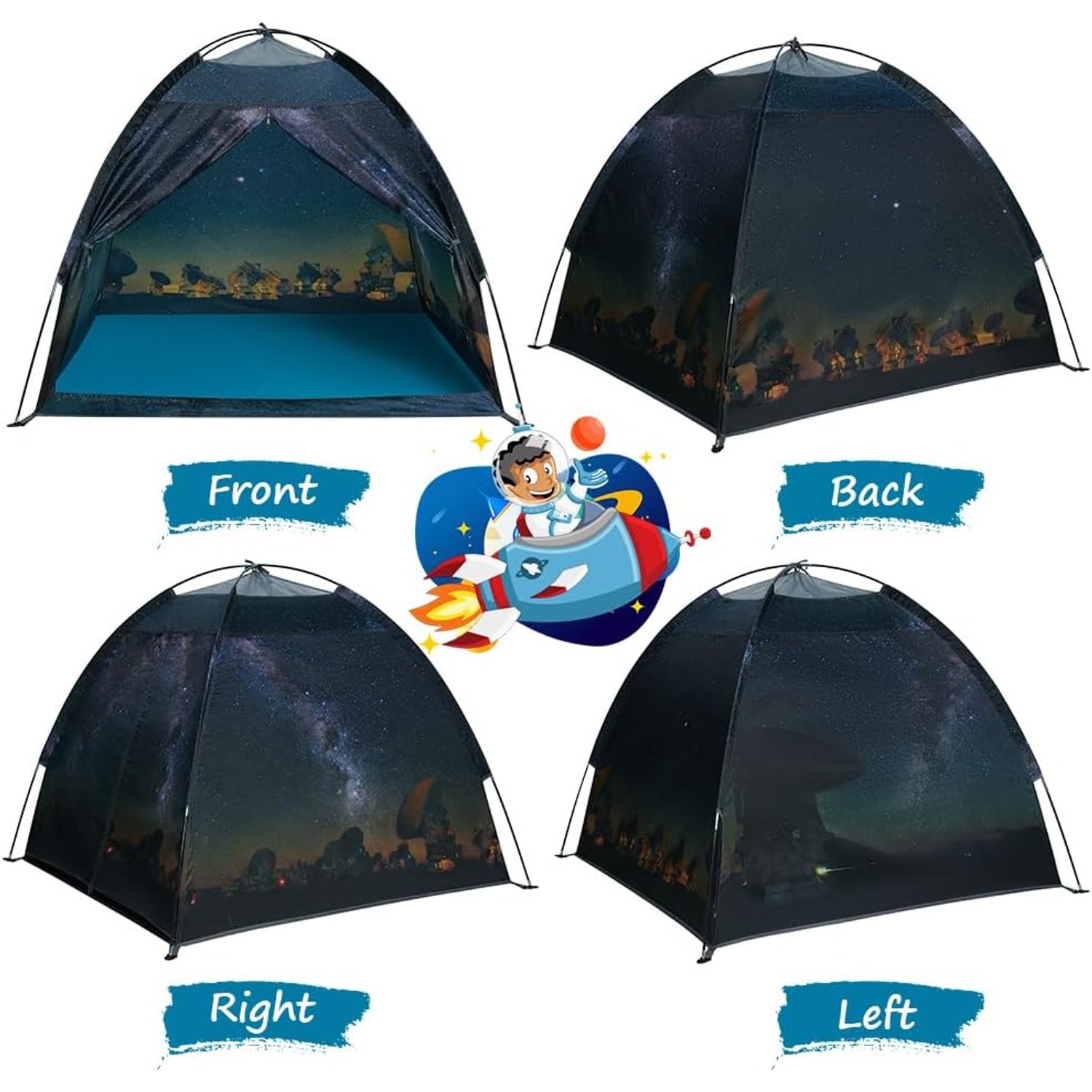
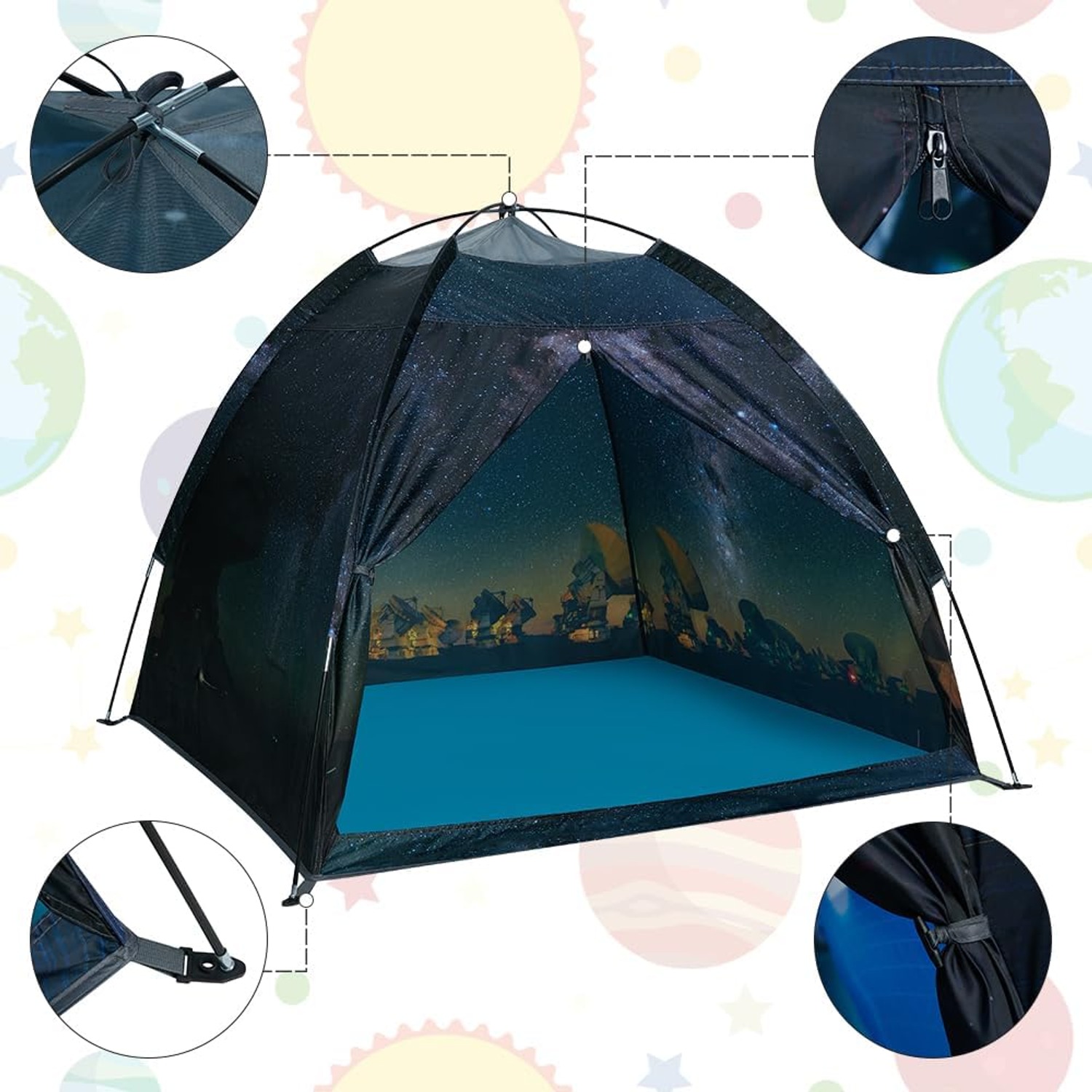
A dedicated play tent solves the practical side. It gives the child a defined den that stands up on its own, and it gives the adult something that can be put away in two minutes when it is time to vacuum. The Starry Galaxy Space Tent is a compact version of that idea, with a star-covered dome that doubles as the setting for whatever story is running that week.
How a dome play tent works
The design here is about as simple as a tent gets. Two metal poles slide into fabric sleeves stitched into the canopy, cross over at the top, and tension the polyester into a dome. There is no hub, no clip set, no instruction manual with twelve steps. One adult can usually have it standing in around five minutes, and after the first go it is faster than that.
The tension of the crossed poles is what keeps the shape. That means the canopy wants to stay taut, and it also means you should not lean on the walls or hang things off the frame. Play tents are structures for sitting inside, not for climbing on.
Across the top sits a mesh panel. This is the part people underestimate. Without it, a dark-colored tent full of a child in winter clothes gets warm and close within minutes. The mesh keeps air moving, and it gives you a way to look in from above. You can check what is going on without opening the door and announcing yourself, which is a small thing that keeps play uninterrupted.
The whole assembly weighs 0.85 kg. That is light enough that moving it from bedroom to living room is not a project, and light enough that a reasonably capable child can drag the packed bag themselves.
Who it suits
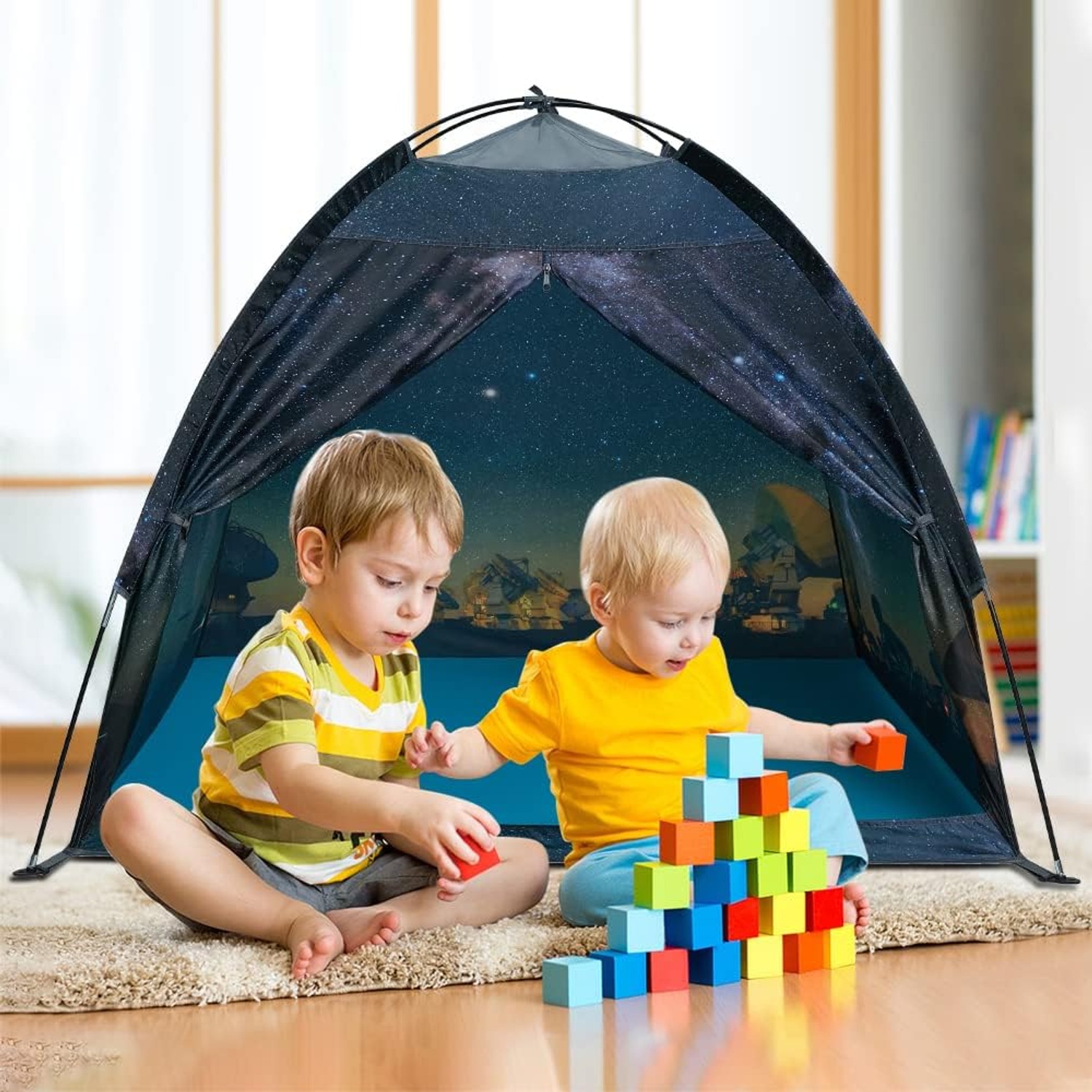
The manufacturer lists this tent for ages three and up. That lines up with how the size works in practice. The interior is a 47 inch square with a peak height of 43 inches, so a preschooler can sit upright comfortably and lie down fully stretched. A seven or eight year old will still fit, sitting cross-legged with books.
It works best as a single-child den. Two small children can share it for a game, though it will be snug. If you have three kids who all want to be inside at once, you want something larger.
Families in apartments and smaller homes tend to get the most out of this size. A tent that is always up in the middle of a living room becomes an obstacle, and it stops being special. One that comes out for the afternoon and goes back in its bag keeps its appeal. The best portable kids tent is the one your household actually tolerates.
It also suits households trying to build in some quiet time. A tent with a rug, a cushion and a small stack of picture books is a genuinely effective way to get a child reading without a negotiation. Parents looking for the best quiet corner for kids often find a tent does more than a dedicated reading chair, simply because it is more fun to get into.
How to choose between play tents
A few things matter more than the pictures suggest.
Footprint comes first. Measure the spot you actually plan to use before you buy. A 47 inch square needs a clear patch of floor just under four feet across, plus a bit of room to walk around it. Taping out the dimensions on the carpet for five minutes tells you more than any product photo.
Then consider height. At 43 inches a child can stand hunched or kneel upright inside, but an adult cannot. That is normal for the best small play tent for apartments style of product. If you want to sit inside and read with your child, you need a taller teepee or a larger dome.
Setup style matters next. Pop up tents go up instantly and fold down with a twisting motion that some people find frustrating for years. Pole tents take a few minutes to build but come apart in an obvious way. If the tent will go up and down often, the pole approach usually causes fewer arguments.
Ventilation is worth checking. A mesh roof panel is not a given on every tent, and its absence shows up fast on a warm day. Look for it specifically.
Finally, think about storage. A carry bag sounds like a minor accessory until you own a tent without one. Being able to compress the whole thing into a bundle that sits on a shelf is what keeps a play tent in rotation rather than in the garage.
Setting it up well
A tent is more inviting with a floor. Put a soft rug, a folded quilt or a play mat down before the tent goes up. It makes the inside comfortable for sitting, and it protects hard floors from the pole ends.
Add two cushions and a small basket. That is usually enough. Resist the urge to fill it with toys, because a tent crammed with plastic stops being a retreat and becomes storage.
If you want atmosphere, battery LED fairy lights are the standard choice. They stay cool and there is no mains cable running into the tent for anyone to trip over. Never use candles, heat lamps or anything with an open element near fabric.
Place the tent away from radiators, heaters, window blind cords and the top of stairs. Keep the sides clear so a child can get out quickly from either direction.
Keeping it in good shape
Care is simple. Wipe the polyester with a damp cloth and a little mild soap when it needs it, then let it air dry fully. Do not put the canopy in a washing machine, do not bleach it, and skip the tumble dryer and the iron. The printed finish and the stitched seams both last longer with hand care.
Shake out crumbs after snack time inside, which will happen. If the tent has been outside, make sure it is completely dry before you fold it, because packing damp fabric away is how a play tent develops a smell that never quite leaves.
Store the poles straight in the carry bag rather than bent against something. A kinked pole never tensions the canopy properly again.
Treat the fabric as fabric. Children climbing on top of a dome or swinging on the panels will pull seams out of shape faster than ordinary use ever will. A quick rule, inside is for playing and outside is for walking around, saves a lot of repair.
The short version
This is a small, dark, star-covered dome tent for children aged three and up. It measures 47 by 47 by 43 inches, weighs 0.85 kg, uses a two-pole metal frame with a polyester canopy and double stitched seams, has a mesh roof for airflow and visibility, and packs into an included carry bag.
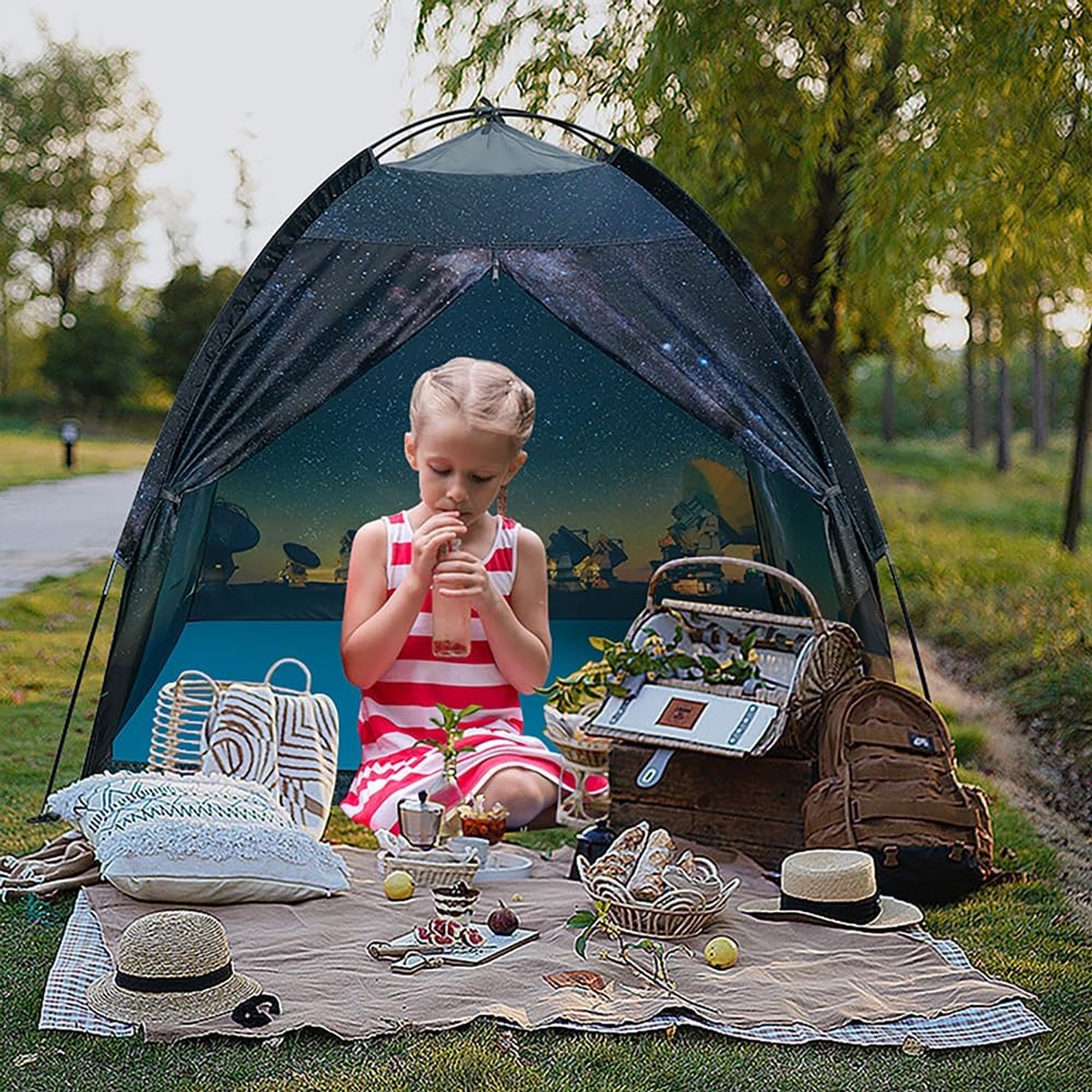
It suits a bedroom corner, a shared playroom or a living room that needs to go back to normal by dinner. It is better for one child than for a crowd. It is not camping gear, so keep it indoors or on dry grass.
If you want to give a child a private spot without giving up a whole room, it does that job neatly, and it disappears into a cupboard when you need the floor back.