

The complete guide
How To Choose A Princess Castle Play Tent That Lasts
The problem a play tent actually solves
Most children's rooms are shared space. There is a bed, a closet, a box of toys, and somewhere in among it all a child who wants a spot that is theirs. Not a corner they have been allocated, but a place with walls and a door and a bit of mystery to it.
That is what a castle tent does. It carves out a small world inside a room you already have. The child decides who comes in. They decide what happens in there. For a lot of kids that sense of ownership matters more than any single toy, and it is why a tent often outlasts the expensive plastic things bought at the same time.
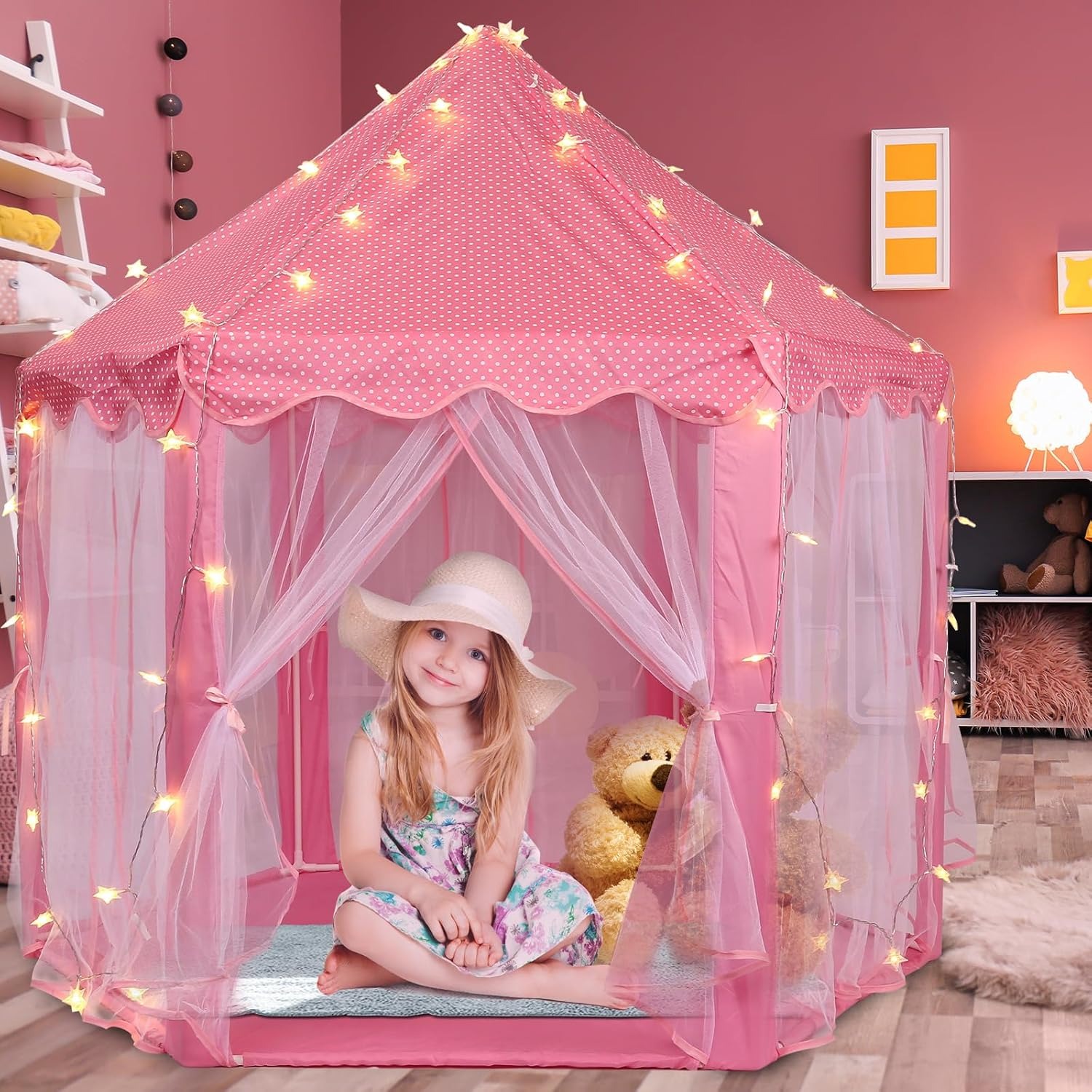
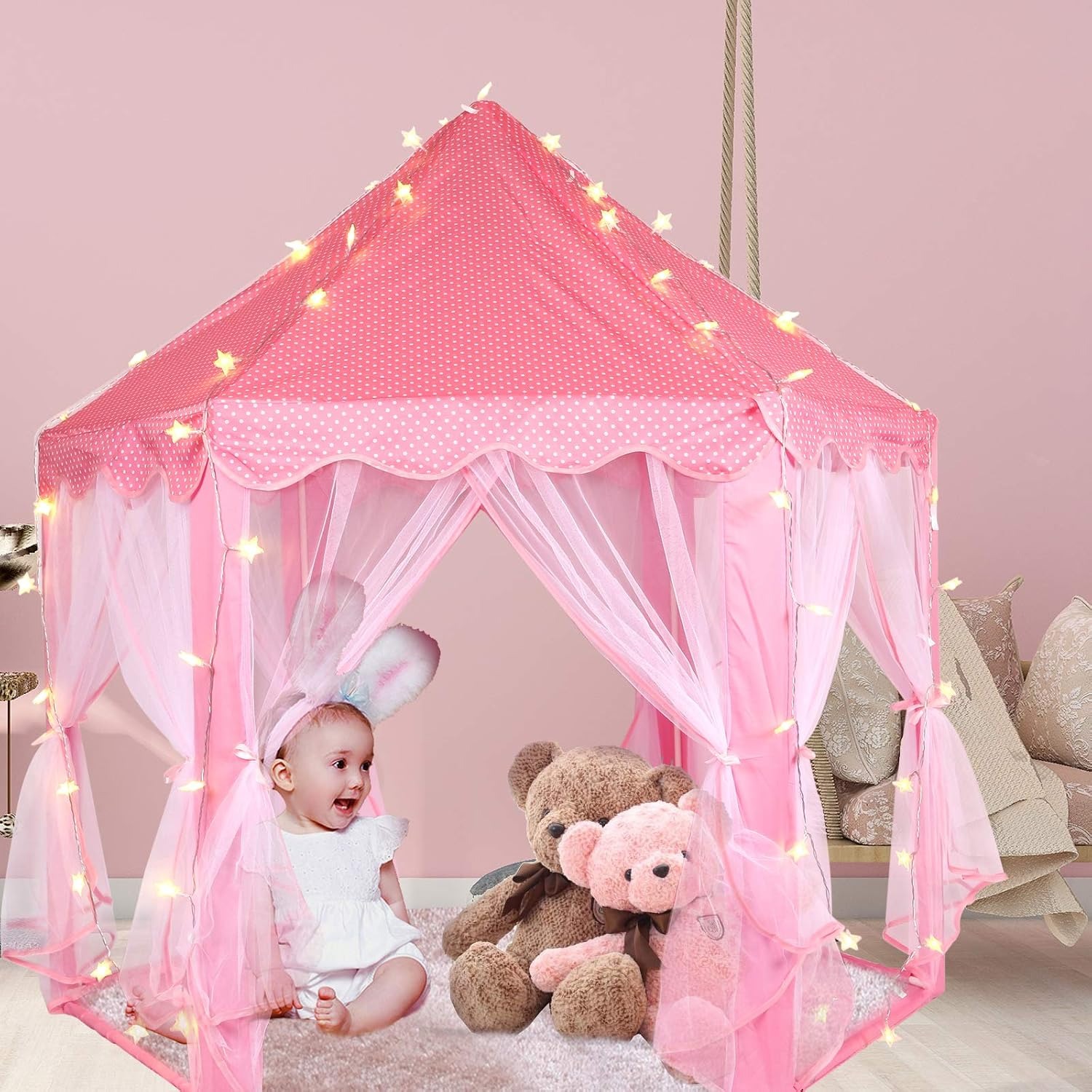
The star lights push it further. A tent in daylight is a den. A tent with soft lights glowing through the panels after dark is something else, and it tends to pull children towards quiet time rather than away from it.
How a castle tent is actually built
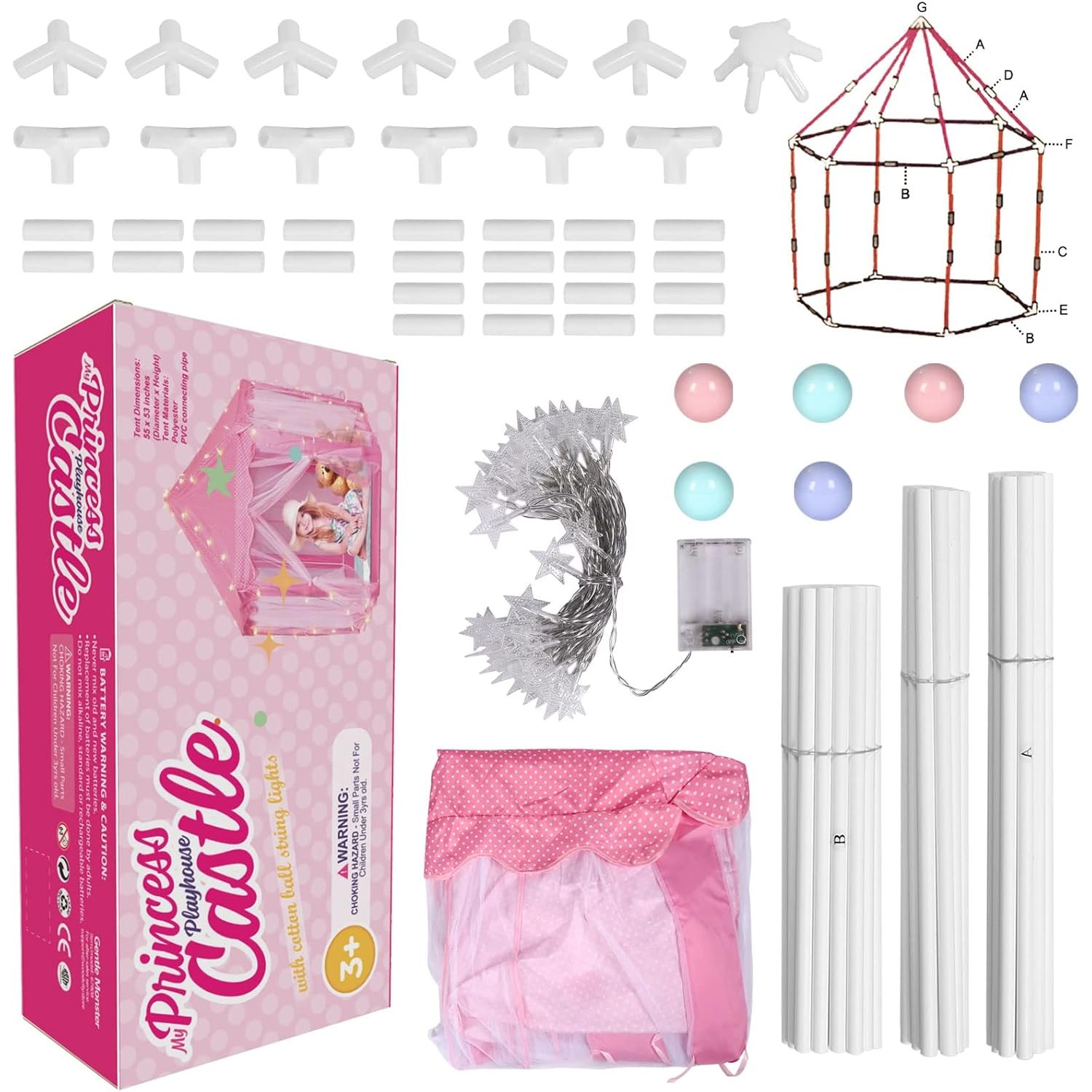
Under the fabric is a frame. On this model the poles are polyvinyl chloride, a hard plastic, with reinforced joints at the connection points. That reinforcement is the detail worth caring about, because joints are where cheap tents fail. A child grabs a wall to pull themselves up, the joint pops, and the whole roof sags.
The panels stretch over that frame and hold the castle shape, including the pointed roof. The fabric is a soft, thicker weave chosen so it does not crease badly and does not fade quickly. The exact fiber content is not listed by the supplier, so we are not going to state one.
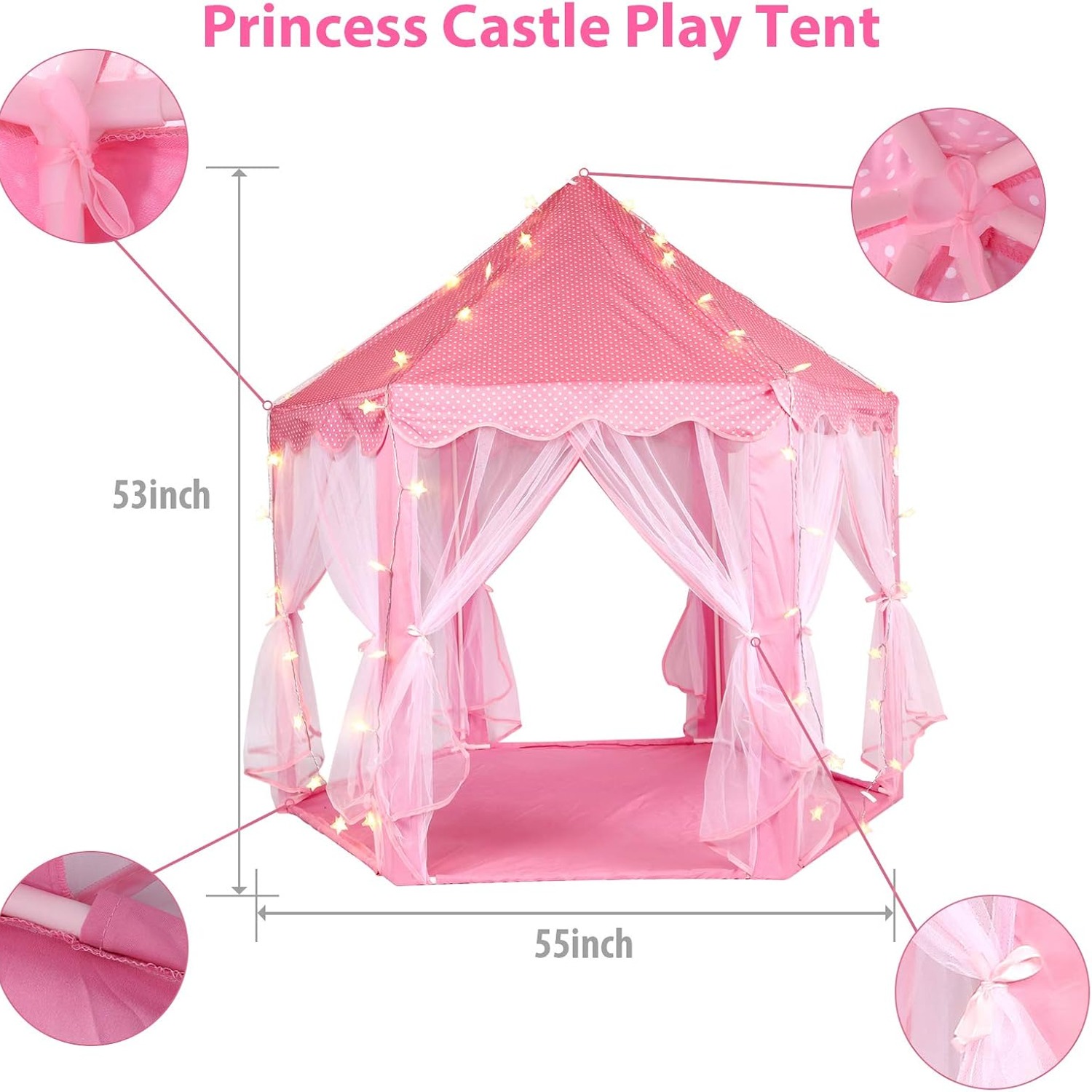
Assembled size is 55 inches deep by 55 inches wide by 53 inches high. The whole thing weighs 1.55 kg. That combination matters more than it sounds. It is big enough to feel like a real space from a child's point of view, and light enough that one adult can shift it across a room without taking it apart.
The star light set strings through the tent. Think of it as decoration rather than illumination. It makes the inside glow. It will not light a book.
Who this suits
The recommended age starts at 36 months. In practice the sweet spot for a princess castle play tent runs from about three to around eight, with the type of play changing a lot over that span.
A three year old uses it as a hiding place and a crawling target. A five year old runs full dressing-up storylines in it. A seven or eight year old mostly wants somewhere to take a book and be left alone, and the tent quietly becomes a reading nook without anyone deciding that it should.
It suits a child who likes a den, who likes small enclosed spaces, who asks to build forts out of sofa cushions. If your child has never once draped a blanket over two chairs, a tent may get less use than you hope.
It is also a reasonable choice for a shared bedroom. One child gets a defined space of their own without needing a second room. That can defuse a surprising number of arguments.
How to choose, practically
Start with the floor. Measure a 55 inch square in the spot you have in mind and mark it with tape or books. Then look at it. A lot of tents get returned not because they are bad but because nobody measured first, and a four and a half foot square takes up more of a small bedroom than people picture.
Check your ceiling and anything hanging from it. At 53 inches tall the peak sits a little over four feet up, which is fine under a standard ceiling but worth thinking about under a loft bed or a sloping roof.
Think about where it will live. If it is going to be a permanent fixture in a corner, size matters most. If you plan to pack it away between uses, weight and how easily it comes apart matter more. At 1.55 kg this one travels well, which is handy if it will spend summer in the backyard and winter in the playroom.
Consider the lights honestly. If your child is nervous in the dark, a glowing tent is a real benefit. If they are the sort to treat a light cord as a toy, plan to supervise and position the cord sensibly.
Finally, think about how long you need it to last. A tent used indoors on carpet by one child will outlive a tent dragged across gravel by four. Neither is wrong, but the second scenario means accepting a shorter life.
Setting it up well
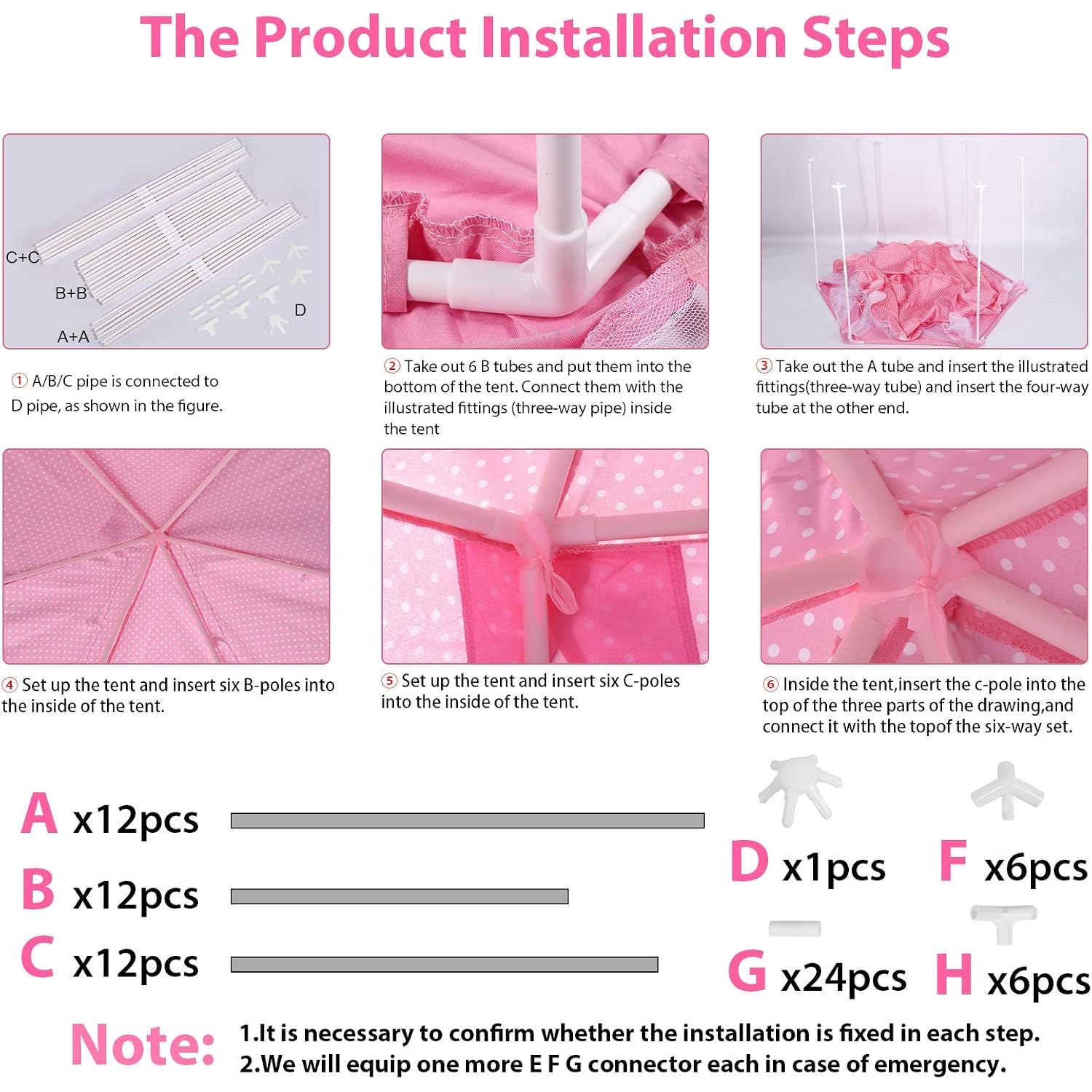
Lay everything out before you start. Poles in one group, fabric in another. Build the frame first, then fit the panels over it, rather than trying to do both at once.
The first assembly is always the slowest. After that most people can put it up in a few minutes. Keep the instruction sheet tucked inside the storage bag so you are not guessing the second time around.
Pick the location before you build rather than after. The assembled tent moves easily enough, but it is still simpler to build it where it will live.
Add a soft layer inside. A rug, a folded blanket or a play mat makes a huge difference on a hard floor and takes the tent from somewhere children visit to somewhere they stay. A couple of cushions and a small basket for books finish it off.
Position the star lights so the cord runs out of the way of the doorway. Children duck through that opening dozens of times a day.
Keeping it in good shape
Cleaning is simple. A damp cloth with a little mild soap handles most marks on the panels. Let the fabric dry fully in the air before you fold anything away. Do not machine wash, tumble dry or iron it, and take the star lights out before any cleaning.
Check the pole joints occasionally. If a connection has worked loose, push it back together properly rather than leaving it. That five second habit is the difference between a tent that lasts years and one that sags by spring.
Keep it out of long stretches of direct sunlight. All dyed fabric fades eventually, and a sunny window does it fastest. If the tent lives in a bright room, shifting it a meter away from the glass helps.
For outdoor use, bring it in before rain and before dark. It is not built for weather and it is not a camping tent. A dry afternoon on the lawn is exactly right. A night left out in a shower is not.
When you store it, fold rather than cram. Tight compression leaves creases that take a while to drop out.
A few realistic expectations
A play tent is a soft structure, not furniture. Children will lean on it and it will flex. That is normal and the reinforced joints are there to handle it, but it is not a climbing frame.
The lights are atmosphere. Lovely, genuinely, but atmosphere.
And the tent will not be exciting on day fifty the way it was on day one. What usually happens is that the novelty fades and then the habit forms, and the tent settles into being the place your child goes when they want to be somewhere else. That second phase lasts far longer than the first.
The short version
This is a 55 inch square, 53 inch tall pink castle tent with a star light set, built on a reinforced hard plastic frame and weighing 1.55 kg. It suits children from 36 months up, works indoors or out on a fine day, and wipes clean with a damp cloth.
Measure your floor space first. Add a soft mat inside. Check the joints now and then. Do those three things and you have a kids castle tent that earns its corner of the room for years.