
The complete guide
How to Choose a Kids Teepee Tent That Actually Gets Used
The problem a teepee quietly solves
Most homes do not have a spare room to hand over to a child. What they have is a corner of a bedroom, an awkward patch of living room, or the end of a hallway that nobody uses. A child still wants somewhere that feels like theirs, with an edge to it, somewhere the rest of the house is slightly further away.
That is the real job of a teepee. It is not a toy in the usual sense. It is a small piece of architecture that costs about four square feet of floor and turns dead space into a destination. Kids who will not sit still on a sofa with a book will happily disappear into a canvas tent with the same book for twenty minutes.
The other thing it fixes is clutter sprawl. Give a child a defined space and a lot of the soft toys, blankets, and favorite books migrate into it. They are still out, but they are contained, and that is a meaningful difference by Sunday evening.
How this one is built
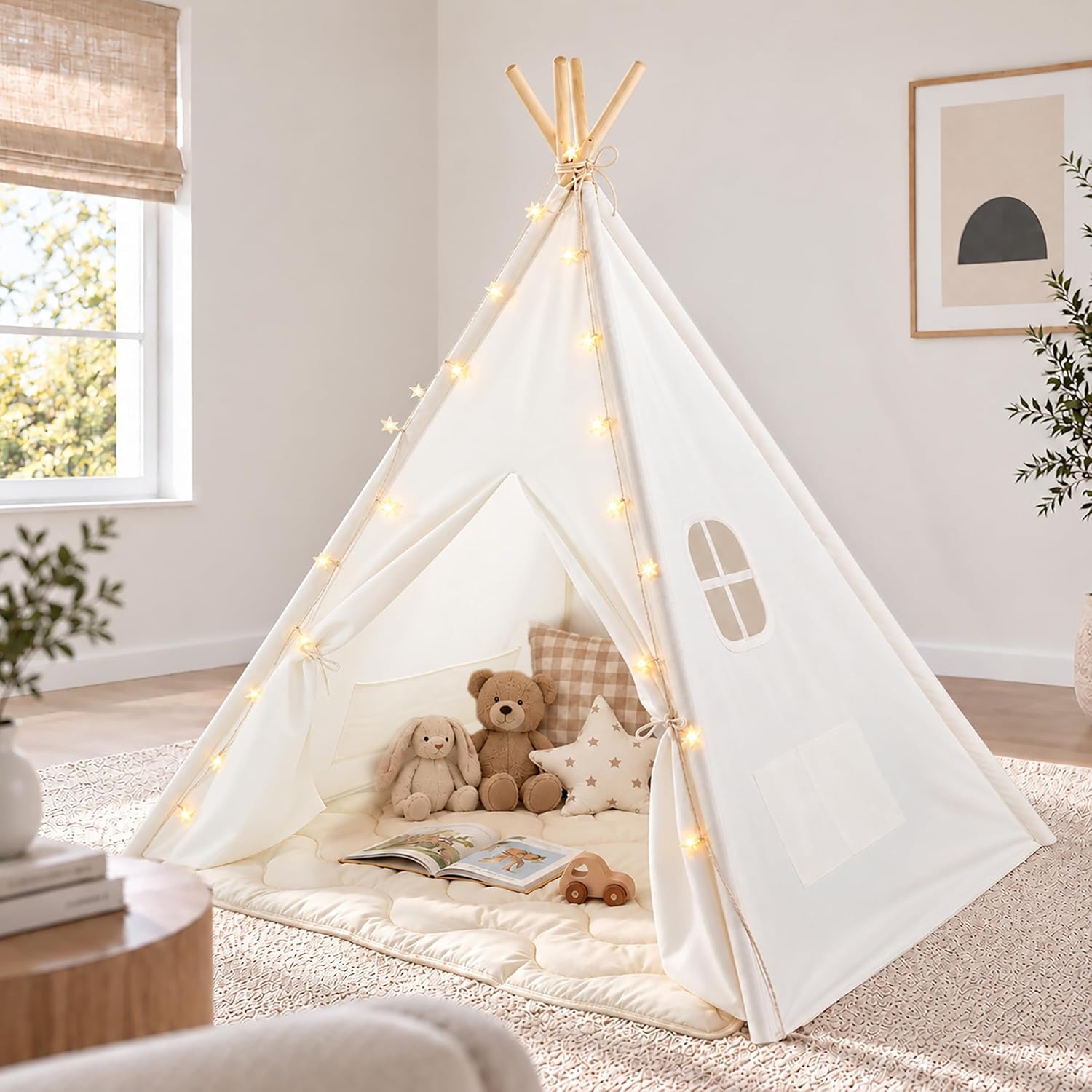
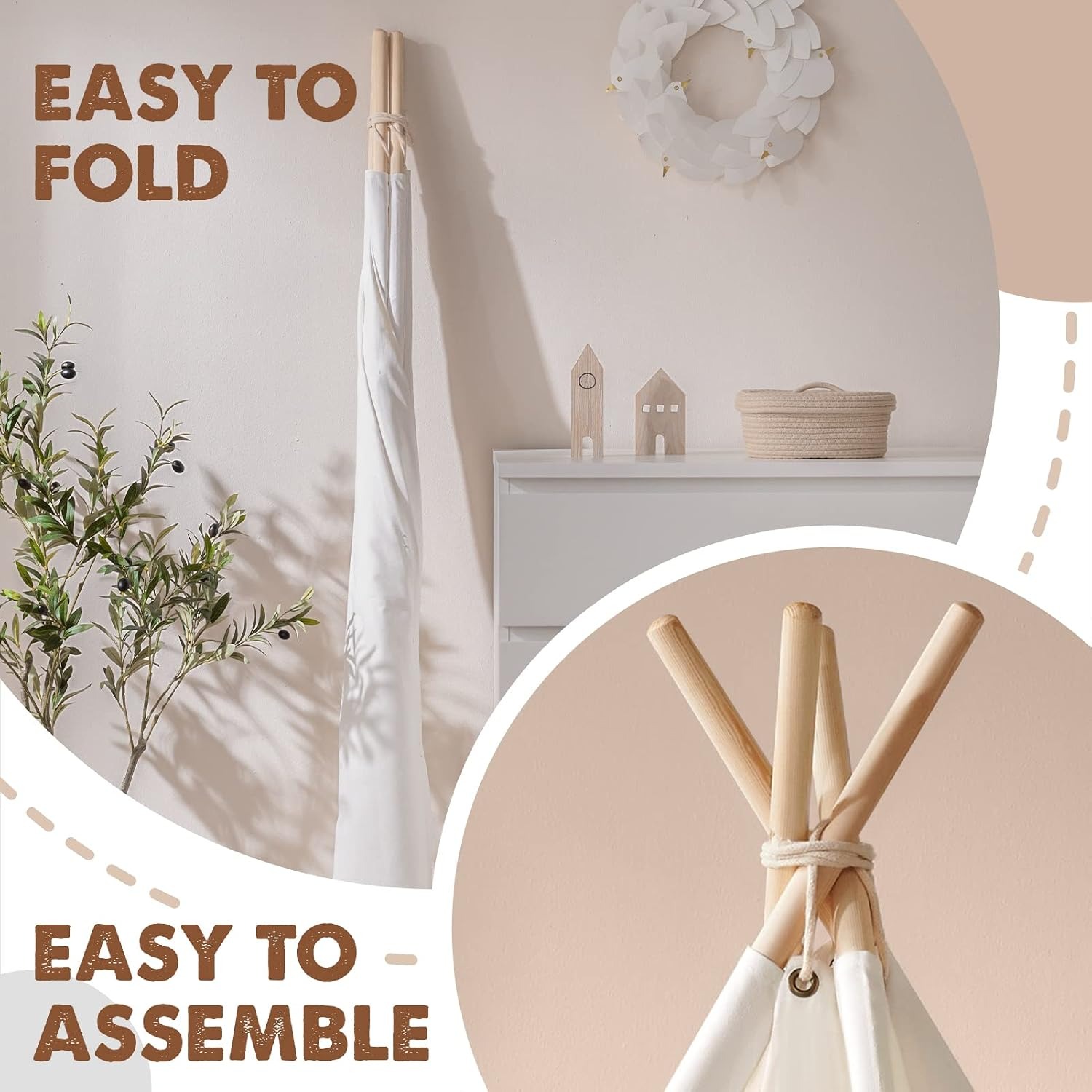
The structure is simple and it has not changed much in decades because it works. Four pine poles cross at the top, a cord cinches them together, and the cotton canvas slides over the frame through sewn sleeves. Spread the feet, and the tension in the canvas plus the angle of the poles holds the whole thing upright. No pegs, no tools, no frame screws to lose.
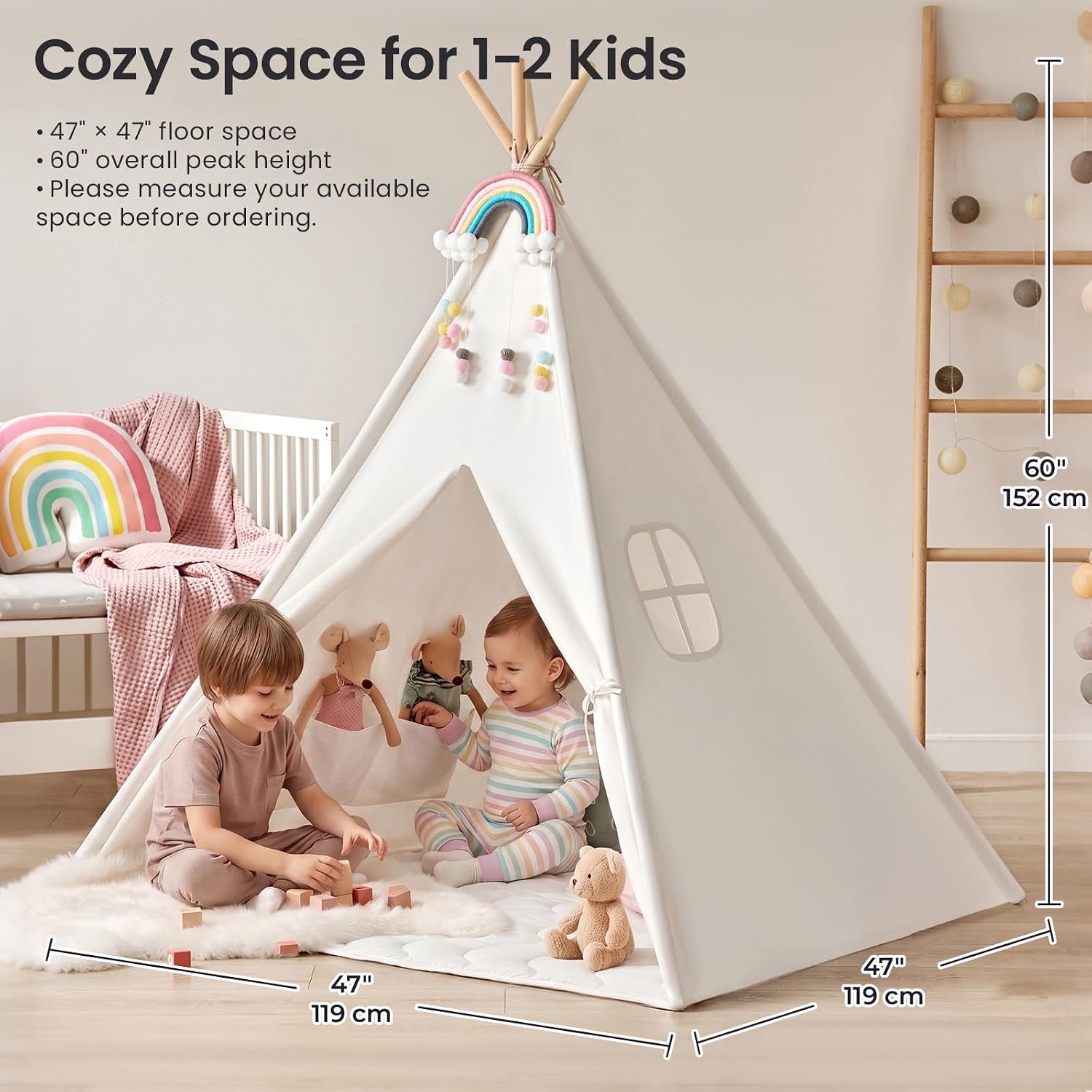
This set measures 48 inches wide by 48 inches deep and 66 inches tall. In practical terms, that is enough height for most young children to stand up inside and enough floor for one child to lie down or two to sit cross legged with a pile of books between them. The whole thing weighs 3.5 kg packed.
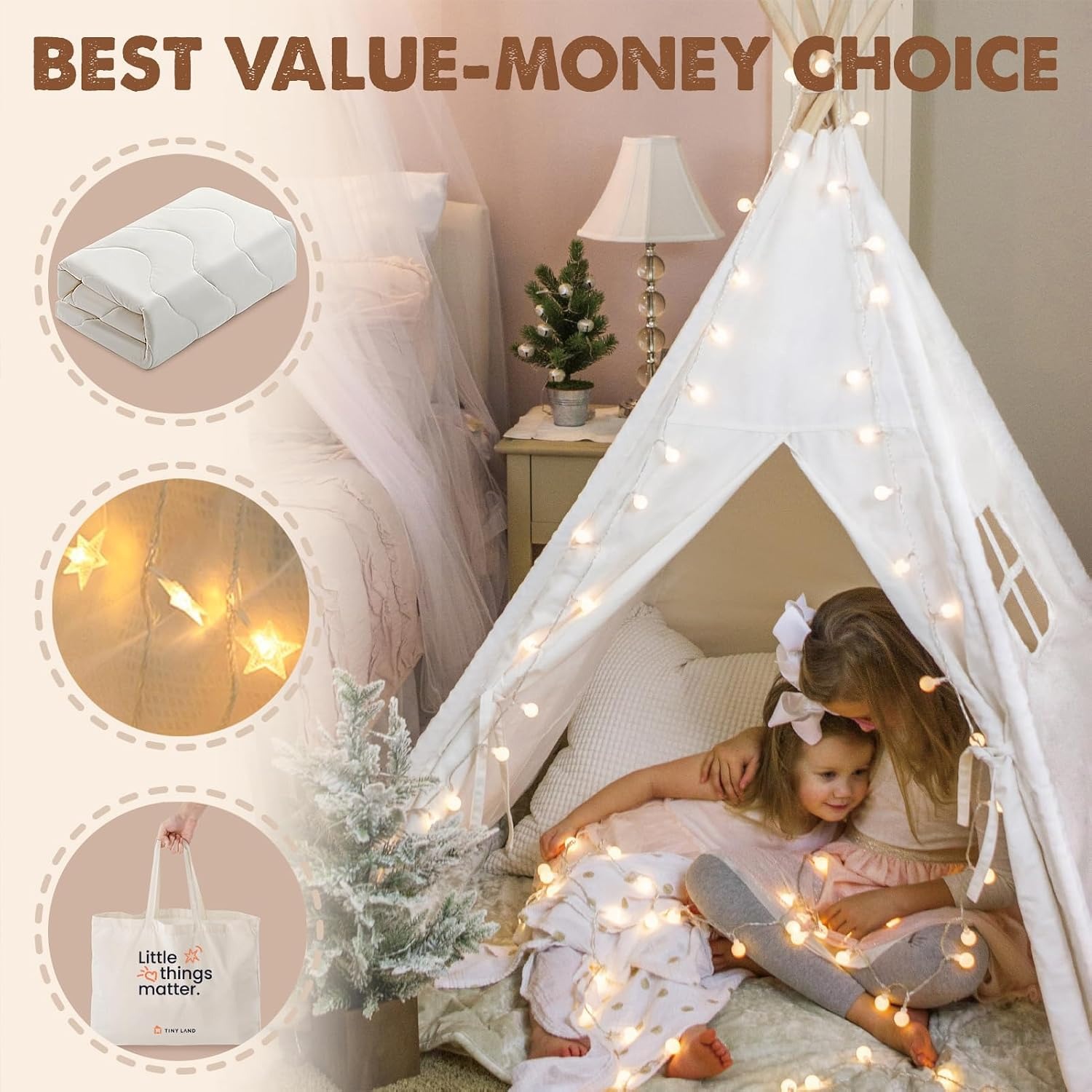
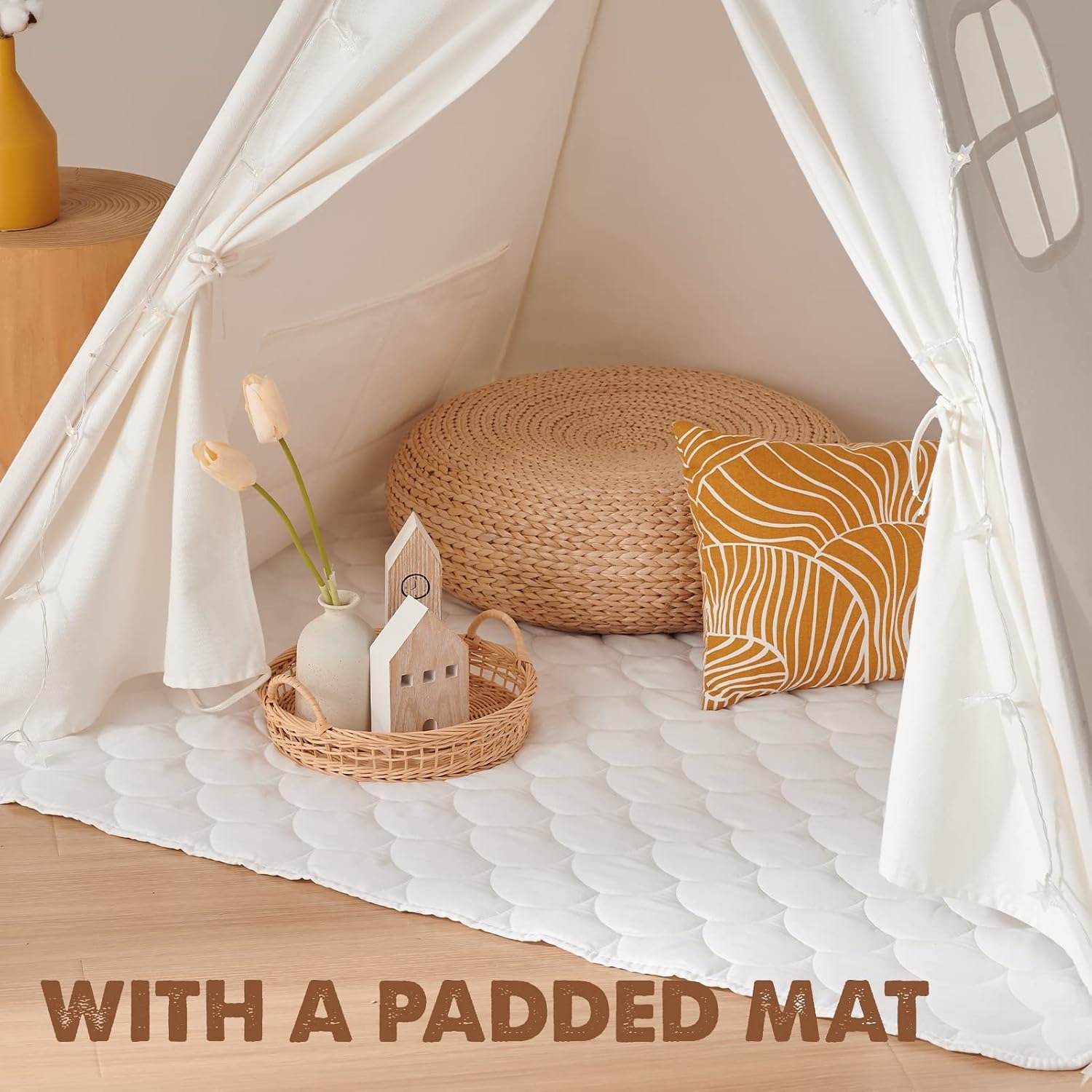
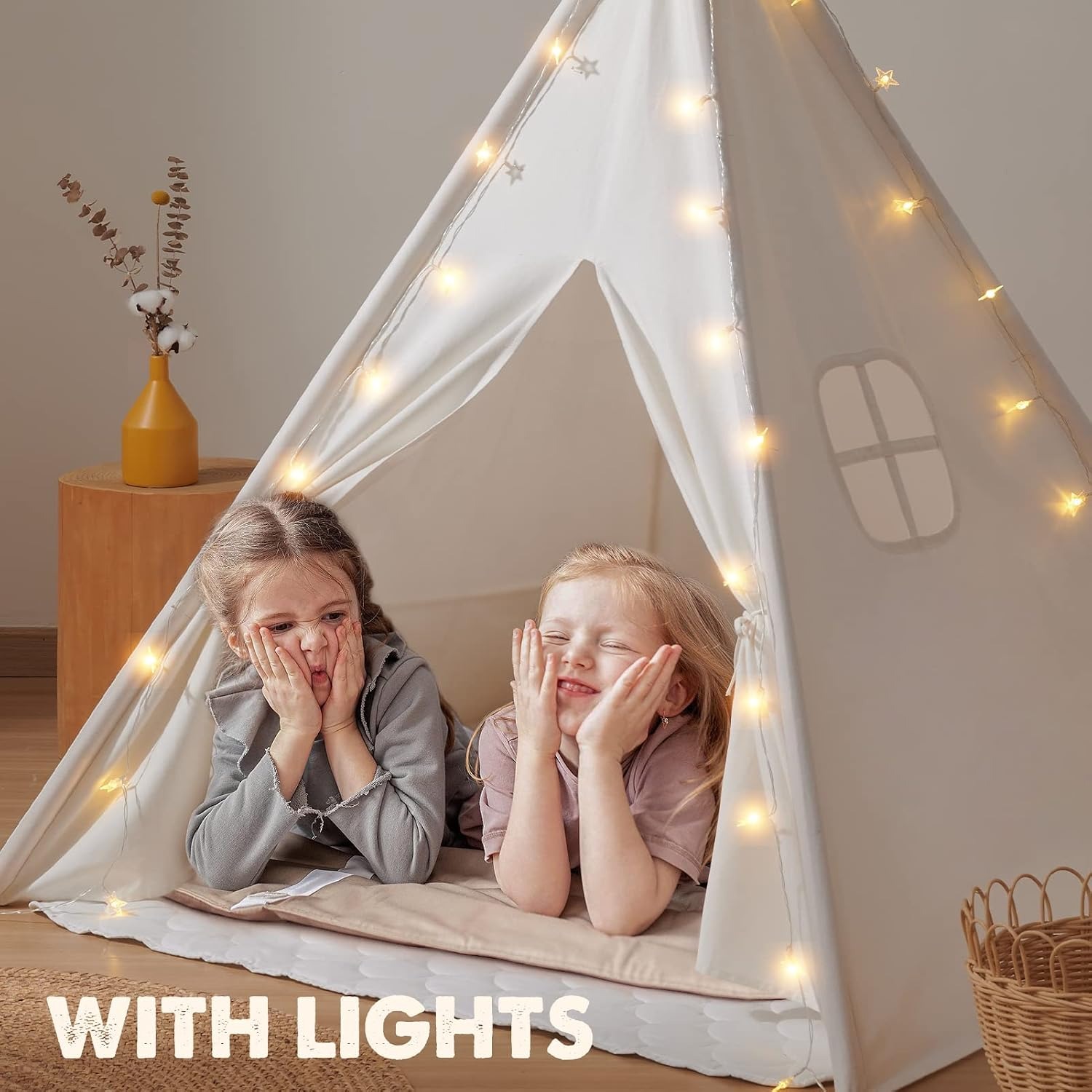
What lifts it above a bare canvas tent is what comes with it. There is a matching floor mat so nobody is sitting on cold boards. There is a 13 ft star light string for a soft glow. There are side pockets sewn into the canvas, which sound minor until you watch a child put a flashlight, a water bottle, and three books into them instead of leaving them across the floor. And there is a carry bag, which is the difference between a tent you can pack away for a month and a tent that lives in the corner forever.
Who it suits
The recommended age range is 3 to 10 years, and that is fair. At three, a child is steady enough on their feet to get in and out without pulling the frame over, and tall enough to enjoy standing inside. By ten, most children have either moved on or grown past the height.
The sweet spot is probably four to seven. That is the age where imaginary play is strong, where a cave is a cave and a shop and a spaceship across one afternoon, and where quiet reading time is something parents are actively trying to build a habit around. A teepee with star lights helps that habit along more than nagging does.
It also suits households that need flexibility. Grandparents who have the grandkids every other weekend can set it up Friday and pack it away Sunday. Families in rentals can move it from room to room as the kids change bedrooms. A foldable kids tent is worth more than a fixed play structure when the layout of your home keeps changing.
Measure before you buy
This is the single thing people skip and then regret. A 48 inch square sounds small on a page and looks bigger in a room.
Put masking tape on the floor in a 48 by 48 inch square and leave it there for a day. Walk past it a few times. Open the nearby doors and see whether they clear it. Then check the height, because 66 inches is five and a half feet, and under a sloped ceiling, a loft bed, or a low light fitting, that is the measurement that bites.
Corners are usually the best home for a teepee. The two back panels sit near the walls, nothing can be knocked into from behind, and the opening faces into the room. Avoid placing it directly against a radiator, a heater, or in the path of a door swing.
Choosing between teepees
Once you start comparing, a few things separate the good ones from the frustrating ones.
Look at the frame material first. Wood, in this case pine, has weight and rigidity that thin metal or hollow plastic poles do not. It stays put when a child leans against a panel. It also looks better in a living room, which matters if the tent is not confined to a playroom.
Then look at the canvas. Cotton breathes, which keeps the inside from getting warm and stuffy, and it hangs with a soft drape rather than standing stiff like coated synthetics. Off-white is a smart default because it disappears into most decor and because children bring their own color with cushions and blankets.
Then check what is actually in the box. Plenty of listings price a bare teepee and leave you buying a mat and a light string separately, which usually costs more than buying a complete set and rarely matches. This one arrives with the mat, the lights, the poles, the connectors, the top cord, the pockets, and the bag.
Finally, think about storage. If you do not have somewhere to put a packed teepee, you are committing to having it up permanently. That is fine if you like the look, and plenty of people do, but be honest with yourself before ordering.
Setting it up well
Assembly takes a few minutes. Join the poles, feed them through the sleeves, pull the top cord tight, then spread the four feet as wide as the canvas allows on a flat floor. The common mistake is leaving the feet too close together, which makes the tent tall, narrow, and tippy. Wide feet mean a stable tent.
Flat floor matters. Thick pile rugs let the poles sink unevenly and the whole structure leans. If you want a rug under it, choose a low flat one, or put the mat straight onto the floorboards.
For the lights, keep the cable tucked along a pole rather than trailing across the entrance, and switch them off when nobody is inside. Simple habits, but worth setting from day one.
Keeping it looking good
Cotton canvas is easy to live with if you deal with marks early. Spot clean with a damp cloth and a little mild soap, then let it air dry completely before packing away. Do not tumble dry. Damp canvas folded into a bag will smell within a week.
The pine poles need almost nothing beyond a wipe with a dry cloth and dry storage. Keep them off a garage floor. Give the connectors a quick check every few months to make sure nothing has worked loose with use.
The mat can be shaken out or vacuumed. The lights should be unplugged when not in use and kept away from water. None of this is demanding, and a teepee treated this way will see out several years and often more than one child.
The short version
This is a complete cotton canvas teepee set, 48 by 48 inches at the base and 66 inches tall, with a pine pole frame, a floor mat, a 13 ft star light string, side pockets, and a carry bag. It is built for indoor use and aimed at children from about three to ten.
If you have the floor space and the ceiling height, it does something small and genuinely useful. It gives a child a defined corner of their own in a house where there is no spare room going. Measure first, set the feet wide, keep it dry, and it will earn its place.